






Trail Talk: Nepal national parks offer a safe walk on the wild side
I recently visited my sister who’s been working in Nepal. A public service veteran, now with grown children, she sought jobs that would enable her to share her skills in other parts of the world. While her work is fascinating, I’d rather share some of what I experienced in two short weeks.
Despite its size (a little larger than Arkansas), Nepal boasts several national parks. As in the U.S., there is an entry fee at each park. However, visitors aren’t allowed to walk in and explore on their own. They are required to hire a registered guide, which is a very good thing.
Nepal’s national parks are home to tigers, leopards, rhinos, crocodiles, elephants and other species that could injure or kill. The guides carry long hollow sticks for protection as guns are not allowed. The practice appears to work well. While tigers do occasionally venture outside the park and kill villagers, attacks inside the park are rare.
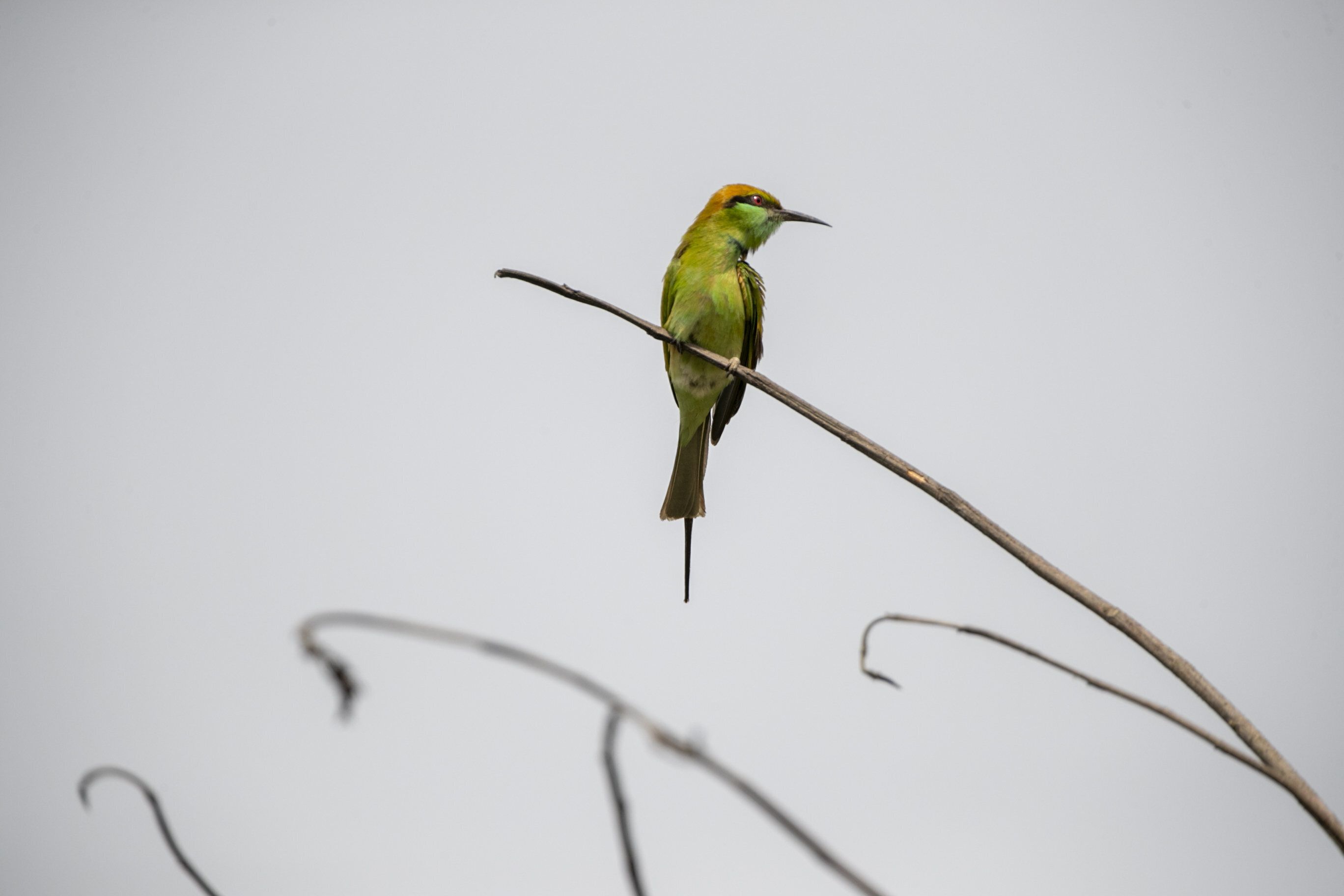
We spent two amazing days in Bardiya National Park. The first day we hiked about 10 miles on soft dirt trails. Walking between our watchful guides, we heard and saw tigers, rhinos and monkeys. The array of birds present was stunning.
The second day we hired a Jeep in order to reach more prime viewing locations. Park staff have built platforms in key spots to make it easier to observe wildlife. We came upon a small herd of elephants and quickly departed as a Jeep is no match for an elephant.
The two days were magical. I found the variety of deer, trees and even bugs fascinating. The fact that at any moment a tiger or leopard could appear made it more exciting.
Our guide’s family manages a few small cabins near the park’s entrance. It sustains their multi- generational family, and they are immensely proud of the park. By adhering to strict rules, limiting the number of entries and following sustainable practices passed down through generations, the forest is healthy and the region is seeing the number of tigers, leopards and elephants slowly increase. Park rangers in Jeeps and on domestic elephants patrol for poachers.
As with any populous area, litter exists in Nepal, with discarded plastic bottles a large part of the problem. But in Bardiya National Park you rarely see trash. Guides and visitors pack out what they pack in.
While grateful for the relative safety we enjoy while hiking Pike National Forest, it’s wonderful to know there are still wild places left on this Earth where the odds are definitely in the tiger’s and elephant’s favor.
Davies is the executive director of the Trails and Open Space Coalition.
A week-old baby elephant is seen at Chitwan national park, about 105 miles southwest of Kathmandu, Nepal, Thursday, March 10, 2022. Chitwan National Park, a conserved area in South central belt of Nepal, is home to numerous birds species and rare mammals. (AP Photo/Niranjan Shrestha)
A green bee eater bird is sighted at Bardiya National Park, Bardiya District, Nepal. Nepal boasts several national parks. As in the U.S., there is an entry fee at each park. Visitors are also required to hire a registered guide.
A Royal Bengal Tiger is sighted at Bardiya National Park, Bardiya District, Nepal, Wednesday, March 31, 2021. Previously established as the Royal Karnali Wildlife Reserve in 1976 the Baridiya National park is also one of the biggest national parks in Southern belt of Nepal and famous for Royal Bengal tiger sighting. (AP Photo/Niranjan Shrestha)
A greater one-horned rhino is sighted at Bardiya National Park, Bardiya District, 330 miles west from Kathmandu, Nepal, in this April 2, 2021, photo. Previously established as the Royal Karnali Wildlife Reserve in 1976, Baridiya National Park is also one of the biggest national parks in the southern belt of Nepal and famous for Royal Bengal tiger sightings.
A langur rests at Bardiya National Park, about 330 miles west from Kathmandu, Nepal, Friday, April 2, 2021. Previously established as the Royal Karnali Wildlife Reserve in 1976 the Baridiya National park is also one of the biggest national parks in the Southern belt of Nepal and famous for Royal Bengal tiger sighting. (AP Photo/Niranjan Shrestha)