






Sister organization to Colorado nonprofit that pioneered CBD for epileptic seizures exploring psychedelics
The six Stanley brothers learned marijuana was part of a sinful lifestyle while at Colorado Springs Christian School and Vanguard Church. But after pot helped their cancer-stricken cousin Ron, the brothers entered the medical marijuana business to work with “God’s plant.”
One marijuana harvest was particularly low in THC, the chemical that gives marijuana its “buzz,” and was high in CBD, the ingredient that can help people with insomnia, anxiety and chronic pain. They called the poor-selling strain “Hippie’s Disappointment.”
Hippie’s Disappointment became a marijuana miracle in 2012 when Paige Figi gave some to her child Charlotte, whose hundreds of weekly epileptic seizures stopped.
“I was seeing Charlotte’s story over and over,” Figi said. “Kids were walking out of wheelchairs. Doctors were astounded. After witnessing all this with my own eyes, I realized I couldn’t stand idly by and do nothing.” (Charlotte died in 2021.)
Word of mouth spread quickly. CNN’s Sanjay Gupta provided the first major news media exposure, soon followed by other national and international media outlets.
Over the next few years, about 500 families moved to Colorado so they could treat their kids with Charlotte’s Web, which was illegal in their home states.
In 2013, Paige and another mom, Heather Jackson, founded a nonprofit called Realm of Caring to help them. Profits from the Stanleys’ medical dispensaries, including two Indispensary outlets in Colorado Springs, funded the research.
“It’s like Robin Hood,” Jesse Stanley said at the time. “Patients at our dispensaries support the work of the charity.”
Times have changed.
Medical marijuana is now legal in 38 states, half of which made it legal after marijuana moms affiliated with Realm of Caring campaigned for laws that didn’t require parents to move across country for their kids’ health.
And last fall, the Stanley’s company made more history, signing the first partnership between a cannabis/hemp brand and a professional sports league. Charlotte’s Web is now the “Official CBD of Major League Baseball.”
And Realm of Caring is celebrating its first decade with a report on its achievements, including millions of dollars in aid for hundreds of CBD pilgrims.
But the group isn’t stopping there. Its sister organization is now doing pioneering research on the medical benefits of another powerful drug: psilocybin, the naturally occurring compound found in psychedelic mushrooms, or fungi.
“Psychedelics have a long history of being intermixed with religion and have been used in religious ceremonies for thousands of years,” said Matthew X. Lowe, who leads Realm of Caring’s offshoot, Unlimited Sciences.
A community grows
More than 100 families moved to the Springs to get Charlotte’s Web for their kids. Many have stayed here.
Realm of Caring worked to improve families’ quality of life, do research on the impact of marijuana with Johns Hopkins University School of Medicine, educate parents, and advocate for medical marijuana laws. Its 2013-2023 Impact Report summarizes the results:
• $3.5 million in grants, discounts and products to thousands of critically ill children
• Database of more than 72,000 clients from around the world who have set up free accounts to seek the group’s information and help
• Call center operators spent 2.5 million minutes on phones offering personal support to people who request information
• Observational Research Registry with 4,000 participants that monitors more than 100 health conditions impacted by cannabis
• Registering participants for its studies of various groups and is continuing a study of CBD with female military veterans
But the group’s greatest social impact might have been its success in helping change marijuana laws in Alabama, Florida, Georgia, Iowa, Kentucky, Maryland, Minnesota, Mississippi, Missouri, New York, North Carolina, Oklahoma, South Carolina, Tennessee, Texas, Utah, Virginia, Wisconsin and Wyoming.
The initial legislative victory came in Utah, where Mormons had enacted some of the nation’s most restrictive alcohol laws. Charlee’s Law, named after a Utah child with epilepsy, was signed into law in March 2014, a century after the state outlawed marijuana.
In Georgia, state Rep. Allen Peake, a Southern Baptist, championed his state’s medical marijuana bill, Haleigh’s Hope Act, which was signed into law in April 2015.
Before his Georgia law passed, Peake traveled to Colorado to meet families who left Georgia to get for Charlotte’s Web. On his return flight to Georgia, Peake practiced civil disobedience, taking bottles of the oil back with him for families who needed it.
“I’m a Christian guy, so to even get into this space has been a significant paradigm shift for me,” Peake told me in 2016, “but this is a compassion issue for me. Christ commands us to care for the sick.”
Peake also condemned the “lunacy” of federal drug laws that “make criminals out of parents and citizens who only want medicine to improve the quality of their lives.”
The U.S. Drug Enforcement Administration continues to categorize cannabis, along heroin and LSD, as a Schedule I drug with “no currently accepted medical use and a high potential for abuse.”
From CBD to psychedelics
Like Charlotte, Heather Jackson’s son Zaki suffered hundreds of weekly seizures before he used Charlotte’s Web. Jackson, a Christian, is Realm of Caring’s former director.
But when Zaki hit puberty, his seizures returned. Mom suffered a breakdown that neither prayer nor therapy could heal. That’s when she tried psilocybin, the compound found in psychedelic mushrooms that have been part of indigenous religious celebrations for centuries.
As Jackson explained in a recent article: “Cannabis saved my kid, psychedelics saved me.” Realm of Caring now has a new director, Sasha Kacheff-Korn, who has overseen a pioneering longitudinal study that tracked 8,006 people who primarily used dried psilocybin mushrooms for “self-exploration” purposes, recording their responses for three months.
The research, which will appear soon in peer-reviewed articles, showed “broad therapeutic potential of psilocybin to produce lasting improvements in mental health symptoms,” including “persisting reductions in anxiety and depression, along with changes in many other facets of psychological health, well-being, and spiritual well-being.”
Research also uncovered a variety of risks to a minority of patients who had negative experiences with psilocybin: 1% required medical care; nearly 4% needed psychiatric care for one to three days after taking the drug. Fewer than 5% reported mood fluctuations.
Realm of Caring now continues the research through its sister organization, Unlimited Sciences, the only nonprofit authorized to conduct such work by Institutional Review Boards operating under FDA regulations, says Matthew X. Lowe, executive director and chief scientific officer.
Lowe says Realm of Caring’s mission remains the same as a decade ago, even as the plants it researches change.
“Psychedelics are the next frontier for mental health treatment,” Lowe said.
“As with cannabis, we’re bringing evidence-based education and awareness to the public.”
The deal with Major League Baseball came after the Stanley brothers formulated Charlotte’s Web SPORT, which meets the league’s scientific benchmarks and features the MLB logo on every bottle. The Stanleys harvest the CBD for their products from Colorado-grown hemp, which contains hardly any THC.
MLB said the product, available in tinctures, gummies, topicals and oral sprays, “aims to benefit athletes’ wellness in four areas: supporting recovery, helping sleep cycles, maintaining focus and helping them stay calm under pressure.”
“Charlotte’s Web products, which receive the NSF Certified for Sport designation, have met the highest safety standards and can be promoted across MLB events and media platforms. We are excited about the possibilities this partnership offers as CBD becomes a more widely adopted part of the health and wellness regimen of our players and fans.”
U.S. women’s soccer star Carli Lloyd has endorsed Charlotte’s Web, and athletes such as former NBA star Kevin Garnett have spoken about their use of CBD as players, the MLB said.
“Athletes aren’t waiting,” CW co-founder Jared Stanley said. “Athletes want to access these products, which is why we commend MLB for recognizing that and trying to find a safe product that they can recommend.”
— STEVE RABEY
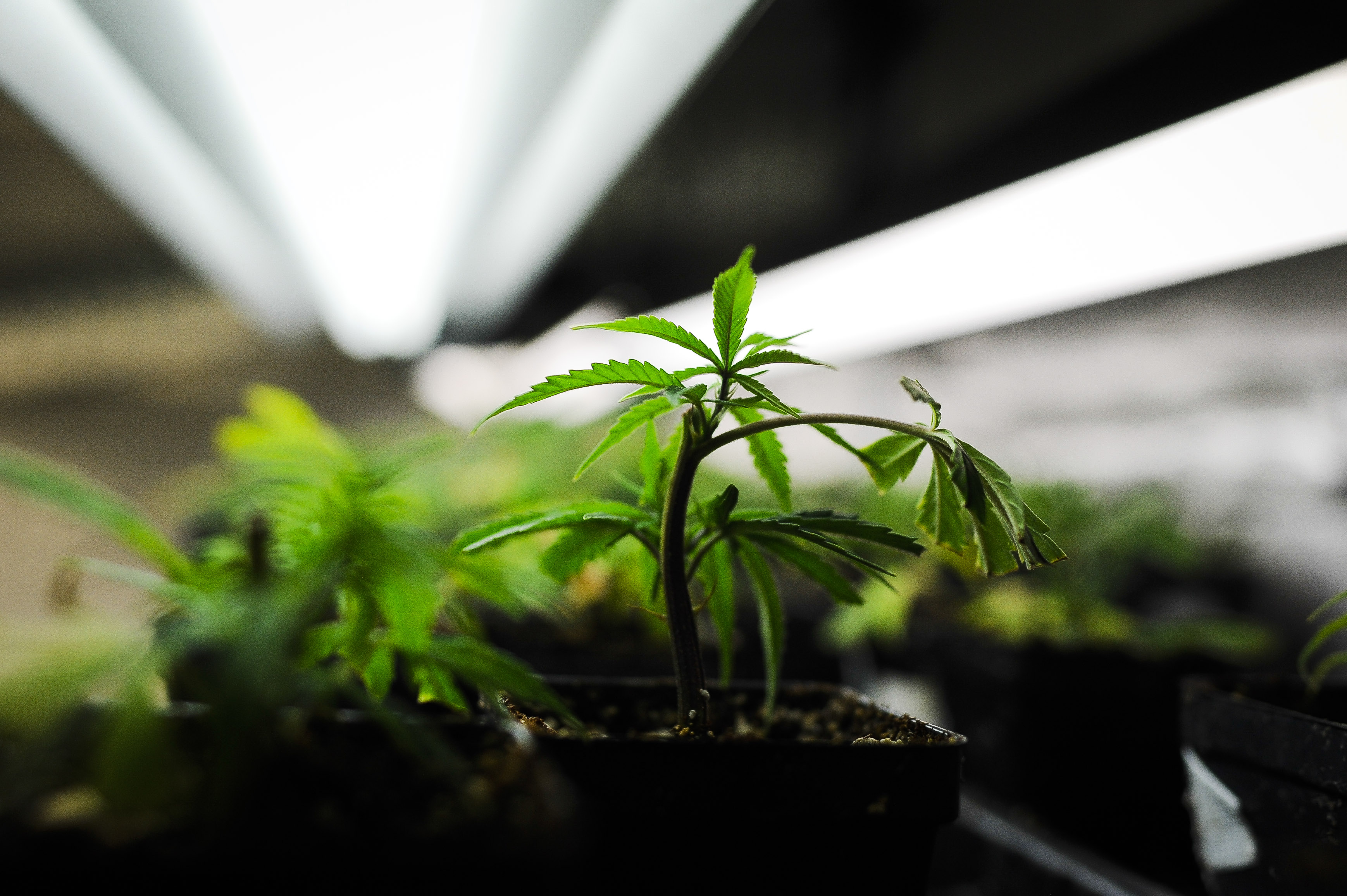
A marijuana plant grows under lamps in a room where the Stanley brothers work to clone Charlotte’s Web: a strain of cannabis with low THC levels and high CBD levels. The strain has been used to treat epilepsy.
Jesse Stanley holds a bottle of CBD oil.
Charlotte’s Web, a strain of cannabis with low THC levels and high CBD levels, grows in a greenhouse operated by the six Stanley brothers outside Divide, Colo. Thursday, September 5, 2013. The strain has been used to treat epilepsy. Michael Ciaglo, The Gazette
Joel Stanley explains the different parts of a marijuana plant at the farm he and his brothers run outside Divide, Colo. Thursday, September 5, 2013. Joel and his five brothers grow and distribute Charlotte’s Web, a strain of cannabis with low THC levels and high CBD levels. The strain has been used to treat epilepsy. Michael Ciaglo, The Gazette
Brothers Jesse and Joel Stanley stand in a field of Charlotte’s Web, a strain of cannabis with low THC levels and high CBD levels, that the brothers designed to have the benefits of medical marijuana with very low psychoactive effects.
Evan Stookey hand waters marijuana plants outside Divide, Colo. Thursday, September 5, 2013 where the six Stanley brothers grow and distribute Charlotte’s Web: a strain of cannabis with low THC levels and high CBD levels. The strain has been used to treat epilepsy. Michael Ciaglo, The Gazette
