






Colorado Springs Utilities incorporating new guidelines for clean heat into updated Sustainable Energy Plan
Reducing greenhouse gas emissions generated by natural gas-based devices and adding more energy-generating resources to its portfolio are the biggest changes Colorado Springs Utilities is working to incorporate into its Sustainable Energy Plan, officials said last week.
The Sustainable Energy Plan was first developed in 2020 to guide the utility’s efforts to reduce carbon emissions 80% by 2030 and 90% by 2050, as well as to retire all coal generation by 2030. Utilities officials are now working to incorporate additional guidelines into the energy plan to meet new Colorado laws for clean heat, said David Longrie, Utilities’ manager of energy resource planning and innovation.
Officials update the plan annually to incorporate new variables and industry changes, he said.
Its latest updates will also include new guidelines for how the utility will add more energy-generating resources like wind, solar power, natural gas and battery storage to its portfolio, he said.
In 2021, state legislators passed a law requiring gas distribution utilities with more than 90,000 customers to submit a Clean Heat Plan to the state’s Air Pollution and Control Division by Aug. 1. The plan must show how the utility proposes to work with its residential and business customers to reduce carbon emissions generated from natural-gas based appliances and heating equipment 4% below 2015 levels by 2025, with a 2% cost cap; and 22% below 2015 levels by 2030, with a 2.5% cost cap, Longrie said.
A cost cap means Colorado Springs Utilities isn’t mandated to spend more than 2%, and later 2.5%, of its gas revenue to achieve those targets, Longrie said. The cost cap protects ratepayers from high utilities costs to meet those goals, he said.
People largely use natural gas to heat their homes and businesses, but it’s also used for cooking and to heat water.
Utilities officials are still developing their Clean Heat Plan and will update the Colorado Springs Utilities Board of Directors, which is also the City Council, on its progress later this month, Longrie said.
To hit state targets, the utility encourages customers to use less natural gas by using more energy-efficient appliances, as well as “taking something we used to use natural gas for — like space heating, your furnace, for instance — and changing from a gas-fueled furnace to an electric-fueled furnace,” a process called beneficial electrification, Longrie said.
As customers move away from using natural gas, it lowers the amount used, therefore lowering carbon emissions, he said.
But as Utilities moves energy uses out of its natural gas system, that puts additional load on the electric system, which can affect the state’s clean energy plan law requiring electric generation utilities to reduce greenhouse gas emissions 80% by 2030 from 2005 levels.
“These two laws are very much in competition with each other, because they have an impact on each other,” Longrie said.
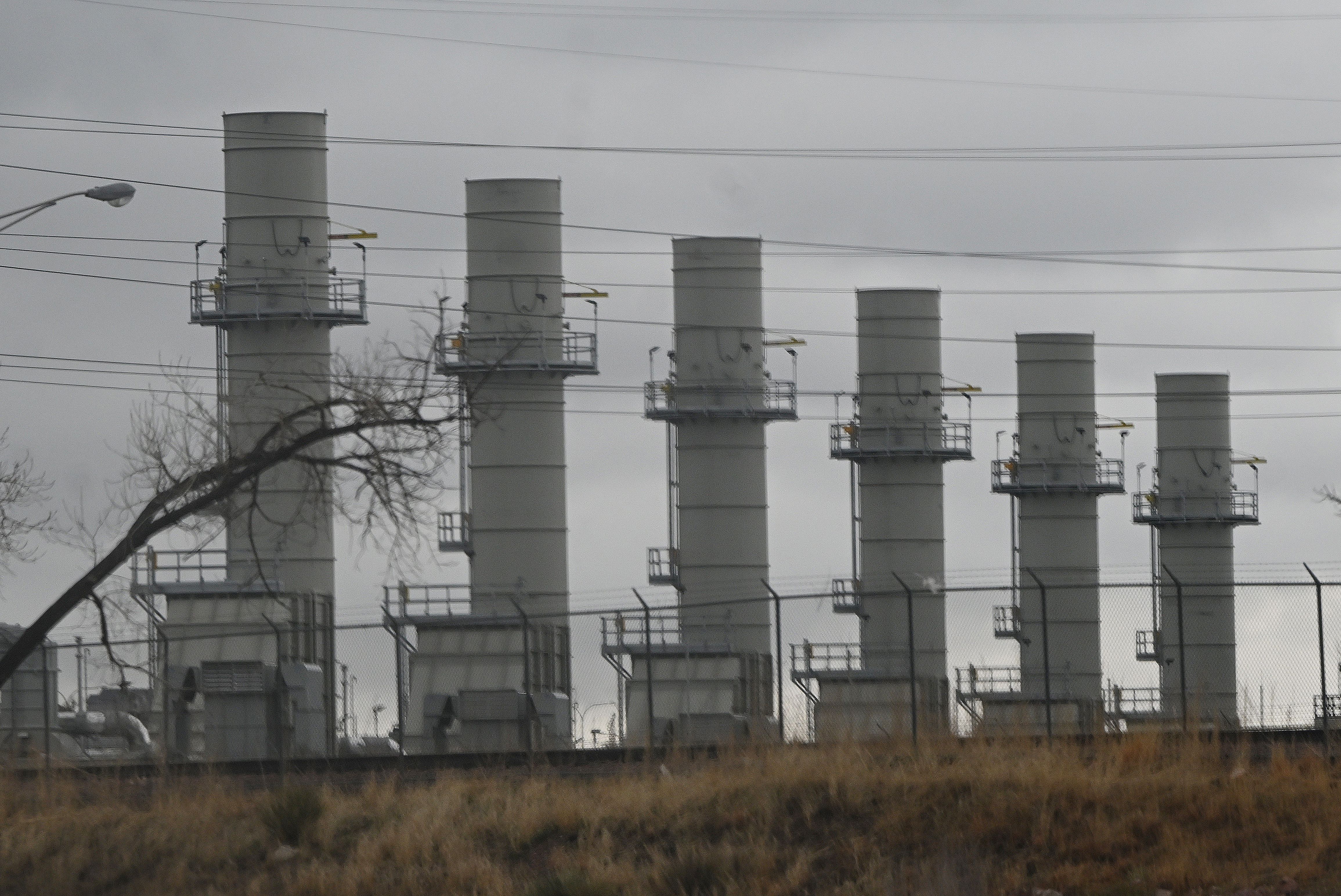
To meet clean energy laws, Colorado Springs Utilities last summer shut down power production at the nearly 100-year-old Martin Drake Power Plant downtown, one of the last remaining urban power plants in the country. Utilities ended coal-burning operations at Drake in August 2021, and last month officials completed installing six new modular, natural gas generating units on the site they say will ensure better energy reliability and resilience for customers.
The utility has also added renewable resources like solar and wind power to its portfolio and incorporated new technologies like battery storage into the electric grid.
For example, Utilities plans to bring the 175-megawatt Pike Solar project online by 2024. When it is built, it will be the largest solar facility on Utilities’ electric grid, officials previously said.
By 2025, Utilities also plans to add 100-200 megawatts of battery storage, the first of its kind on the system, to help increase the energy grid’s flexibility as new power resources are added to Utilities’ portfolio.
Some customers have wondered why they must reduce their consumption of natural gas resources while Utilities is putting natural gas units online, spokesman Steve Berry said.
“Since the utility is a generating utility, we can make the biggest difference on emissions by reducing our reliance on coal. For the consumer, at the end-user level, they can make the biggest difference on their homes and businesses by reducing their natural gas consumption,” he said.
The utility also offers residential and business rebates and incentives, like smart thermostats and HVAC rebates, to promote cost savings for customers and use of more energy- and water-efficient products, Longrie said.
Colorado Springs Utilities officials are incorporating a new plan to reduce greenhouse gas emissions generated by natural gas-based devices and adding more energy-generating resources to the utility’s portfolio as part of new updates officials are incorporating into the Sustainable Energy Plan. Pictured are six new natural gas generating units in place at the Martin Drake Plant downtown.
Employees work on installing new modular natural gas generators at Martin Drake Power Plant in June 2022. This April, the city completed the installation of all six new units.
