






LETTERS: Renaming Mt. Evans; danger posed by rail lines
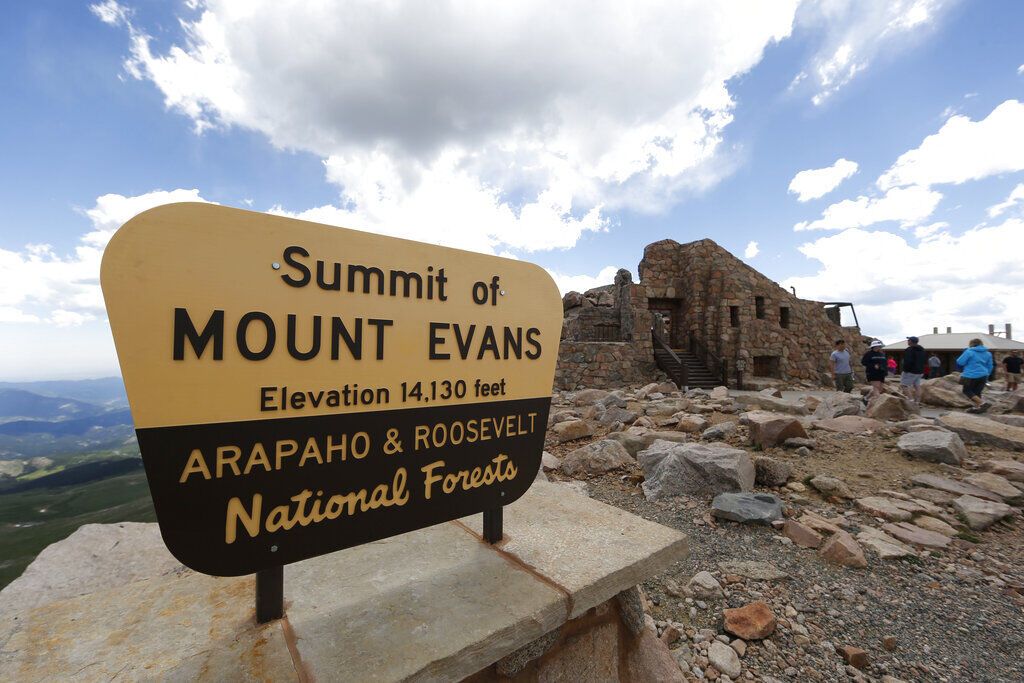
Renaming Mt. Evans
Re: “Colorado’s Mount Evans Name Change Hits Mysterious Snag in Final Hour,” March 9.
The Gazette has pointed out the abrupt cancellation of the vote by the U.S. Board on Geographic Names to change the name of Mount Evans.
From the beginning, the process to rename Mount Evans was flawed.
The Wilderness Society lobbied Congress to approve the name Blue Sky rather than following procedure with the BGN. This was against federal rules and unfair to the proponents of other proposals waiting to be heard — and apparently didn’t work anyway.
The Northern Cheyenne made clear at the state board meeting on Oct. 11, 2022 that they considered use of the term Blue Sky a sacrilege because it referenced a tribal ceremony that they did not want to share with the public as the name of the mountain overlooking Denver.
The Colorado Geographic Naming Advisory Board called a vote on the name at their Nov. 17, 2022 meeting anyway, in violation of the state’s sunshine laws. The agenda for the meeting did not include a vote. The Northern Cheyenne boycotted the meeting, once again making clear that they felt betrayed by the process.
In spite of these irregularities, which should not have been honored, Gov. Jared Polis approved changing the name of Mount Evans to Mount Blue Sky on March 3.
The federal naming board scheduled a vote a few days later, on March 9 which was scrapped after an emergency request from the Northern Cheyenne, who at last halted the process.
The reasons for changing the name of Mount Evans were just, but the process was political and ignored important considerations of tribal members.
Beverly Bennett
Aurora
Danger posed by rail lines
Two train derailments in Ohio have shown a spotlight on the danger posed by freight rail lines like those that run through Denver. In the most recent accident, a 212-car train derailed; 28 cars left the track.
Fortunately, the cars that left the track were not carrying hazardous materials.
The residents of East Palestine, Ohio, were not as fortunate. That accident spilled toxic chemicals leading to a controlled burn that released toxins into the air. Residents near the rail line were evacuated. While government officials have said they haven’t detected dangerous levels of chemicals in the air or municipal water, residents worry about the long-term health impacts. Their complaints of headaches, coughs and rashes have, as yet, not been tied directly to the accident. Residents also reported chickens, cats and dogs falling ill. The Kentucky Department of Natural Resources estimates 38,222 small fish or minnows were killed, and 5500 — 5550 other aquatic species.
In a bi-partisan action, the U.S. Senators from Ohio have introduced legislation to regulate rail carriers and hold railroad companies accountable. Senator Bennet has asked the U.S. Department of Agriculture to suspend a decision to allow 4.6 billion gallons of waxy crude oil to be shipped through Colorado from the Uinta Basin in Utah to the Gulf Coast. This would dramatically increase the amount of hazardous materials traveling through Denver.
Denver can’t wait for federal action to protect our environment and our citizens. The city has the power and responsibility to mitigate risks from hazardous materials incidents and derailments, as well as to be prepared to respond to incidents and use its power to regulate land use close to rail lines. Our fire department continually trains to respond to rail incidents. I assisted the department in securing a grant to acquire a rail tank car training apparatus that simulates flammable liquid incidents and several contaminant detectors to quickly identify chemicals. Now it is time to turn to regulating land use and development.
Blueprint Denver, the city’s primary planning document, calls for continued development along rail corridors.
Four of the five “regional centers” identified in Blueprint Denver for the highest intensity of development are located along railroad main lines. In the past, when fewer rail cars were traversing the city, we approved development of apartment buildings like Encore Evans Station (18 feet from the edge of the railroad right-of-way) and apartments in the Central Platte Valley that are 26 feet from the railroad right-of-way without appropriate mitigation of risks associated with release of hazardous materials or train derailments. It is time to provide city agencies the power and responsibility to review these developments for risk mitigation during the permitting process.
We also must assure that residents have clear evacuation routes and that emergency responders have access in the event residents are required to evacuate.
Debbie Ortega
Denver City Council
Underinsured jeopardized
I am a local family physician. I have been reading with interest your recent articles and guest opinions about HB 23-1215 regarding facility fees that “are billed to patients on top of copays”. I agree with the Colorado Consumer Health Initiative that we do need to protect consumers from health industry practices that jeopardize health.
Five years ago I had a pediatric patient who had signs, symptoms, and an event that required a medical work-up with an echo-cardiogram. The patient’s parents were both self-employed. Like the millions of other self-employed Americans, no one was giving them health insurance on a silver platter. They were uninsured. When I contacted Children’s Hospital to find out the self-pay price for a pediatric echo-cardiogram, something that I think should have cost around $700 or $1,000 at most, I was quoted the self-pay price of $5,000. I assume the extra $4,000 was facility fees. This price for a pediatric echo-cardiogram was incomprehensible to me and undoable for the family. Are the facility fees really paying the salaries of essential professional and non-professional staff or are they making up for an overabundance of administrators in healthcare and unnecessary complexity in healthcare billing?
The echo-cardiogram was not done. The medical signs and symptoms have recently evolved. Five years later, I still need that study to properly diagnose and treat my patient. The health of underinsured Coloradans has been jeopardized by the lack of transparency in facility fees.
Jamie Glover
Monument