






Manchin cites inflation concerns, roiling budget talks anew
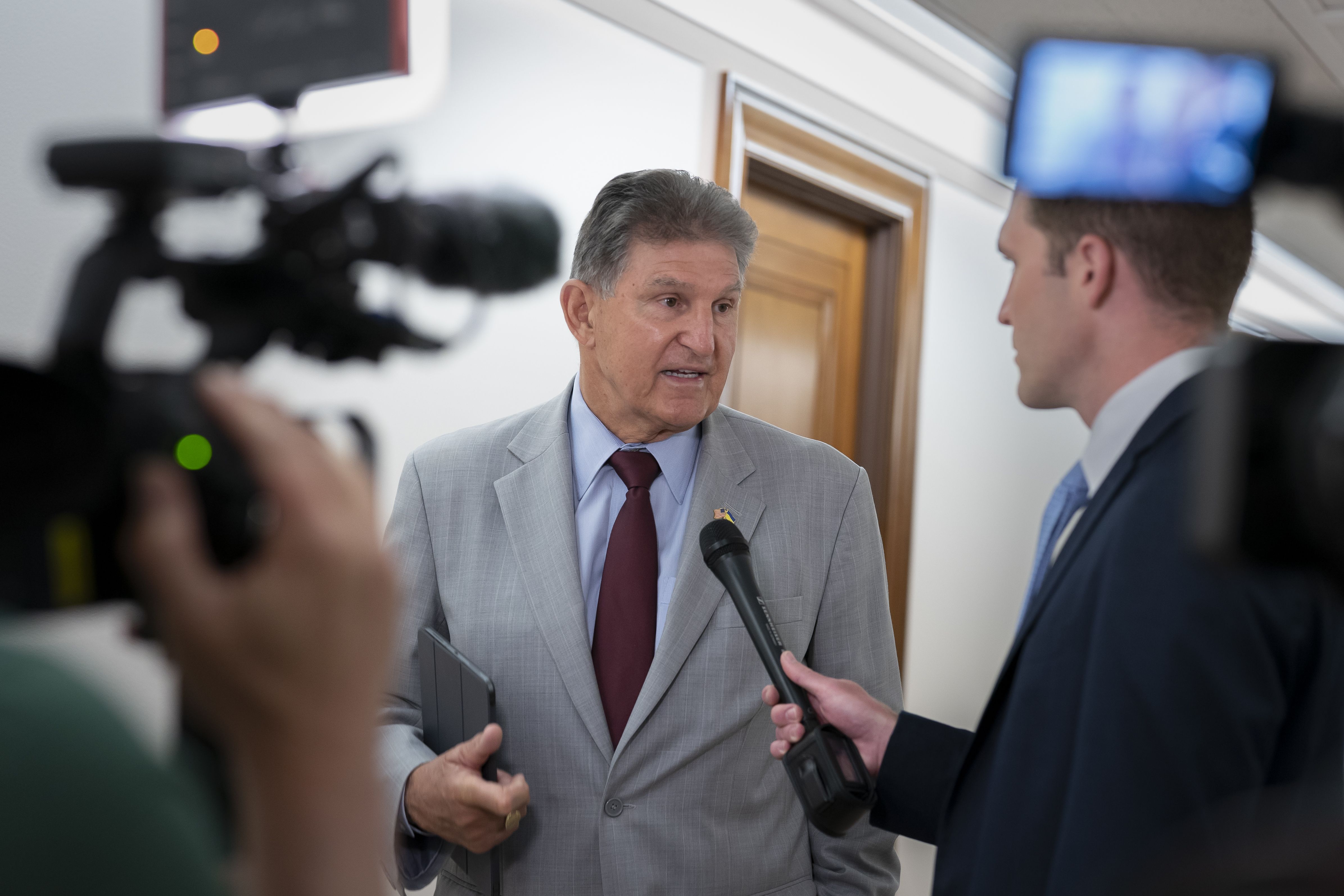
WASHINGTON • Sen. Joe Manchin roiled his budget talks with Democratic leaders anew Wednesday, saying the latest inflation surge makes him “more cautious than I’ve ever been” about agreeing to federal spending increases that could drive consumers’ costs even higher.
The West Virginia Democrat, who single-handedly killed Democrats’ roughly $2 trillion, 10-year social and environment bill before Christmas, has been bargaining with Senate Majority Leader Chuck Schumer over a new economic package that would be around half that size. But Manchin said grim new inflation figures meant the energy, tax and health compromise he’s been discussing with the New York Democrat must be reviewed.
“Everything needs to be scrubbed, anything that can be inflationary,” Manchin said. He said that while agreed-on provisions aimed at containing pharmaceutical prices should remain, “Is there anything more we can do? I don’t know. But I’m very, very cautious.”
It was unclear what impact Manchin’s comments would have on his closed-door talks with Schumer, which have shown progress lately. But they suggested he believed the day’s inflation report strengthened his leverage in that bargaining and, beyond that, in winning enough Democratic votes to push any agreement through the tightly divided Congress.
Unanimous opposition seems certain from Republicans, who say the emerging plan’s spending and tax increases would worsen inflation.
Shortly after the government reported early Wednesday that the consumer price index has grown by 9.1% this past year, Manchin released a statement citing “the pain families across the country are feeling.” It was the largest annual inflation increase in four decades.
“No matter what spending aspirations some in Congress may have, it is clear to anyone who visits a grocery store or a gas station that we cannot add any more fuel to this inflation fire,” Manchin said.
Other Democrats contest Manchin’s assertion that the measure under discussion would make inflation worse. They say it would contain costs like drug prices and use half its roughly $1 trillion price tag to reduce government debt.
Experts cite many factors for this year’s relentless inflation increase including the trillions Washington has spent on pandemic relief, record gasoline prices and cheap borrowing from interest rates that were low until recently. Other reasons include the tight job market, global supply chain problems and disruptions to world energy and food markets from Russia’s invasion of Ukraine.
Asked if Manchin’s latest comments were discouraging, No. 2 Senate Democratic leader Richard Durbin of Illinois said, “I’m used to it.” Durbin has been openly skeptical that the effort can be revived following Manchin’s move last year to scuttle the earlier package, which was a top priority for President Joe Biden.
Even so, some Democrats have shown cautious optimism a deal with Manchin is attainable this time, if for no other reason than a reluctant acknowledgement that a more modest, imperfect election-year accomplishment would be better than none.
Asked if she was concerned that Manchin’s remarks put a revived package in jeopardy, Sen. Elizabeth Warren, D-Mass., said, “We need 50 votes.”
Democrats face other stumbling blocks as well.
A handful of moderate Democrats in the House — where leaders can lose no more than four votes — want any agreement to boost federal deductions allowed for state and local taxes. Manchin said he and Schumer have not discussed that proposal.
It remains unclear if Schumer and Manchin will be able to clinch a deal and enact it, especially before Congress begins its summer recess next month. That timetable is a goal for party leaders because if they don’t do that, they will only have until Sept. 30 before special procedures expire that would let Democrats push it through the 50-50 Senate without any GOP votes.
The Schumer-Manchin talks have focused on provisions that could include protections for the fossil fuel industry and incentives for clean energy, higher taxes on top earning individuals and companies, prescription drug price curbs and a buttressing of Medicare’s finances, according to people following the talks. About half the $1 trillion would go for deficit reduction, a Manchin demand.
Sen. Joe Manchin, D-W.Va., speaks last month at the Capitol in Washington. Manchin is roiling budget talks with Democratic leaders anew. The West Virginia Democrat says the latest inflation surge makes him more cautious about agreeing to federal spending increases that could drive consumers’ costs even higher.