






Year-round gardening: Planning for fall-blooming plants in the spring
Many perennial plants provide a gorgeous show of blooms in the spring and summer, but by fall, most blooms have faded, and the garden may look tired. By planning ahead and adding fall-blooming plants in spring, you can extend your garden’s beauty into autumn.
Why is it a good idea to plant fall-blooming plants in the spring? Since most plants need a minimum of four to six weeks for their roots to establish before the ground freezes, planting fall bloomers in the spring provides plenty of time for the plants to establish and grow prior to our sometimes erratic fall weather. Many mail-order nurseries will only ship fall-blooming plants in the spring.
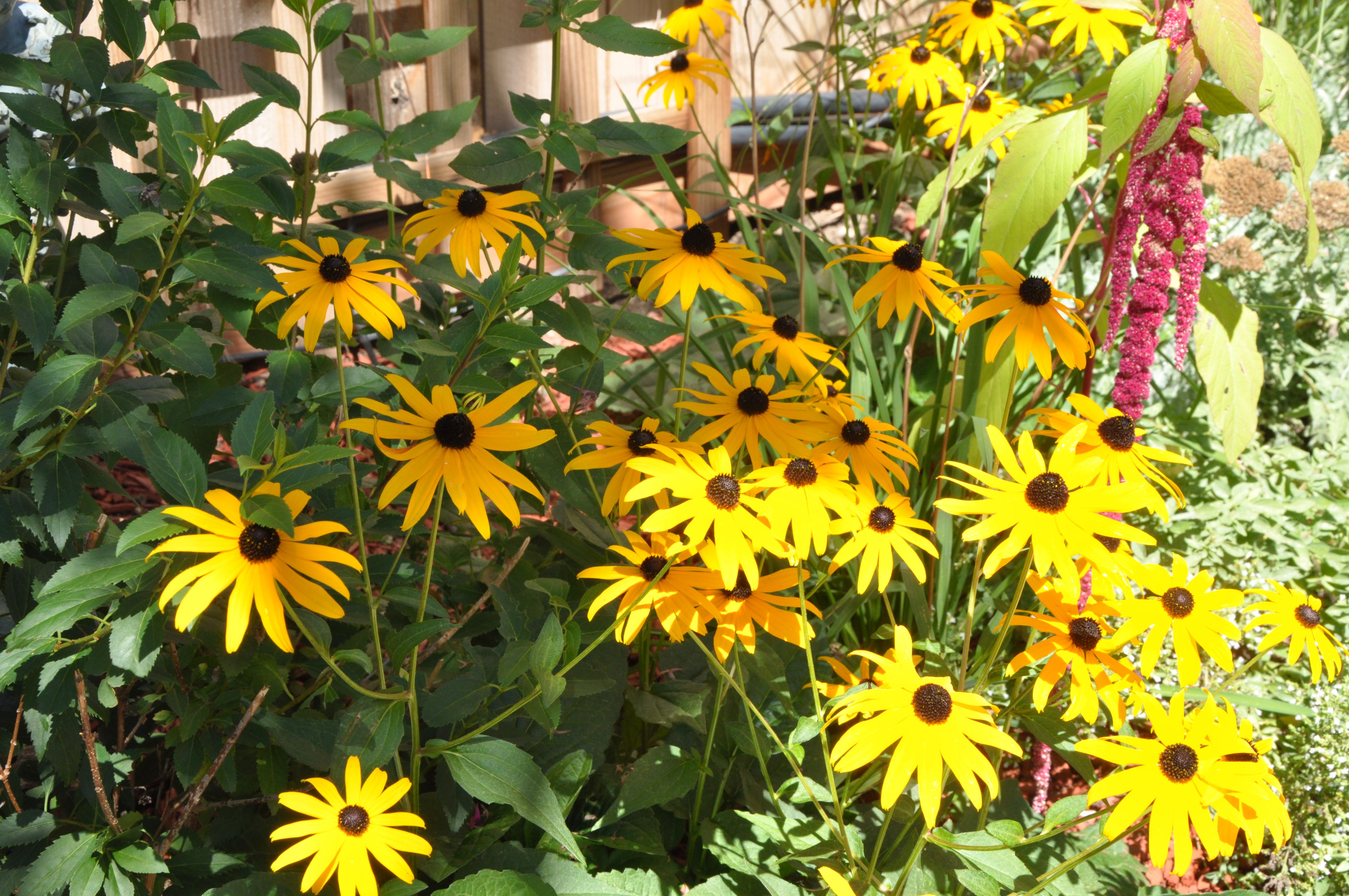
Chrysanthemums and asters are popular fall-blooming perennials, but there are many other beautiful perennials that provide late season color in our region. Some start blooming in late summer and continue blooming until the first frost (such as hyssop, black-eyed Susan, Mexican hat and goldenrod).
Others start blooming in the fall, such as Maximilian sunflower, dotted blazing star and plumbago.
Don’t limit your fall color choices to just perennials! Some shrubs provide beautiful fall color of purplish-red (some viburnums, some dogwoods), red (burning bush, sumac), orange (serviceberry, cotoneaster), and yellow (Nanking cherry, ash-leaf spirea).
Ornamental grasses are also a great choice for providing fall color and seasonal interest. Many grasses actually glow in the autumn sun! Most grasses require full sun, and in fact, need three to five hours of direct sun each day to develop their best fall color. Early planting of ornamental grasses ensures the plants will have adequate time to establish before the first frost. Some varieties that perform well in our region are big bluestem with its orange fall color, blaze little bluestem with its orange-red fall color, and our native switchgrass.
Fall-blooming plants also provide food for pollinators at a time when food is not as readily available. Adding late-blooming plants in the landscape can help pollinators to survive the winter or migration to warmer climates.
By planning now for your fall garden, you will be able to enjoy another season of color and interest in your landscape.
Perennials
Aster (Aster spp.)
Autumn Joy Stonecrop (Sedum ‘Autumn Joy’)
Black-Eyed Susan (Rudbeckia hirta)
Chrysanthemum (Chrysanthemum spp.)
Dotted Blazing Star (Liatris punctata)
Goldenrod (Solidago spp.)
Hyssop (Agastache spp.)
Maximilian Sunflower (Helianthus maximiliana)
Mexican Hat (Ratibida columnifera)
Plumbago (Ceratostigma plumbaginoides)
Prairie Zinnia (Zinnia grandiflora)
Shrubs
Ash-leaf Spirea (Sorbaria sorbifolia)
Burning Bush (Euonymus alatus)
Rabbitbrush (Chrysothamnus nauseosus)
Three-leaf Sumac (Rhus aromatica var. trilobata)
Ornamental grasses
Big Bluestem Grass (Andropogon gerardii)
Blaze Little Bluestem Grass (Schizachyrium scoparium ‘Blaze’)
Switch Grass (Panicum virgatum)
Rudbeckia blooming in late August. Photo by Fredricka Bogardus, Colorado Master Gardener
Rudbeckia blooming in late August.
