






Number of Ukraine refugees passes worst-case U.N. estimate
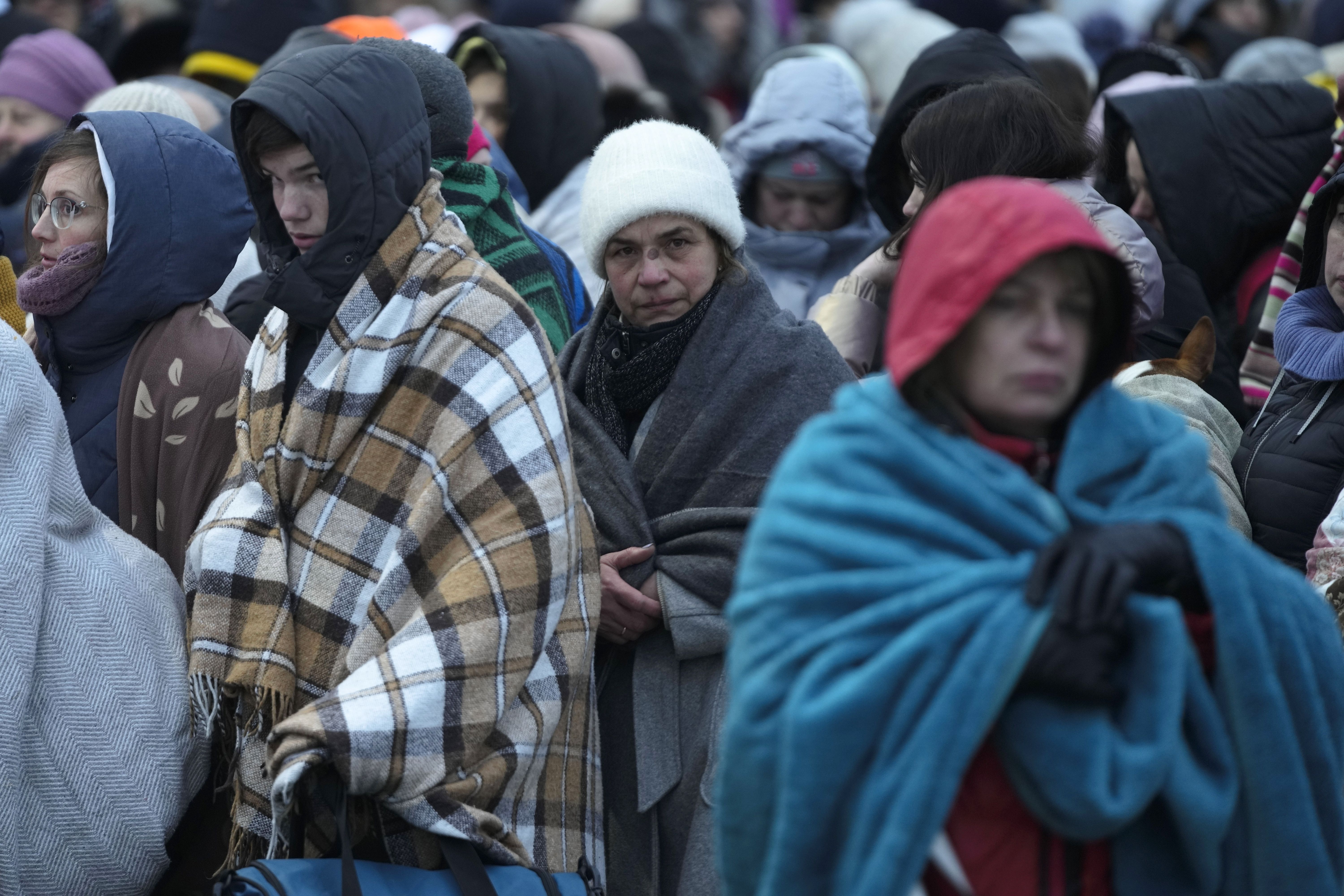
MEDYKA, Poland • The number of people who have fled Ukraine since Russian troops invaded has surpassed 4 million, the United Nations reported Wednesday as shelling continued in places where Moscow had vowed to ease its military operations.
“I do not know if we can still believe the Russians,” refugee Nikolay Nazarov, 23, said as he crossed Ukraine’s border into Poland with his wheelchair-bound father.
Despite Russia’s announcement during talks on Tuesday that its forces would ease their assault near Ukraine’s capital, Kyiv, and elsewhere, Nazarov said he expects “more escalation” in the country’s east, including the city he and his father fled.
“That is why we cannot go back to Kharkiv,” he said.
“We are afraid of a new phase of war in eastern Ukraine.”
Nazarov, like other refugees interviewed by The Associated Press, echoed the opinion of Ukrainian President Volodymyr Zelensky.
In his nightly video address, Zelensky said that given what was happening on the ground, there was no reason to believe Russia’s statement about reducing military activity near Kyiv and in Chernihiv, a besieged northern city.
“We can call those signals that we hear at the negotiations positive,” Zelensky said in his address to the Ukrainian people.
“But those signals don’t silence the explosions of Russian shells.”
For Diana Konstantynova, a 45-year-old accountant from Vinnytsia in south Ukraine, Russia’s promise to scale back its attacks is not a signal she can safely return home.
“I do not believe in a truce,” said Konstantynova, who fled to Romania with her 8-year-old son a month ago. She says they will only return when “bombs stop exploding in my city” and “when Russian troops completely leave our territory.”
Elena Litvinova, a 33-year-old accountant from Mykolaiv, is also skeptical of Russia’s promises and will only head home with her two young children when “our president says that the war is over.”
“During the negotiations, the city administration and children’s educational institutions where my children studied were destroyed,” she said at a refugee center in Romania’s central city of Brasov, where she says they will stay until the war is over. “It’s still very scary, every day we get messages from home that there is shooting and bombing.”
Olha Kovalyova, who arrived in Poland with her two children, said she didn’t trust Moscow because it had failed to fulfill earlier promises made in the framework of 2014 and 2015 agreements aimed at ending fighting between Russia-backed separatists and Ukrainian forces in the eastern Donbas region.
“The Minsk agreement is not working, so how can we call it peace talks if they are shooting and bombing our cites during and after the talks?” Kovalyova said. “There is no trust in Russia, but also I hope for peace and calm, but unfortunately this is the situation.”
The U.N. refugee agency, UNHCR, said Wednesday that more than 4 million people have left Ukraine since Russia launched its invasion on Feb. 24 and sparked Europe’s largest refugee crisis since World War II.
That number exceeds the worst-case predictions made at the start of the war.
Half of the refugees from Ukraine are children, according to UNHCR and the U.N. children’s agency UNICEF.
“I think it’s a tragic milestone,” Alex Mundt, the UNHCR senior emergency coordinator in Poland, said. “It means that in less than a month or in just about a month, 4 million people have been uprooted from their homes, from their families, their communities, in what is the fastest exodus of refugees moving in recent history.”
Refugees, mostly women and children, wait in a crowd for transportation after fleeing from the Ukraine and arriving at the border crossing in Medyka, Poland, in early March. The U.N. refugee agency says more than 4 million refugees have fled Ukraine after Russia’s invasion.
