






Jurors in Potter trial ask about not reaching verdict
MINNEAPOLIS • Jurors weighing the case of the suburban Minneapolis police officer who shot and killed Black motorist Daunte Wright asked the judge after a full day of deliberations Tuesday what they should do if they can’t reach a verdict.
Judge Regina Chu told them to continue working, as was explained in the initial instructions she gave them. The jury also deliberated for about five hours on Monday.
Former Brooklyn Center officer Kim Potter, who is white, is charged with first- and second-degree manslaughter. If convicted of the most serious charge, Potter, 49, would face a sentence of about seven years under state guidelines, though prosecutors have said they will seek more.
Potter said she meant to use her Taser on Wright rather than her gun. Prosecutors presented evidence on the differences between the gun and the Taser, including weight, feel, size, color, and that the gun was holstered on her right side and the Taser on her left.
The jurors asked if they could remove zip ties keeping former Potter’s gun in an evidence box so they could hold it, and the judge said they could. Potter attorney Paul Engh objected, saying that the gun should remain in the box “for safety purposes.” The judge overruled him.
Jurors can also examine the Taser during their deliberations.
Chu read the jury’s question about deliberating: “If the jury cannot reach consensus, what is the guidance around how long and what steps should be taken?”
She then reread jurors their instructions, which included an instruction to continue to “discuss the case with one another and deliberate with a view toward reaching agreement if you can do so without violating your individual judgment.”
Potter’s attorneys objected to the judge rereading the jury instruction and to allowing jurors to hold the gun. They argued that rereading the jury instruction inappropriately emphasized that paragraph over the rest of the instructions. Chu overruled both objections. The judge has ordered that the jury be sequestered during deliberations — meaning they remain under the court’s supervision in an undisclosed hotel and cannot return to their homes until they have reached a verdict or the judge has determined they can’t reach one. Her order allows them to communicate with family members as long as they avoid discussing the trial.
During closing arguments, prosecutors accused Potter of a “blunder of epic proportions” in Wright’s death in an April 11 traffic stop — but said a mistake was no defense.
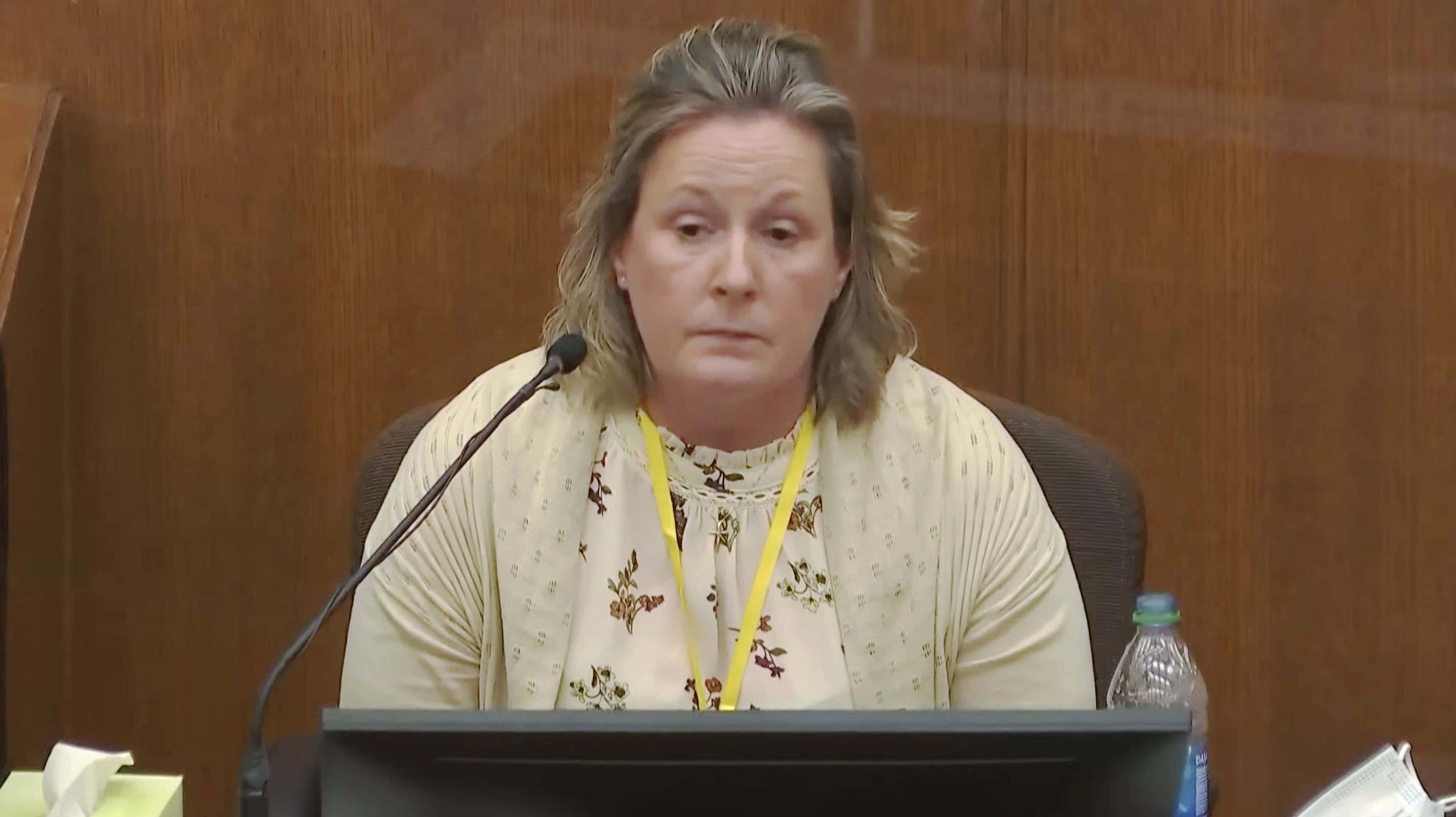
Former Brooklyn Center Police Officer Kim Potter takes questions Friday from the prosecution as she testifies in court at the Hennepin County Courthouse in Minneapolis.