






PERSPECTIVE: The city needs money for wildfire protection and parks
Building and maintaining adequate public infrastructure is an essential function of government. That’s particularly true on the local level. When I was elected Mayor of Colorado Springs in 2015, the city had three very serious infrastructure problems for which there was no adequate revenue stream to remedy. City engineers and planners estimated the total infrastructure deficit to be about $1.5 billion.
The first glaring infrastructure problem, and the most readily apparent to city residents, was our roads. They were terrible. Sixty percent of our roads were in poor condition. In the early 1990s, the voters had been persuaded to eliminate a half percent infrastructure sales tax. That cost the city a billion dollars in revenue over the next two decades and set the condition of our roads and bridges on a downward trend. By 2015 we were only repairing about one percent of our roads per year.
Our second very serious infrastructure problem was our stormwater system. In 2009 the voters and City Council had been persuaded to eliminate stormwater fees. Colorado Springs became the only major city in America without a dedicated stormwater fee. This led to a precipitous decline in stormwater construction, repair and maintenance. By 2015 we were in violation of our legal obligations regarding stormwater and were facing lawsuits by the EPA, State of Colorado and downstream communities, including Pueblo. We were in danger of not being able to turn on the Southern Delivery System when it was supposed to go on line in April of 2016.
Our third major public infrastructure issue pertained to our parks. While land acquisition through the TOPS program, created in 1997, and developer land contributions ensured we acquired significant land for parks and open space, our general fund revenue was inadequate to develop new parks and properly maintain the parks, trails and open space we already have. To this day our general fund allocated for parks, which must compete against priorities such as public safety, is less than it was before the great recession.
In 2015 the City Council and I set about to tackle these public infrastructure issues and, thanks to the help of Colorado Springs voters, we’ve made dramatic progress. Through successful ballot issues in 2015 and 2019 we’ve been able to pave and improve 1,300 miles of city roads. While there’s still work to be done, Colorado Springs now has a sufficient revenue stream to keep pace with our growing road system.
In 2017 the voters reinstated our stormwater fee. That has produced revenue to resolve all our legal issues and we are now well on our way to having the best stormwater system in the state of Colorado.
Here’s the best news. We were able to fix these serious infrastructure problems while still ensuring Colorado Springs residents had among the lowest per capita municipal tax burdens in the country. With a 2020 population of 480,000 people and a 2021 budget of $350 million, Colorado Springs has a per capita tax burden of $730. The average annual municipal per capita tax burden for the 100 largest cities in the U.S. is over $2,600.
But we still have one major infrastructure problem to solve. Our park infrastructure is overburdened and we are not developing new parks at a pace sufficient for city growth. Nor are we properly maintaining the parks, trails and open space we already have. Our parklands and open space, and our entire city for that matter, also face dangers from wildland fires. That’s why I believe the passage of Issues 2C and 2D on the November ballot are critical to our city’s future.
Issue 2C – Renewal of TOPS
Our parks have always been an essential part of our quality of life in Colorado Springs. It’s part of the legacy of our city’s founder, William J. Palmer, who donated a great deal of land to help establish our parks system. It’s our parks that draw so many residents and tourists to our city.
It’s been 24 years since voters approved the Trails, Open Space and Parks program (TOPS). That program has allowed the city to acquire 7,200 acres of open space, build or renovate 66 parks and construct 50 miles of trails. However, over the ensuing two dozen years, the number of people using our parks, trails and open space system has grown exponentially. And the state demographer
estimates that in 30 years Colorado Springs will likely be the largest city in Colorado. We need to create a sustainable parks, open space and trails system that can grow with the city and be properly maintained. That’s what Issue 2C will do and that’s why the City Council unanimously referred it to the ballot.
Issue 2C will extend the TOPS program for 20 years. It will raise the sales tax from 0.1% (one cent on every $10 purchase) to 0.2% (two cents on every $10 purchase). That will raise an estimated additional $11 million per year, or a total of $22 million per year for acquisition, development and maintenance of open space, trails and parks. We’ll continue to acquire key open space properties like Corral Bluffs/Jimmy Camp Creek, Kettle Creek, and Mountain Shadows and to develop master plans and implement them in areas such as Blodgett Open Space, Austin Bluffs Open Space and Ute Valley Park. We’ll continue to acquire property and trail easements and implement master planned trails such as Black Squirrel, Chamberlain, Cottonwood Creek, Foothills, Pikes Peak Greenway, Homestead, La Foret, Palmer Mesa, Legacy Loop, Rock Island, Sand Creek, Sinton and Woodmen Road. We’ll replace old asphalt trails with concrete at Palmer Mesa Trail, Pikes Peak Greenway, Homestead, Sand Creek and Sinton trail. We’ll finally be able to develop backlogged promised parks throughout the city, including Greyhawk, Coleman, Skyway, Skyview and Bradley Ranch Park. We’ll be able to finally construct a much-needed sports complex in the northeast area of the city. We’ll complete the build out of master planned properties such as Acacia Park, Antlers Park, Alamo Square, Garden of the Gods and Palmer Park. And we’ll build AND MAINTAIN play spaces, spray grounds, walking trails, water conserving irrigation and restrooms throughout our park system. In short, over the next 20 years we’ll make huge progress in addressing the current $270 million backlog in parks development and maintenance.
And the cost to the average household will be $14 per year, or about $5.50 per person. That’s the lowest tax of its kind in Colorado or among the top 50 cities in the U.S. Non-city residents will pay about one-third of the cost. Issue 2C will have strong accountability. All expenditures are based on recommendations from a citizen advisory committee. Funds are subject to independent audit and administrative expenses are strictly capped at 5%.
The last 18 months have shown us how important our parks and outdoor recreation are to our mental and physical health. Increased urbanization will only increase the need for recreation spaces.
Just as building and maintaining transportation infrastructure and stormwater infrastructure are essential government functions, the acquisition, development and maintenance of parks, trails and open space have come to be regarded by our citizens as essential to their health and welfare. Let’s be good ancestors to future generations of Colorado Springs residents. Let’s support Issue 2C.
Issue 2D – Creation of a Permanent Wildfire Mitigation Fund
As a small boy growing up in Colorado Springs, I remember my father telling me about a wildland fire in January of 1950 that burned much of Ft. Carson, much of the east and north slope of Cheyenne Mountain and threatened the Broadmoor. Eleven volunteer firefighters were killed. Current residents are familiar with the damage wrought by the recent Waldo Canyon and Black Forest fires. Wildland fires have been part of the history of Colorado Springs and the Pikes Peak region and they will be a part of our future. It’s not a question of IF the city will experience future wildfire, but a question of when and where.
State and local governments are focusing more on wildland fire prevention and mitigation to reduce the threat to people and property. Some communities in Colorado are considering forming taxing districts to raise funds for fire mitigation and prevention. But the City Council and I believe we have a better solution. Because of the increased sales tax revenue in Colorado Springs, the city will take in revenue of about $30 million in excess of its Taxpayer Bill of Rights (TABOR) cap. That money will be refunded to citizens on their utility bills unless citizens allow the city to retain a portion of it.
Under Issue 2D, the city would be allowed to retain $20 million of the 2021 TABOR excess for the exclusive purpose of creating a permanent citywide Wildfire Mitigation and Prevention Fund to be administered by the Colorado Springs Fire Department, with the assistance of a citizen advisory committee appointed by the Mayor. The Fund will draw interest and as much as 5% of the balance can be expended each year on wildfire mitigation and prevention efforts. Any excess revenue over the $20 million, now estimated to be approximately $10 million, will be refunded to city residents through a credit on their utility bills.
In the past the fire department has relied primarily on grants for wildfire mitigation efforts. But grand funding is sporadic and inadequate to fully fund needed mitigation efforts. A permanent Wildfire Mitigation and Prevention fund will allow the fire department to spend three to four times more per year than it is at present. This investment will double the size of neighborhood chipping programs and increase the capacity of fire mitigation programs from 2,000 to up to 7,000 acres annually. This will dramatically improve safety for all our neighborhoods. And it will be done without imposing any new tax or increasing an existing one.
We know from experience that fire mitigation works. We saw that in the Bear Creek fire in November of 2019. Because the area of the fire had been mitigated, the CSFD was able to extinguish it before it destroyed any homes or endangered any people. Properly mitigated neighborhoods may also benefit from lower insurance costs.
Under Issue 2D, the fire prevention and mitigation work can be done in all areas of Colorado Springs, including both wooded areas and grasslands. It can even be done outside the city boundaries, if it would serve to protect city residents and their property. For example, mitigation work could be done in the national forest along city boundaries with the cooperation of the U.S. Forest Service.
A permanent citywide Wildlife Mitigation and Prevention Fund is a creative and highly effective way to address a continuing threat to the health, safety and welfare of our city’s residents. Supporting Issue 2D is a great investment in the future of our community.
Colorado Springs is in a period of unprecedented prosperity, and some people may say the city does not need the revenue Issues 2C and 2D would provide. But citizens must remember that city revenues can only grow by the TABOR allowed level, which usually average about 3-4% per year, which barely allows the city to deal with inflation. Any amounts over that can only be retained with voter permission. And because any funds the voters allow the city to retain are one time and not ongoing revenues, they can only be spent on one time expenditures and not for ongoing expenses such as operation and maintenance of parks, police or fire salaries, etc. The Wildland Fire Mitigation and Prevention Fund is a great example of such a one time expenditure. The city has made good use of funds the
voters have allowed us to retain for one time capital expenditures. But in the case of the ongoing sustainability of our parks, trails and open space we need an adequate ongoing stream of revenue that Issue 2C would provide. That’s what is necessary to continue General Palmer’s legacy for future generations.
If the citizens approve Issue 2C, in six and a half years we will have overcome all of our critical public infrastructure funding issues. For four consecutive years a broad survey of Americans by US News and World Report has ranked Colorado Springs the most desirable city in America to live. In passing Issues 2C and 2D, our city will have committed itself to remaining so. And we will have done so while still ensuring our citizens have a per capita municipal tax burden that is less than one third that of the average for major cities in America.
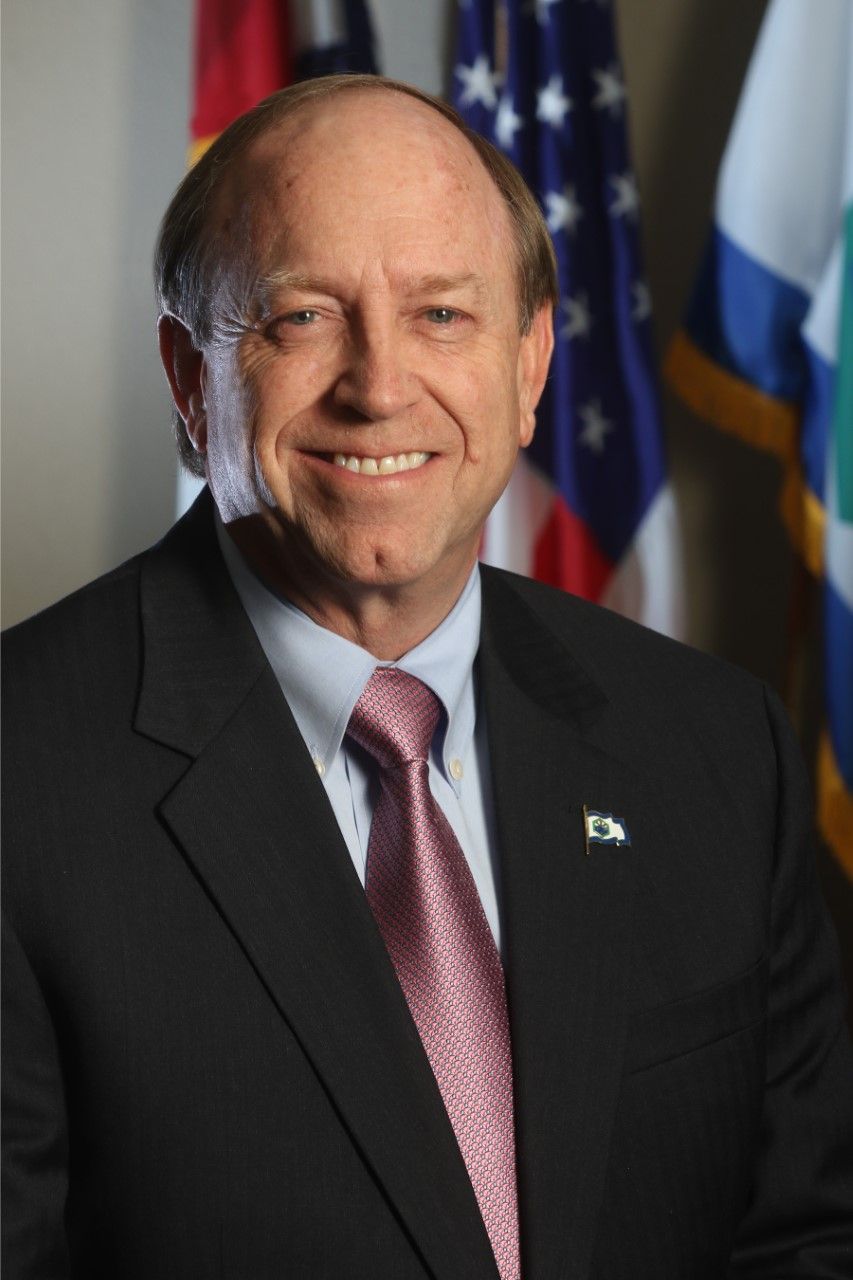
John Suthers is the mayor of Colorado Springs, and Colorado’s former attorney general, U.S. attorney, director of corrections, and district attorney
John Suthers