






Colorado Springs weighs more funding for crisis response following law enforcement commission’s recommendation
The city of Colorado Springs will weigh more funding for teams that respond to people in mental health crisis, following a recommendation from its newly formed law enforcement advisory committee.
The Law Enforcement Transparency and Accountability Commission was formed last year following summer protests that called for police reform after the death of George Floyd in Minneapolis at the hands of a police officer. The group’s recently released first recommendation, based on months of meetings and community input, asks the city to expand its use of crisis response teams.
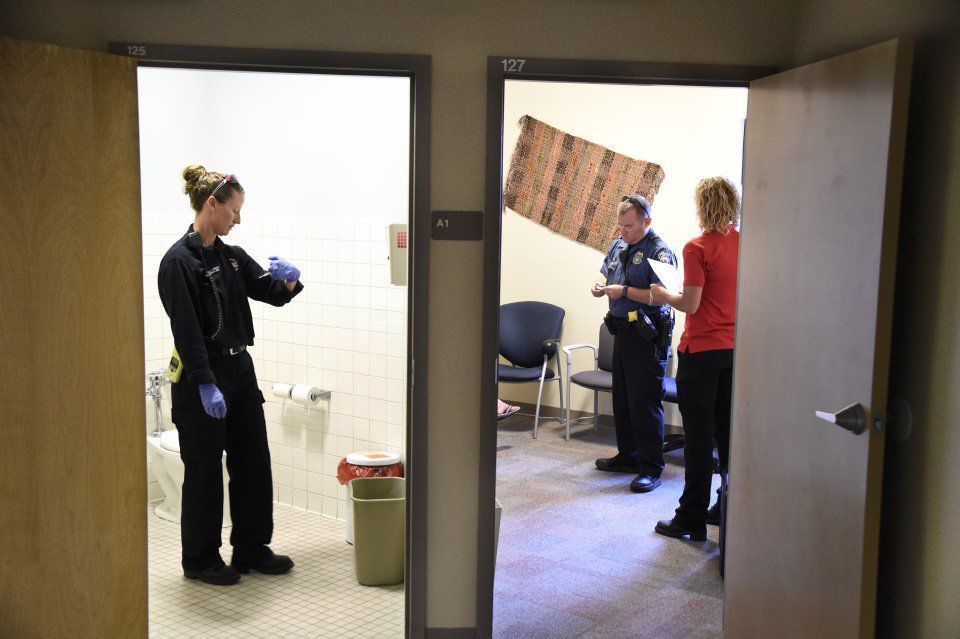
The city has four of these teams that responded to about 3,700 calls last year. The calls involved someone in crisis and needing mental or behavioral health help. The teams include a police officer trained in crisis intervention, an emergency responder with medical training and a licensed mental health care specialist, according to the commission’s report.
“The commission has heard stories that have praised the work of the city’s current crisis response teams,” the report stated, adding that some assert that when teams are not available, call outcomes are “less than optimal.”
The teams can help keep people in crisis out of the emergency room and jail, the document said. They can also reduce use-of-force instances, and enhance safety for responders and the public, among other benefits, it stated.
The recommendation was intentionally broad, in part because the group didn’t feel it had enough budgetary or operational information to provide a more specific recommendation. The group also trusts that Colorado Springs fire, police and Diversus Health, the group that employs the mental health specialists, will know how best to expand crisis services, said Steve Kern, vice chairman of the commission.
“I think commissioners feel a great deal of confidence in the current model,” he said.
The Colorado Springs City Council praised the commissioners for their work and recommendation Monday and asked the mayor’s office to consider funding the request.
Councilwoman Yolanda Avila, an early critic of the commission’s limited power to just make recommendations, was among those to praise the group’s work.
“I would encourage you not to tip toe and not to be afraid,” she said.
Chief of Staff Jeff Greene said the mayor’s administration would work on the request.
“I want to strongly emphasize that the administration is very supportive of this request and we will be incorporating this request into our budget prioritization,” he said.
The police and fire departments currently receive $1.2 million for the teams, with 60% of the money coming from the city’s general sales tax collections and 40% from grants. Diversus Health pays the mental health providers, according to the commission’s report.
Colorado Springs police and fire departments still need to meet to identify what is needed next year to provide increased mental health and behavioral health support, said Lt. James Sokolik, a police department spokesman. He did not know if the departments would ask for an additional team.
