






Keep City Council in charge of neighborhood zoning | Cronin & Loevy
Christian Murdock, The Gazette
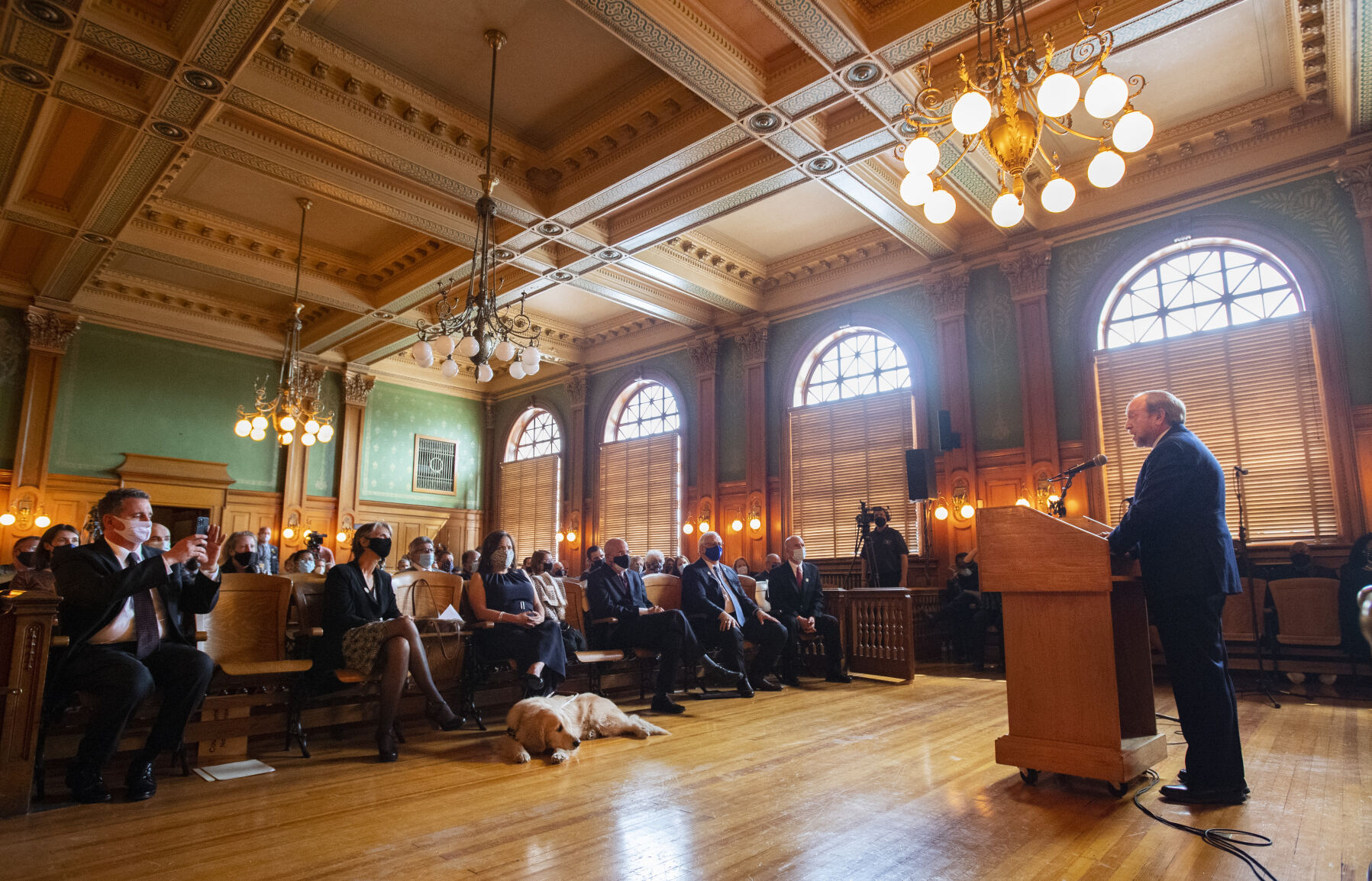
One of the charms of life and civic traditions in Colorado Springs has been that ordinary citizens can go down to City Hall and speak to City Council, in session, on issues that concern them, especially land use and zoning issues.
Citizens can make their arguments to protect their homes and neighborhoods from damaging rezoning in person, just before City Council votes on the land use or zoning issue.
It is established procedure that the city council member chairing the meeting will ask for public testimony from “those who support the measure” and then “those who oppose the measure.” Over the years people from all walks of life in our community have been able to directly tell their elected representatives their needs and wishes concerning rezoning and zone variances.
Legislative redistricting is reasonable with few changes needed | Cronin & Loevy
There are no qualifications required when it comes to addressing City Council in Colorado Springs. You do not have to be the president of a bank, or the leader of a local labor union, or the head of a major interest group. The process here is impressively inclusive. Any person willing to sit and wait in the council chamber until their item comes up on the agenda can take their turn at the lectern and testify as to the facts and their feelings on a new zoning law, a new subdivision being built, or a zoning variance.
This tradition of citizens speaking at city council meetings comes to us from the New England town meeting, the ultimate form of direct democracy in which every resident of the town could not only speak on issues but also vote on them.
Typical of Western and Midwestern cities, Colorado Springs kept the citizen speaking part but left the voting exclusively to city council members.
It is discouraging to learn that RetoolCOS, a major rewriting of the zoning code in Colorado Springs by an out-of-town consultant, calls for all land use and zoning issues to be decided by the city planning commission rather than City Council. In essence, zoning issues that currently are decided by citizen-elected city council members will be decided by a nine-member commission appointed by City Council.
Colorado Springs considers changing land-use, planning appeals process to cut out city council
Don Elliott, a spokesperson for Clarion, the planning consultants, said cutting the City Council out of planning and zoning decisions was what is done in big cities.
The Colorado Springs Planning Commission currently exists, but right now all of its land use and zoning decisions can be appealed to City Council. When many citizens turn out and tell City Council they do not want a particular zone change or zoning variance, the City Council will often reverse the Planning Commission and deny the zone change.
Keep in mind that zoning determines the character of the immediate environment in which we all live. Whether a neighborhood is single-family or multi-family is determined by zoning. Whether commercial activities should be allowed in single-family neighborhoods is a zoning issue. In our view, when such matters are so close to the daily lives and comfort of citizens, they should be decided by the elected City Council.
These concerns are real. Over the years we have witnessed City Council deny attempts to build hospital facilities, sidewalk cafes, military medals stores, doctors’ offices, and apartments of all sorts in single-family zoned neighborhoods.
We believe cutting the City Council out of zoning matters flies in the face of the logic behind creating “district” city council members. Back in the 1950s, all nine city council members were elected at-large (citywide). In the 1960s it was decided to have four city council members elected from individual districts and only five elected at-large.
Bipartisanship is hard to do - yet possible and often desirable | Cronin & Loevy
The idea of district city council members, and their ability to represent smaller groups of citizens more directly, became so popular that we now have six district council members and only three at large.
The logic behind district council members was that individual citizens and neighborhoods would have one person on City Council to specifically represent their particular local interests in their particular part of town. Given the importance of zoning issues to neighborhoods, it seems logical to have district city council members participating in deciding zoning issues and not having those decisions made by un-elected appointees.
To put it another way, an appointed planning commission will not have the same interest in serving the needs of local citizens and neighborhoods on zoning issues that district city council members have.
The planning commissioners, who can come from anywhere in the city, will not be related to actual homes and neighborhoods the way that district City Council members are.
It is important to keep in mind the differences between all the city council members and planning commissioners. It has been our experience that local businesses recruit their high-ranking employees to volunteer to become members of the city Planning Commission. Businesses realize the importance of having influence on such an important governmental body.
City Council members, however, and particularly district City Council members, will be more interested in the needs and desires of the voters who elected them to office.
We recognize that the population is increasing in Colorado Springs. But, despite the population growth, our city continues to have much of the charm and lifestyle of a smaller city. In this case, we think that citizens being able to speak at City Council meetings on land use and zoning issues is a civic tradition and privilege that should be preserved.
City council members — let the people continue to be heard by you, their elected representatives, on land use and zoning matters.
Tom Cronin and Bob Loevy write on Colorado and national issues. Bob Loevy served as a Colorado Springs city planning commissioner from 1972 to 1975. The city government wants to hear your opinion on this issue. E-mail them at RetoolCOS@coloradosprings.gov.
