






Caution urged for Colorado backcountry skiers: With great powder comes great responsibility
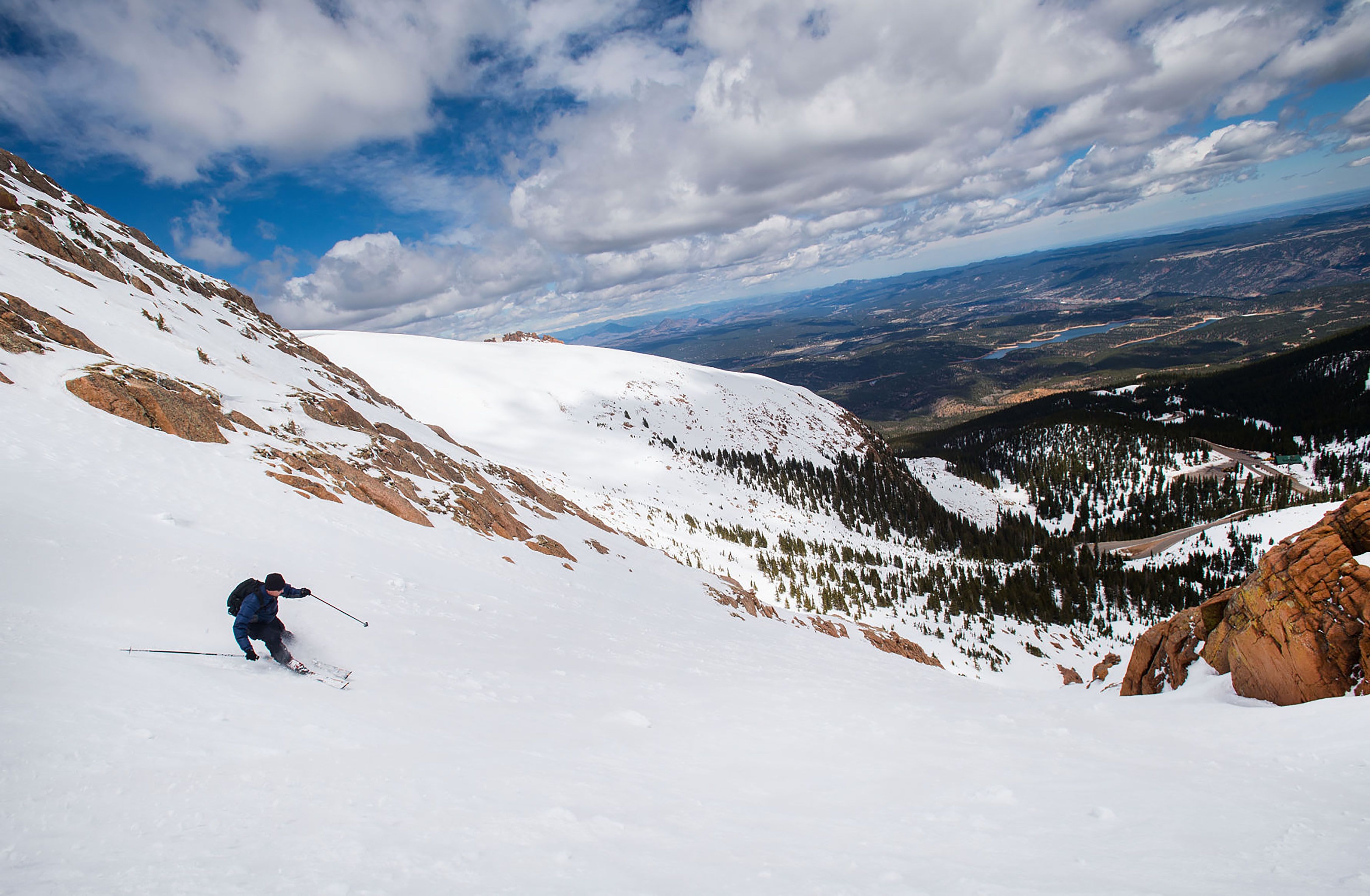
Maddie Miller had always been a skier, but as a Colorado College freshman in 2014, she unlocked a deeper appreciation.
She journeyed with peers to Pikes Peak, the steeps unforgiving on the way up but smile-inducing all the way down.
“I’ll never forget that feeling,” Miller said. “I got to ski a line I worked my ass off to get.”
It’s a feeling that more Coloradans have been chasing, as exemplified by the courses Miller has been managing recently. She’s a coordinator for Colorado Mountain Club, which has added to its winter education portfolio classes that get back to basics, detailing proper equipment and how to use it.
Introduction to Backcountry Skiing and Snowboarding filled quickly in November and December, prompting additions in January, February and March.
“It was crazy,” Miller said. “We didn’t even really need to do any marketing for it. That’s how much demand was there.”
Which has her thinking about the backcountry season ahead.
“I think it’ll be a crowded season,” she said, “but my hope is it will be a kind season.”
That’s the hope of all onlookers in a state that notoriously leads the nation in avalanche deaths. On average, six lives are claimed every season.
Spring signaled a watershed moment for the sport, a hint that the “do it yourself” attitude sweeping broader society had taken root in skiers and snowboarders. As the pandemic forced resorts to close in March, unprecedented crowds flocked to slopes without chairlifts, filling parking lots and truly earning their turns — and also agitating snowpack.
Between March 14 and April 28, the Colorado Avalanche Information Center received reports of 31 people caught in slides. Two perished.
“That is a lot for that time period,” said Ethan Greene, the center’s director. “That definitely felt like an increase to us.”
Although resorts have resumed business with COVID-19 restrictions, officials aren’t convinced the grim, out-of-bounds trend will reverse in the months to come. That was apparent last week, when Gov. Jared Polis and multiple state agencies launched a campaign aimed at safety and awareness. The announcement cited “surging interest” in winter backcountry travel.
Market analysts with NPD Group have noted the increase in the United States. Sales for alpine touring gear spiked 31% year-to-year in 2018-19, and 2020 saw another jump of 15%, according to the group.
Evidence of growth is otherwise anecdotal. Jeff Sparhawk, for one, thinks back to his 1980s beginnings on backcountry powder.
“It would not be hard to find a nice, quiet place to go for a ski, just me and my partner or my group,” said the president of the Colorado Search and Rescue Association. “Nowadays you’ve really gotta try to get away from all the people.”
Nowadays, Sparhawk said, he and search-and-rescue crews are asking “difficult questions we’ve never had to deal with before.” For instance: Are teams in the resource-strapped COVID-19 era capable of responding at potentially rapid rates?
Missions on foot through harsh snowfields “take a lot of calories,” Sparhawk said. “Physically, it’s just very hard to do day after day after day, which is what we’re potentially facing.”
In the early season, the avalanche center was showing numbers in line with the 10-year average: seven people caught in avalanches from the start of October to the end of November.
But with historically dry conditions — drought continues to grip the mountains — “you might be able to interpret that as an increase,” Greene said. “We’ve definitely seen a lot of interest. Every time there’s a little bit of snow, there’s a lot of people out.”
Whether those people are backcountry newbies is hard to say. And the extent to which that matters in terms of avalanche threat recently became clearer with an assessment by the avalanche center.
Contrary to some thinking, investigators determined more educated and experienced skiers and snowboarders contributed to avalanches in the 2019-20 season. Nearly half of the researched incidents involved explorers deemed advanced, while intermediate types accounted for 25%. Beginners were tied to 15% of incidents.
The message is obvious: Mother Nature overrules all skill and preparation. Colorado’s nation-leading avalanche death record could be tied to the state’s proud reputation for powder.
“The problem with that powder is it’s very susceptible to wind transport, because it’s so light,” explained Brian Pollack, representing Friends of Berthoud Pass, committed to safety at one of the Front Range’s most popular backcountry skiing destinations.
“And because (the snow) has so little moisture in it, it doesn’t bond well with other snow. That creates a lot of layers,” Pollack said. Layers ready to shift and slide.
Translation: “It really comes down to your personal risk and what sort of risk you are willing to take.”
The Friends of Colorado Avalanche Information Center is encouraged by the 2,100-plus enthusiasts who have joined the group’s first-year pledge drive, promising to check the center’s danger forecast before heading out.
Miller and her colleagues at Colorado Mountain Club can only hope.
The club’s executive director, Keegan Young, knows winter touring to be “amazing and can change lives” — as Miller knows from personal experience and from people signing up for courses.
“That feeling of being human-powered is something people are striving for,” she said. “Especially in this world of stress and uncertainty.”


