






Hurricane Iota roars onto Nicaragua as 2nd blow in 2 weeks
TEGUCIGALPA, Honduras • Hurricane Iota battered Nicaragua with screeching winds and pounding surf Tuesday, chasing tens of thousands of people from their homes along the same stretch of the Caribbean coast that was devastated by an equally powerful hurricane just two weeks ago.
The extent of the damage was unclear because much of the affected region was without electricity and phone and internet service, and strong winds hampered radio transmissions.
Preliminary reports from the coast included toppled trees and electric poles and roofs stripped from homes and businesses, said Guillermo González, director of Nicaragua’s emergency management agency.
More than 40,000 people were in shelters.
Later, Nicaragua Vice President and first lady Rosario Murillo said that a brother and sister, ages 11 and 8, had drowned in the community of La Pinuela trying to cross the swollen Solera River. There were reports of others missing in the same area.
A day earlier, Iota intensified into a Category 5 storm, but it weakened as it neared the coast and made landfall with maximum sustained winds of 155 mph. The system came ashore as a Category 4 hurricane about 30 miles south of the Nicaraguan city of Puerto Cabezas, also known as Bilwi. That was just 15 miles south of where Hurricane Eta made landfall Nov. 3, also as a Category 4 storm.
By Tuesday afternoon, Iota had diminished to a tropical storm and was moving inland over northern Nicaragua. It had maximum sustained winds of 60 mph and was spinning westward at 12 mph. The storm was forecast to cross into southern Honduras late Tuesday.
Aid agencies struggled to reach their local contacts, and the government said in a statement that at least 35 towns in the east and north had no phone service. Nicaragua’s telecommunications ministry said phone and broadband provider Columbus Networks was offline because of flooding in Bilwi.
Along Honduras’ remote eastern coast Tuesday, people continued evacuating from damaged and flooding homes.
Mirna Wood, vice president of the Miskito ethnic group in Honduras’ far east Gracias a Dios region, was in Tegucigalpa collecting donations for her community ravaged by Eta when Iota hit.
About 40,000 people in the area had moved to shelters from low-lying land beside rivers and the sea, but other people remained stranded near the border with Nicaragua. Some were rescued by Nicaraguan authorities, she said.
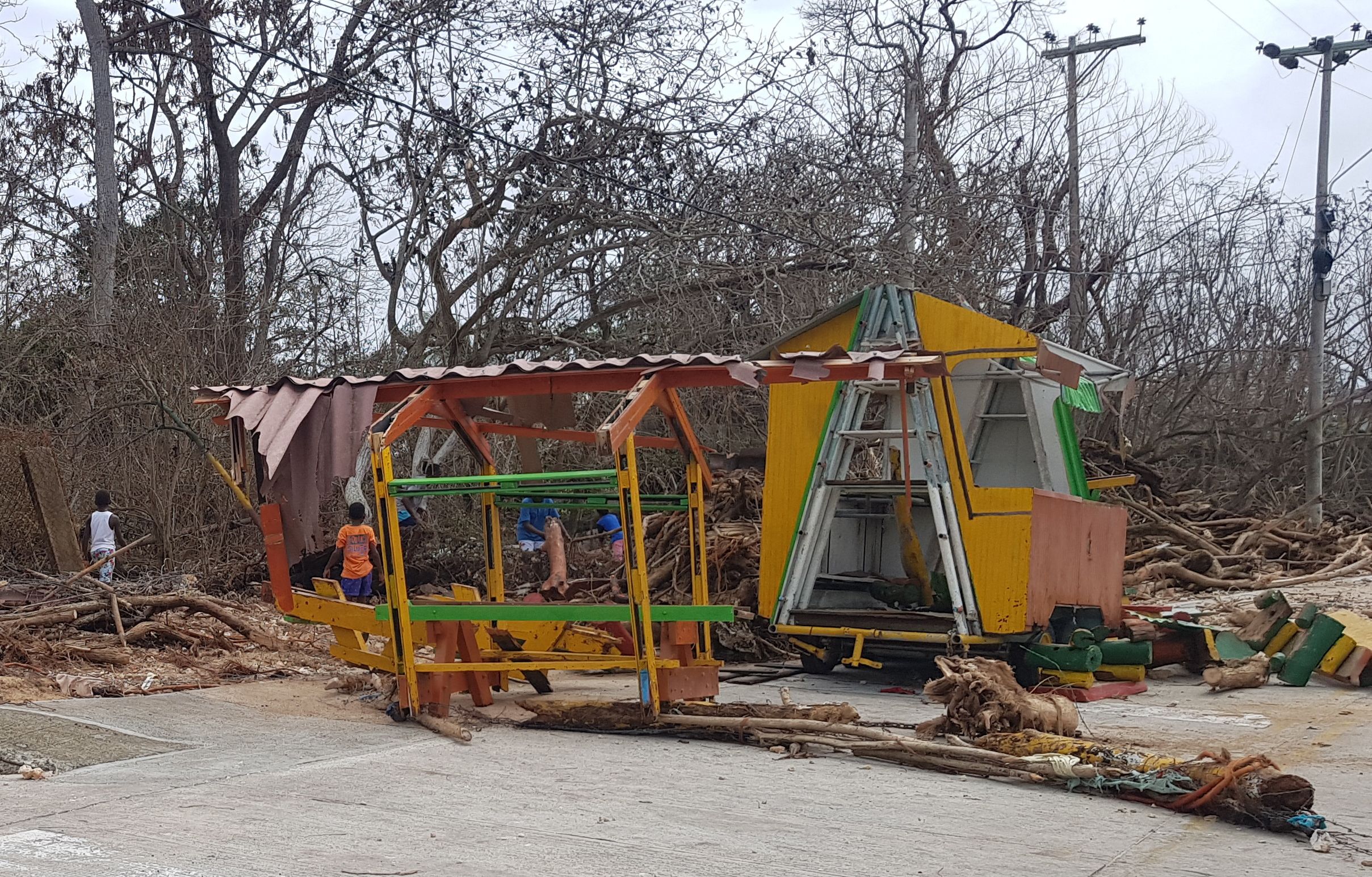
A structure stands in ruins amid fallen branches Tuesday after the passing of Hurricane Iota on San Andres island, Colombia. Iota moved over the Colombian archipelago of San Andres, Providencia and Santa Catalina, off Nicaragua’s coast, as a Category 5 hurricane.