






Germany says Soviet-era nerve agent used on Russia’s Navalny
BERLIN • Russian opposition leader Alexei Navalny was poisoned with the same type of Soviet-era nerve agent used in a 2018 attack on a former Russian spy, the German government said Wednesday, provoking outrage from Western leaders who demanded Moscow provide an explanation.
The findings — which experts say point strongly to Russian state involvement — added to tensions between Russia and the West. German Chancellor Angela Merkel called Navalny’s poisoning attempted murder, meant to silence one of Russian President Vladimir Putin’s fiercest critics. The Berlin hospital treating the dissident said he remains on a ventilator though his condition is improving. It said it expects a long recovery and still can’t rule out long-term effects on his health from the poisoning.
The German government said that testing by a German military laboratory showed “proof without doubt of a chemical nerve agent from the Novichok group.” British authorities identified Novichok as the poison used on former spy Sergei Skripal and his daughter in England.
“There are very serious questions now that only the Russian government can answer, and must answer,” Merkel said.
British Prime Minister Boris Johnson also called on Russia to explain what happened, calling the use of a chemical weapon “outrageous.” In Washington, National Security Council spokesman John Ullyot tweeted that it was “completely reprehensible.”
“We will work with allies and the international community to hold those in Russia accountable, wherever the evidence leads,” Ullyot said.
The European Union also called for an investigation and its foreign affairs chief, Josep Borrell, said any use of chemical weapons was “completely unacceptable and a breach of international law.”
Navalny, a politician and corruption investigator, fell ill on a flight to Moscow on Aug. 20 and was taken to a hospital in the Siberian city of Omsk after the plane made an emergency landing.
He was moved two days later to Berlin’s Charite hospital, where doctors last week said initial tests indicated Navalny had been poisoned.
German Foreign Minister Heiko Maas said the Russian ambassador was summoned to his ministry Wednesday after the latest findings. Russian authorities appeared reluctant to comment on the poisoning, instead blaming Germany for not sharing its findings with Russian law enforcement.
Kremlin spokesman Dmitry Peskov said Russian authorities are “ready and interested in full cooperation and exchange of information” with Germany but added that Berlin still hasn’t provided any official response to formal requests from the Russian prosecutor general’s office and doctors who treated Navalny. Peskov reiterated that Russian doctors didn’t find any poisonous substances in Navalny’s system.
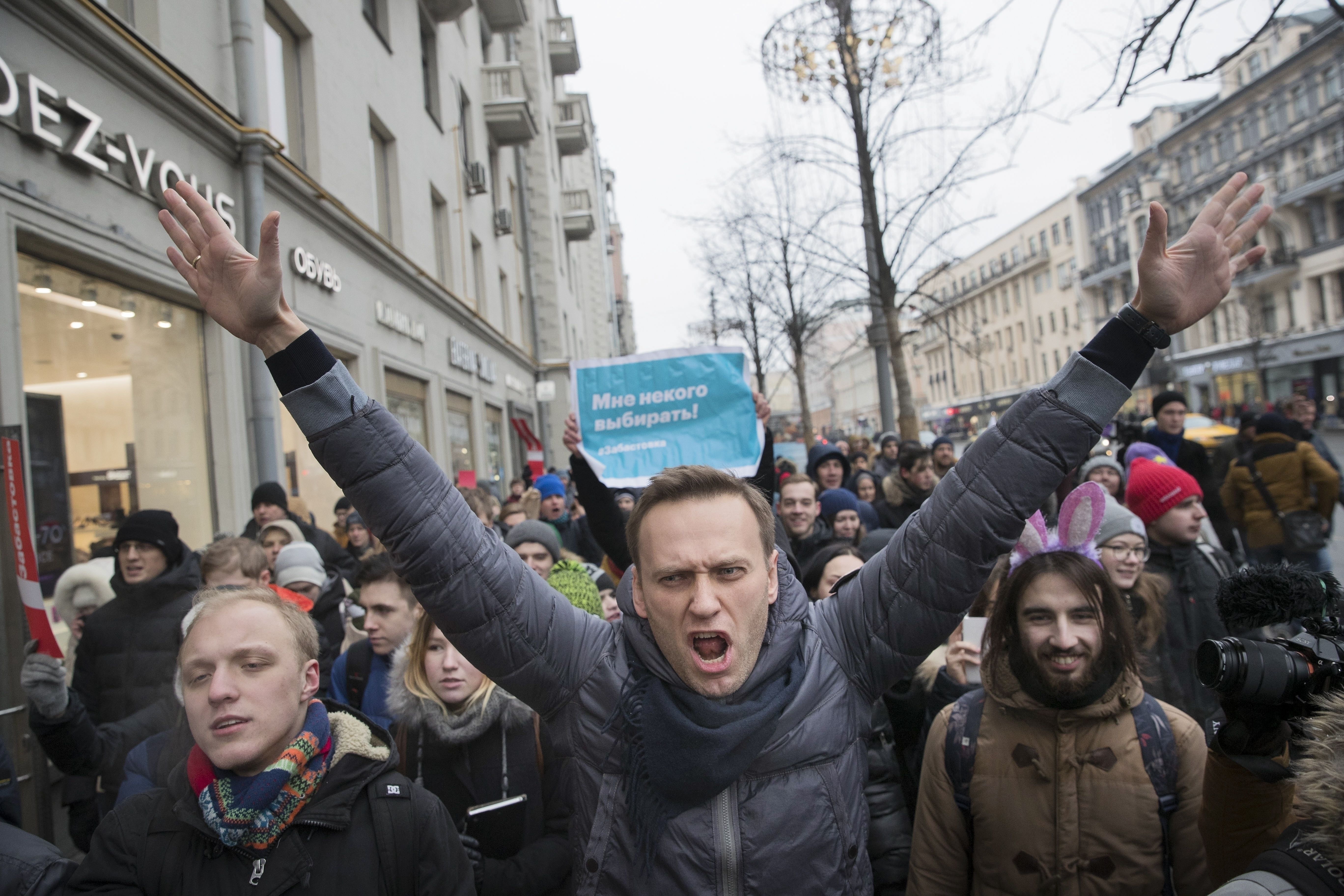
Russian opposition leader Alexei Navalny, center, attends a 2018 rally in Moscow. Russian opposition leader Alexei Navalny was the victim of an attack and poisoned with the Soviet-era nerve agent Novichok, Germany said Wednesday.
