






Need Meat? I’ve got you covered | Wild About Teller
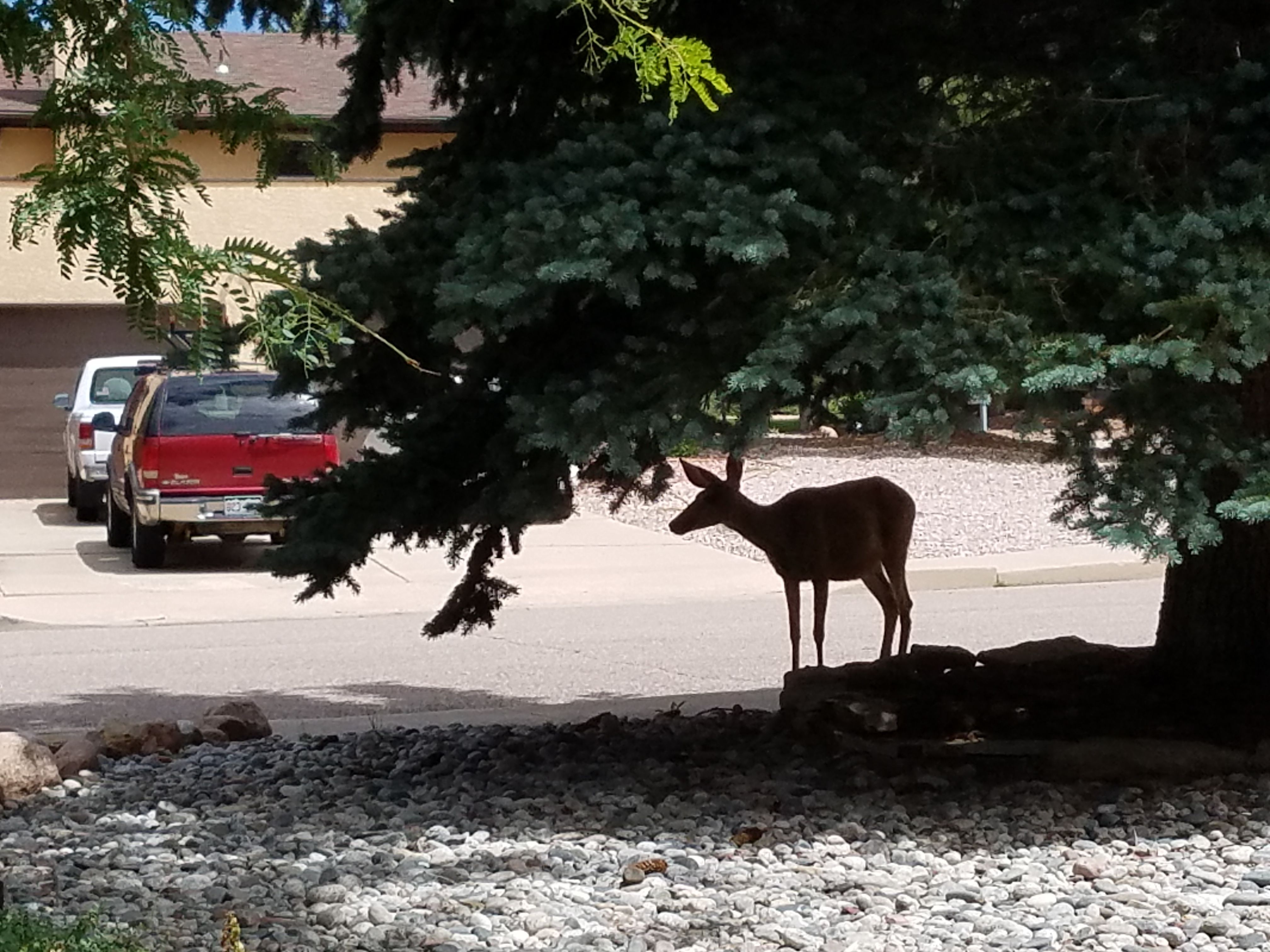
Pop Quiz: What’s the most dangerous animal in North America?
The answer, amazingly, is deer!
Every year, about 200 people are killed in vehicle collisions with deer across our continent, according to statistics from the Centers for Disease Control and Prevention. Far more deer die.
In past columns, we have discussed how car/deer collisions are increasing in Teller County and how we can reduce these collisions.
It’s an important discussion because of all the damage these collisions cause. People get seriously injured and killed. Their vehicles suffer expensive damage. And, at best, the deer limp away with fractured bones, brain damage and other permanent injuries.
I receive a call almost every day about an injured deer. Often callers are shocked we don’t pick up injured deer and nurse them back to health.
The sad fact is that we don’t have the staff or budget to rehabilitate any animals. Rehabilitation of animals is a voluntary service provided by fewer and fewer licensed rehabbers statewide.
Here are the general guidelines CPW officers follow when we get a call about an injured deer and the ways we can intervene:
• We will respond to humanely euthanize the deer if it is immobile and suffering.
• If the deer is still able to get up and walk around and has a lower leg injury, even a bad one, we will only observe and monitor the deer. The deer may need some time to rest and recover (that might be in your yard), but usually a lower leg break will heal on its own. We cannot rehabilitate these deer.
• If the deer starts to go downhill from an infection, we will humanely euthanize it.
With a call almost daily about injured deer, you might guess that we have to euthanize a significant number of deer. Unfortunately, that is indeed the case and not at all a fun part of our job.
But what happens to the deer after that?
Well if the deer looks healthy and was not hit badly in a vehicle collision, I will try to donate its meat for human consumption.
If you need or would like some wild game meat — mostly deer, but an occasional elk will get hit, too — then please sign up on one of the roadkill lists, posted below, to receive donations of roadkill meat.
• Woodland Park Police Department, 719-687-9262
• Teller County Sheriff’s Office, 719-687-9652
• CPW (Tim Kroening), 719-227-5281
Please understand it would be your duty to field dress and process the animal. Whether you do that yourself or have a processor do that is up to you.
Colorado Parks and Wildlife is working with Woodland Park Police Department and Teller County Sheriff’s Office to reduce the amount of edible meat that is wasted from wildlife vehicle collisions. Often in these collisions, a large portion of the animal or entire animal can be salvaged for human consumption.
I would much rather give someone some roadkill meat then have them poach an animal. Poaching is a serious crime punished by fines approaching $11,000, seizure of firearms and vehicles and even possible jail time.
I appreciate the comments and feedback about the columns. If you have an idea or have a question or concern please feel free to call me at 719-227-5281. Thank you!
Tim Kroening holds a degree in wildlife biology from Colorado State University. He works as a district wildlife manager for Colorado Parks and Wildlife in Teller County.
Photos by Colorado Parks and Wildlife
Colorado Parks and Wildlife is working with Woodland Park Police Department and Teller County Sheriff’s Office to reduce the amount of edible meat that is wasted from wildlife vehicle collisions. Often in these collisions, a large portion of the animal or the entire animal can be salvaged for human consumption.
Colorado Parks and Wildlife is working with Woodland Park Police Department and Teller County Sheriff’s Office to reduce the amount of edible meat that is wasted from wildlife vehicle collisions. Often in these collisions, a large portion of the animal or entire animal can be salvaged for human consumption.
Every year, about 200 people are killed in vehicle collisions with deer across our continent, according to statistics from the Centers for Disease Control and Prevention. Far more deer die.
Tim Kroening