






U.S., China reach tentative ‘phase one’ trade pact
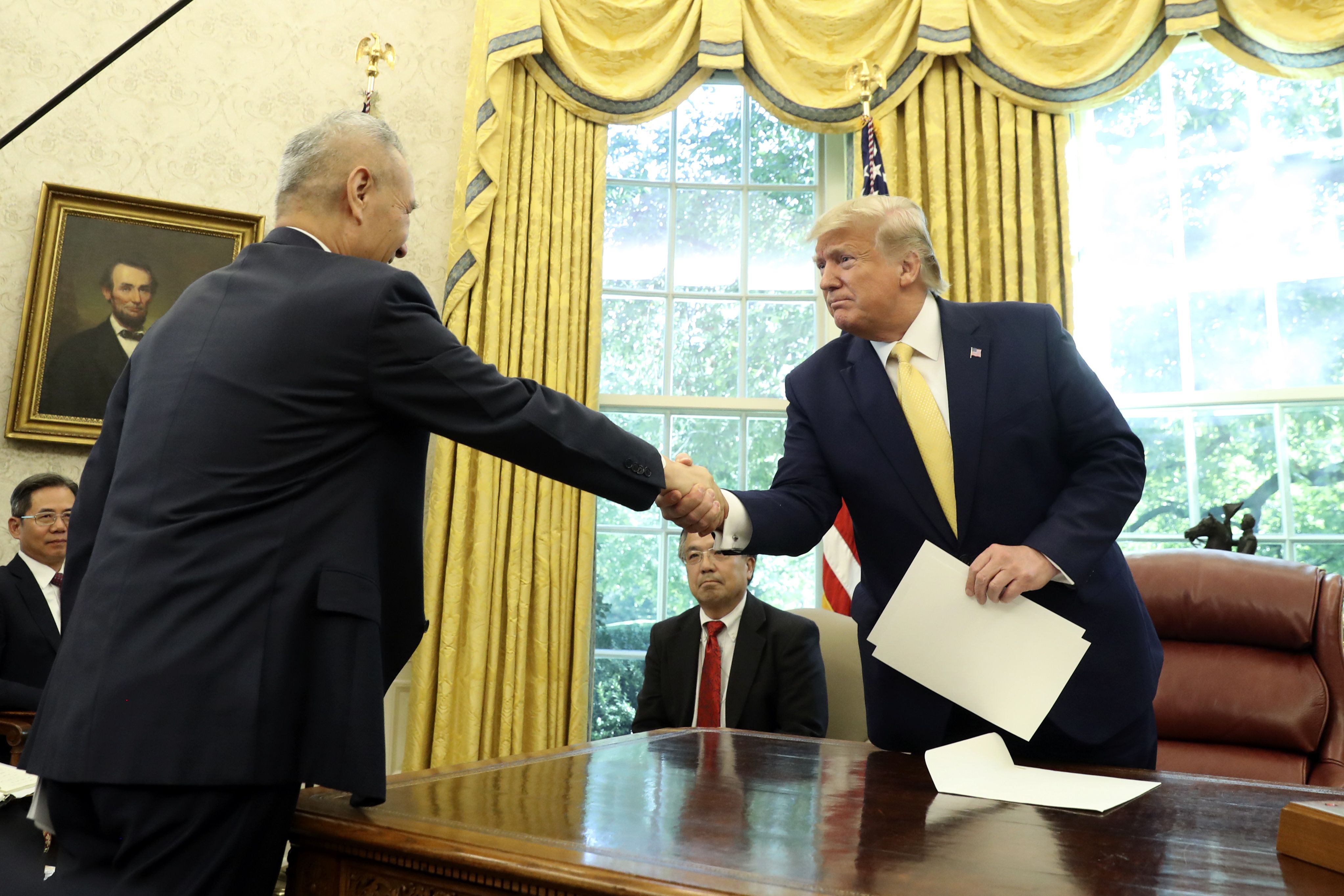
WASHINGTON • The U.S. and China said they agreed in principle on the first phase of a trade accord that could de-escalate tensions between the economic powers, with the U.S. saying it would hold off on ramping up tariffs next week and China saying it agreed to ramp up its purchases of U.S. agricultural products.
“We’ve come to a very substantial phase one deal,” President Donald Trump told reporters after meeting with Chinese Vice Premier Liu He in the White House.
China agreed to buy $40 billion to $50 billion in U.S. agricultural products and a commitment to open itself further to international financial services, Trump said. The pact that officials are calling a first phase will be finalized in three to five weeks, Trump said after a meeting with Liu in the White House.
The sides cited progress on several other matters, without offering specific details, including the potential for agreement on intellectual property protections and currency manipulation.
Trump’s trade adviser, Robert Lighthizer, said the president hadn’t decided yet on whether to follow through on additional tariffs set to be imposed in December.
The countries were unable to finish a planned pact to curb currency manipulation, but Treasury Secretary Steven Mnuchin said discussions were “almost complete.” Trump also cited “good progress” on discussions to prevent the forcible transfer of technology in China.
Liu said the discussions with senior Trump administration officials were “very good.”
The limited truce was less than what was hoped for by some business groups, which were pushing for the completion of a currency pact, new rules to liberalize China’s economy and a postponement of major new tariffs on imported consumer goods that Trump is set to impose Dec. 15.
Still, officials on both sides now have more time to pursue future provisions that would open up trade further or even a comprehensive agreement with structural reforms, as originally envisioned by the Trump administration.
It wasn’t clear whether the administration would follow through on plans to grant licenses for American businesses to sell to Chinese telecommunications giant Huawei.
Lighthizer said Huawei was being considered in a separate process.
What is (and isn’t) in the deal
The U.S. and China have agreed in principle on a limited trade deal.
Here is a look at what was agreed to, and which issues remain unresolved.
What the U.S. stands to gain:
• China agreed to purchase $40 billion to $50 billion in U.S. agricultural products, according to President Trump. The time frame of these purchases wasn’t clear.
• China agreed to open its market to international financial services, according to Trump, potentially allowing U.S. banks and insurance companies to expand in China.
What China stands to gain:
• The U.S. won’t move forward on Oct. 15 with a planned increase in tariff rates to 30% from 25% on about $250 billion of Chinese goods.
Major issues unresolved:
• Tariffs of 15% are still scheduled to be imposed on $156 billion of Chinese imports on Dec. 15, barring further progress in the talks.
• The U.S. didn’t announce any relaxation of restrictions it has imposed against Chinese telecommunications giant Huawei.
• The U.S. said China would agree to better protections for U.S. intellectual property. Trump said this would be addressed later.
• The U.S. wants China to agree to a pact not to manipulate its currency.
Mnuchin said a pact was “almost complete.”
• The U.S. wants China to restrict the practice of requiring American companies to share technology with Chinese partners in exchange for access to the market. Mnuchin said they had made “good progress” but hadn’t reached a deal.
• The U.S. had hoped China would take actions to rein in state-owned companies, but no progress was cited.
• U.S. negotiators have pressed China to change rules on information security, cross-border data flows and high-tech sectors such as cloud computing, but no progress was cited.
• Existing tariffs from both sides remain in place with no mechanism to unwind.
• Both sides have said they want a way to ensure compliance. The U.S. said there will be a consultation process, but no details have been announced.
President Trump shakes hands with Chinese Vice Premier Liu He in the Oval Office of the White House in Washington, Friday. Trump announced a “phase one” trade agreement.