






Best movies of 2018: ‘Roma’ is intimate, epic and the year’s finest
If 2018 will be remembered for anything, it will be for well-executed blockbusters: From “Black Panther” and “Crazy Rich Asians” to “Mission: Impossible — Fallout” and “Halloween,” audiences were treated to exceptionally smart, technically proficient, visually rich exercises in action, romance, horror and other genres whose mass appeal usually makes them immune to questions of sophistication and aesthetic taste.
A top-10 list easily could include all those titles, with “Bohemian Rhapsody” and “A Star is Born” thrown in for good measure. Similarly, in a year when four documentaries shattered the $10 million ceiling, one could create a top 10 of nonfiction films alone: To “RBG,” “Won’t You Be My Neighbor?,” “Three Identical Strangers” and “Free Solo,” just add “Dark Money,” “Shirkers,” “Minding the Gap,” “Bisbee ‘17,” “Saving Brinton” and “American Animals,” and boom — you have some of the best movies of the year.
As for the little indies that could, there were so many to love: the winsome comedies “Juliet, Naked,” “Hearts Beat Loud” and “Private Life”; the psychological sports drama “Borg vs. McEnroe”; the revisionist Westerns “Damsel” and “The Sisters Brothers”; “The Death of Stalin” and “Cold War,” one a flawlessly executed Soviet-era satire, the other a flawlessly executed Soviet-era love story. Two underseen portraits of heroism, “Journey’s End” and “First Man,” would round out that list as among my favorites of 2018.
All by way of saying: Faced with so many choices, a final list wasn’t easy. But here it is.
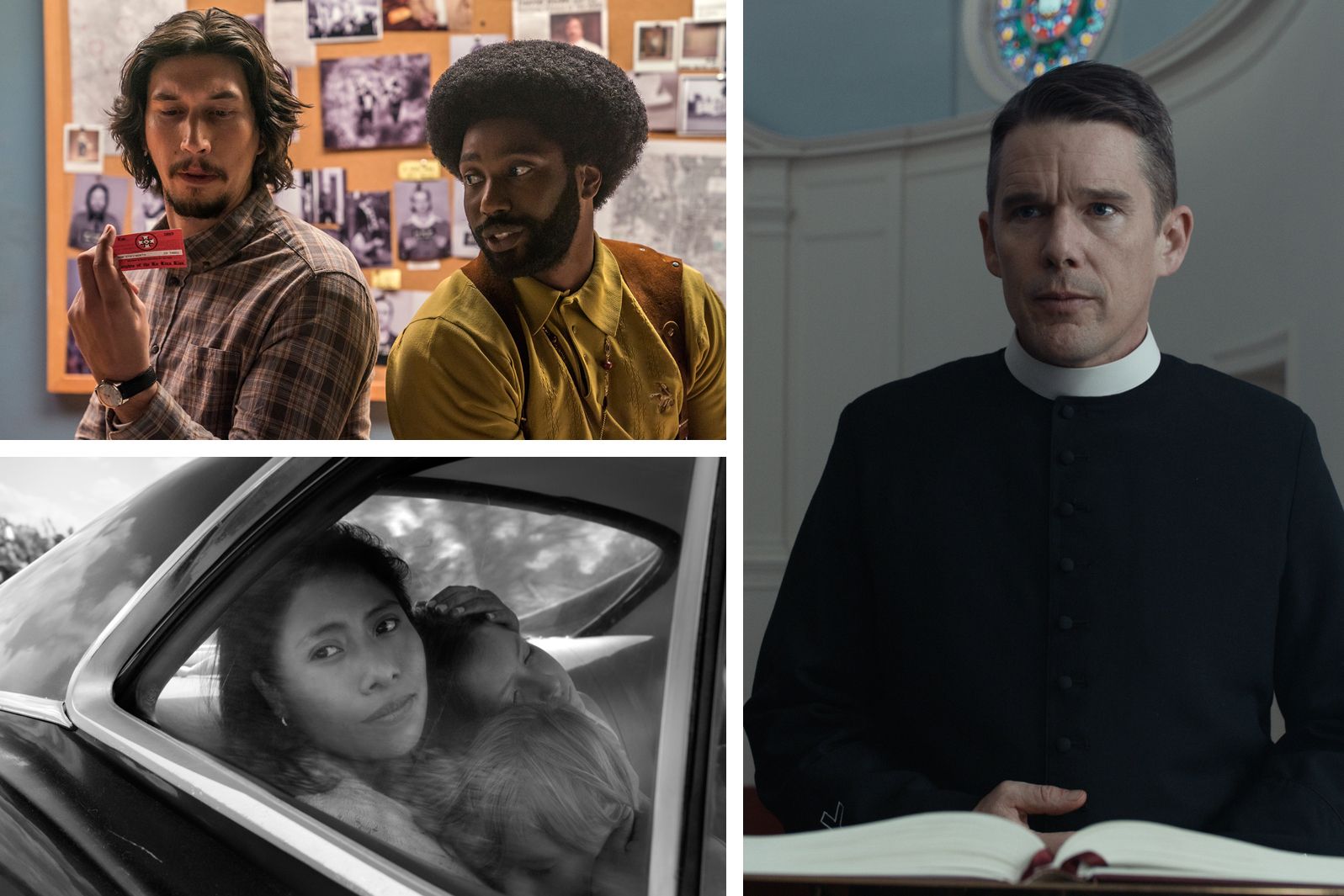
1. “Roma”: Alfonso Cuarón’s portrait of his youth in Mexico City manages to be intimate and epic, minutely observed and monumental. Focusing on the nanny who cared for him and his family during his parents’ divorce, this chronicle feels less like storytelling than poetry, shot through with shrewd social observation that never swamps the film’s deep emotional core.
2. “If Beale Street Could Talk”: Barry Jenkins adapts the James Baldwin novel in a style that transcends plot mechanics and character beats to become a tremulous ode to the fierce power of love. This depiction of an African-American couple navigating a relationship amid the racism and family pressures of 1960s New York starts out as pure cinema and winds up as pure feeling.
3. “The Rider”: Brady Jandreau, a real-life cowboy in South Dakota, is the charismatic star of this film, in which director Chloe Zhao redefines the American Western as something both mythic and mundane. Following Jandreau as he recovers from a debilitating brain injury incurred while riding, the movie becomes a meditation on purpose, identity, landscape and human frailty.
4. “First Reformed”: From Paul Schrader comes a film that could be called the summa of his career and its cardinal concerns, including spiritual crisis, alienation, oppressive self-discipline and sudden, violent release. Ethan Hawke delivers masterfully as the pastor of a semirural church, where he endures physical and psychic breakdowns that are terrifying and cathartic.
5. “BlacKkKlansman”: Outrageous, audacious, funny and caustic, Spike Lee’s adaptation of the real-life story of Ron Stallworth bursts with the energy and distinctive cinematic language Lee has developed over a 30-year career. The movie isn’t perfect — there are moments of excess and indulgence that often have bedeviled the filmmaker. But the sum of the parts is powerful.
6. “Green Book”: In many ways, this fact-based story of piano player Don Shirley and the white man he hired to drive him through the Jim Crow South in the 1960s feels like a throwback: As a buddy road comedy set amid noxious and violent racism, it easily could have been a patronizing “feel good” portrayal of white redemption. Instead, this entertaining film is about characters.
7. “Eighth Grade”: We’ve seen this movie before: Awkward teen comes of age amid bullies, mean girls and her own crippling angst. But director Bo Burnham turns the genre inside out to create a portrait that’s painful and vicariously mortifying, but also deeply compassionate and respectful of a young heroine whose anxieties are outstripped only by her own self-belief.
8. “Tully”: If there’s any justice in this crazy world, Charlize Theron will be remembered at awards time for her spot-on portrayal of a mother battling what looks like postpartum depression but winds up being her own ambivalence. A fascinating dramatization of selfhood as serial lives, this strange chamber piece was a head trip in all the right ways.
9. “Blindspotting”: Daveed Diggs and Rafael Casal wrote a rap musical based on growing up in the midst of the political and cultural ferment of Oakland, Calif., ultimately creating a boisterous commentary on everything from gentrification and interracial friendship to assimilation and cultural appropriation. The movie felt attuned to our times in ways sobering and exhilarating.
10. “A Quiet Place”: The first true breakout hit of 2018 was a fabulous contradiction: a good old-fashioned horror movie that broke new ground in the use of sound; a genre exercise that called back to the elegance and purity of silent filmmaking. This film proved that in an era dominated by reboots, spinoffs and endless franchises based on pre-existing material, originality isn’t dead.
Clockwise from upper left, Adam Driver, left, and John David Washington in “BlacKkKlansman” (David Lee, Focus Features); Ethan Hawke in “First Reformed” (A24); Yalitza Aparicio in “Roma” (Alfonso Cuarón, Netflix).