






Air Force failed 6 times to keep guns from Texas church shooter before he killed 26, report finds
The 26 worshipers whom Devin Patrick Kelley shot and killed may not have seen him coming. But the Air Force did.
The service failed six times to submit records to the FBI that would have barred the troubled former airman from buying the guns he used in the November 2017 massacre at a church in Sutherland Springs, Tex., a Pentagon inspector general’s report concluded.
On at least four occasions during and after criminal proceedings against Kelley concerning domestic violence, the Air Force should have submitted the former service member’s fingerprints to the FBI Criminal Justice Information Services (CJIS) Division, the 131-page report concludes. On two other occasions, it should have submitted to the FBI the final disposition report — which states the results of a case, after proceedings occur. In each instance, it did not.
If the Air Force had followed protocol, Kelley’s criminal history would have been recorded in the Interstate Identification Index, and would in turn have surfaced in the National Instant Criminal Background Check System, known as NICS. That background system is used by federally licensed firearm dealers to determine whether a customer is prohibited from buying a firearm.
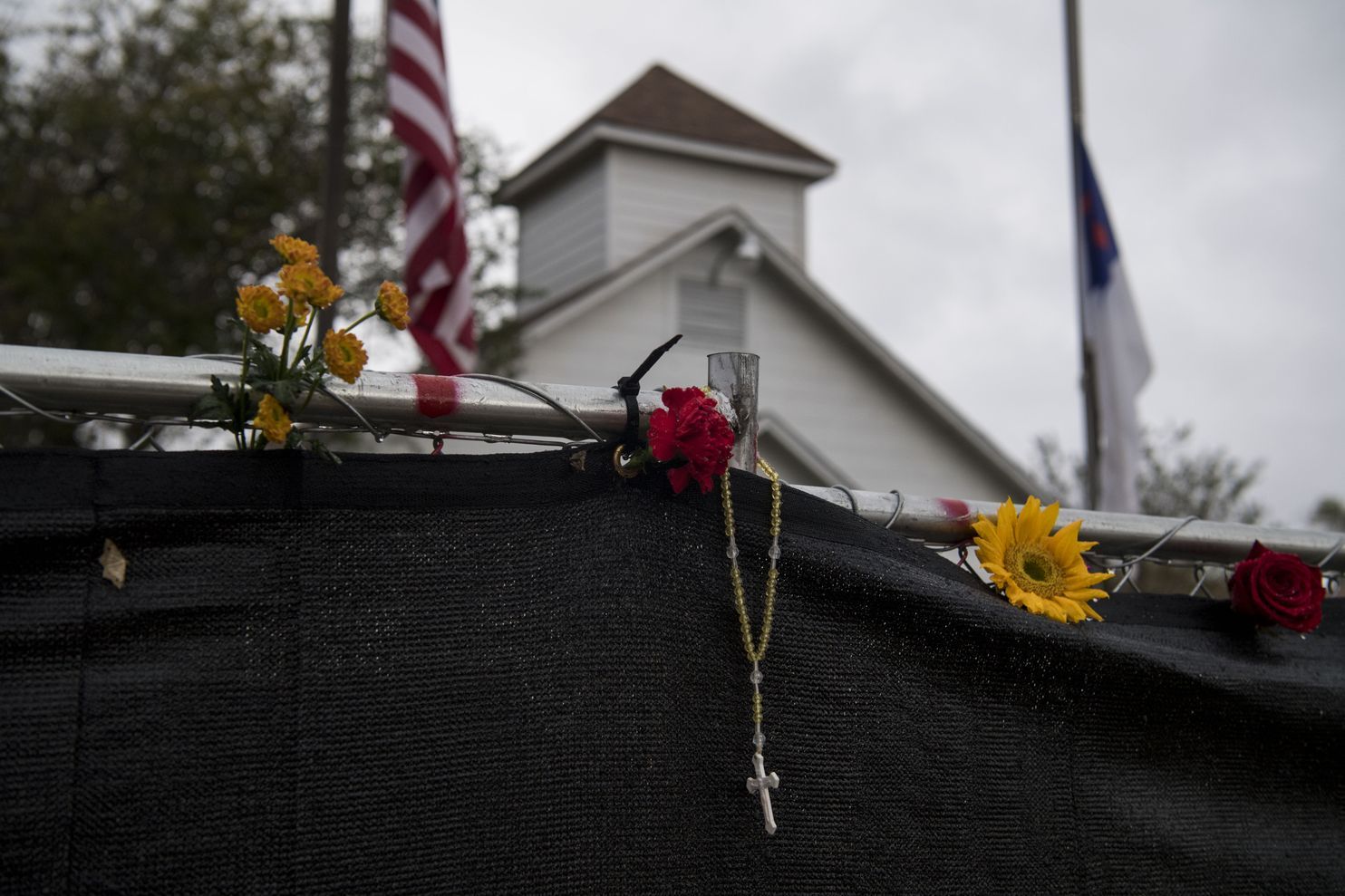
Because of these oversights, Kelley’s name never showed up in NICS, even though he was convicted in 2012 in a general court-martial of assaulting his wife and stepson. He legally bought four firearms, three of which he used to kill 26 people and wound nearly two dozen more during the attack at the First Baptist Church of Sutherland Springs.
For more on this story visit washingtonpost.com.
A rosary hangs on the fence surrounding the Sutherland Springs First Baptist Church one week after 26 people were killed inside on Nov. 12, 2017. (Carolyn Van Houten/The Washington Post)