






Trump’s new sanctions takes hard line with Iran
WASHINGTON • The Trump administration was caught between allies at home and abroad and the reality of global economics as it reinstated sanctions Monday on Iran, forced to carve out exemptions for important allies and back off on measures that could have been even more punishing for Tehran.
The U.S. granted waivers to allow China and seven close U.S. partners and allies to continue importing Iranian crude and other petroleum products without penalty, bowing to concerns that a complete end to Iran’s exports would cause a major spike in world oil prices and cause other economic disruptions. Trump conceded that reality on the campaign trail before midterm congressional elections.
“We have the toughest sanctions ever imposed but on oil we want to go a little bit slower because I don’t want to drive the oil prices in the world,” he told reporters. “I could get the Iran oil down to zero immediately, but it would cause a shock to the market.”
The newly reinstated sanctions target Iran’s energy, financial and shipping sectors and are aimed at forcing Iran to end ballistic missile program and end its support for armed movements throughout the Middle East.
The measures restore all the U.S. sanctions that had been lifted under the 2015 accord that gave Iran billions of dollars in sanctions relief in exchange for curbs on its nuclear program, a deal that Obama administration critics had argued was too soft on the Islamic Republic. In reinstating the measures, the Treasury Department imposed penalties on more than 700 Iranian and Iranian-linked individuals, entities, aircraft and vessels. Among those are 50 Iranian banks and subsidiaries, more than 200 people and ships, Iran’s state-run airline Iran Air and more than 65 of its planes.
The sanctions freeze any assets that those targeted have in U.S. jurisdictions and bar Americans from doing business with them. They will also affect non-Iranian companies that deal with sanctioned Iranian firms and officials.
Yet, while the administration seeks to cut off Iran’s oil revenue, it is allowing Greece, India, Italy, Japan, South Korea, Taiwan and Turkey to continue purchasing Iranian oil as long as they work to reduce imports to zero. “When I look at the list, it’s obviously very large economies that still in many ways depend on Iran oil imports and at this time don’t have any strong alternatives,” said Brian Katulis, a senior fellow at Center for American Progress, a liberal think tank.
“This is part of the Trump team’s trying to balance its maximum pressure campaign against Iran versus its concerns over where the global prices of oil might go and how that could negatively impact everyone including America. I don’t support this policy, but if you are going down this path, it’s a way to lessen the risk of economic blowback in America.”
Three of the eight waiver recipients — Greece, Italy and Turkey — are members of NATO. Japan and South Korea have mutual defense treaties with the U.S. and have a key part in the North Korea denuclearization initiative. India, the world’s largest democracy, plays a critical role in the administration’s “Indo-Pacific” strategy, which seeks to unite countries in the region into forming a bloc to counter China.
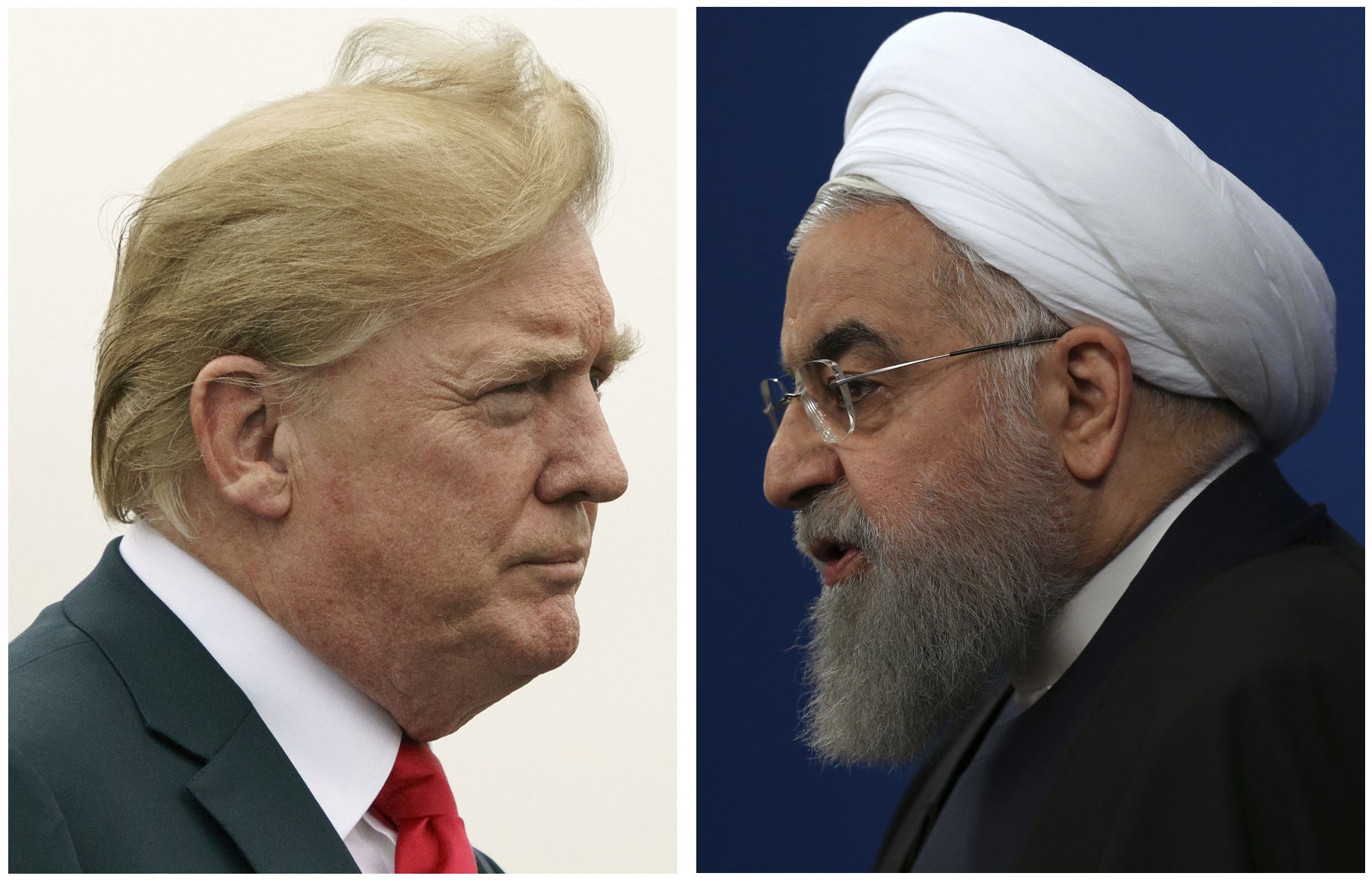
President Donald Trump, left, on July 22, and Iranian President Hassan Rouhani on Feb. 6. The Trump administration is announcing the reimposition of U.S. sanctions on Iran that had been lifted under the 2015 nuclear deal. The Trump administration is announcing the reimposition of all U.S. sanctions on Iran that had been lifted under the 2015 nuclear deal.