






Questions swirl over U.S. troop role at border
WASHINGTON • President Donald Trump ordered troops to the border in response to a caravan of migrants slowly making its way through Mexico toward the United States and still about 900 miles away, with many dropping out.
Here’s what we know about the military’s mission:
• More than 7,000 active-duty troops have been told to deploy to Texas, Arizona and California. They are a mix of forces, including military police, an assault helicopter battalion, various communications, medical and headquarters units, combat engineers, planners and public affairs units.
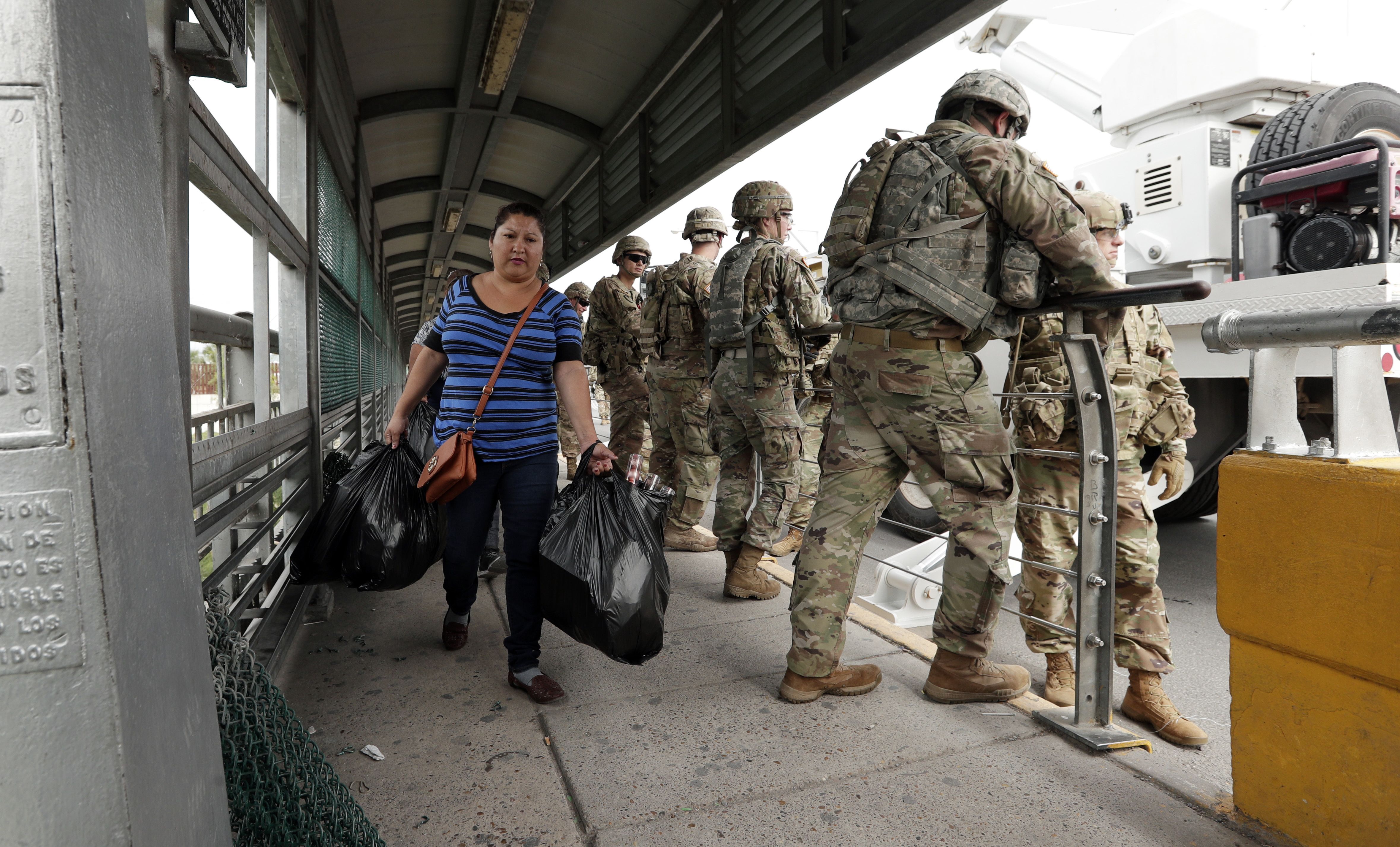
As of Friday, one week after the Pentagon acknowledged that Defense Secretary Jim Mattis had approved a Department of Homeland Security request for military support at the border, the troop deployment was still unfolding, with about 3,500 at staging bases in the Southwest. Of those, about 2,250 active-duty troops are at staging bases in Texas, about 1,100 Marines are at Camp Pendleton in California, and fewer than 200 are in Arizona. About 100 troops are actually on the border, at the port crossing near McAllen, Texas.
Most of the troops are being used to facilitate the movement of Border Patrol agents, house them, feed them and provide some of their protection.
• The Pentagon is adamant that active-duty troops will not do law enforcement, which they are forbidden from doing under the Posse Comitatus Act in the Constitution. Troops can’t arrest people at the border. Their main job will be to support the Border Patrol.
This means the military will transport border patrol agents to and along the border, help them erect additional vehicle barriers and fencing along the border, assist them with communications, and provide some security for border agent camps. The military also will provide the border patrol agents with medical care, prepackaged meals and temporary housing.
• Many of the soldiers will be armed, mainly for self-protection.
Military police at the border will be armed, although they will have non-lethal options for dealing with unexpected conflict. Pentagon officials say they are planning for a worst-case scenario of violence that could force soldiers to rely on their training to make split-second decisions to defend themselves or civilians.
Pedestrians pass members of the U.S. military working to place razor wire along the U.S.-Mexico border on the McAllen-Hidalgo International Bridge, Friday, Nov. 2, 2018, in McAllen, Texas. (AP Photo/Eric Gay)