






Learning to eat like an Olympian at the U.S. Olympic Training Center
Editor’s note: The Gazette is taking a look at the lifestyle of athletes at the U.S. Olympic Training Center in Colorado Springs, asking professionals what the public can learn from the habits and routines of some of the world’s top competitors. Part 1, Oct. 2 — Think like an Olympic athlete; Part 2, today — Eat like an Olympic athlete; Part 3, Oct. 16 — Recover like an Olympic athlete.
Honing in on every detail makes Olympic athletes the best in the world, and diet is part of that complicated recipe.
“Food is a component; it is one of the pillars of optimal performance. It’s not the only thing, but as a dietitian, obviously I want to say it’s the only thing,” said Rob Skinner, senior dietitian in sport performance at the U.S. Olympic Training Center in Colorado Springs.
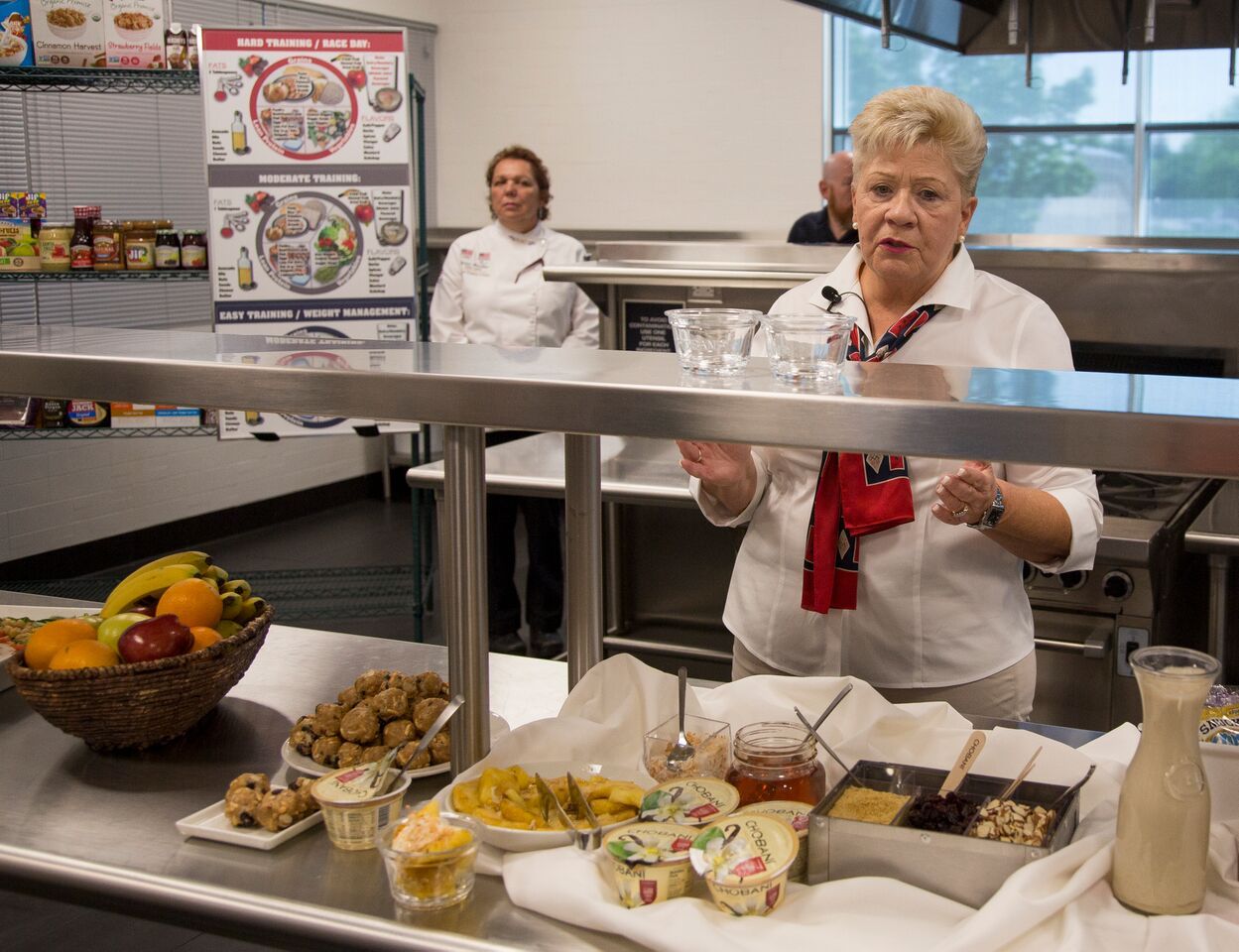
Negotiating an athlete’s meal plan depends on various factors. Skinner said he guides athletes to three “plates,” considering whether they’re doing easy, moderate or hard training. The amount of protein remains the same, but the balance of grains, fruits and vegetables shifts.
Factors such as sport, weight and personal preference come into play, too. But Skinner said he’s not out to create a rigid plan, as it’s important that athletes learn to be flexible.
“Variety is a big issue,” he said. “Most people don’t eat enough of a variety of foods. They get in what dietitians used to call ‘food jag.’ The jag is just a rut. But the only difference between a rut and a grave is just the depth of the hole, so you can’t eat the same thing every single day.”
And social media can misguide athletes as well as the public.
“Social media just beats it in your head that you have to eat ‘clean,’ and I don’t like that term,” Skinner said. “There’s always going to be some new supplement, diet trend, super food or magic food.”
Cravings and comfort foods are handled with moderation and timing, he said. Athletes don’t eat “clean” or nutritious foods all the time. They’re human, too, and everyone craves foods that don’t fit in any plan.
“I’m from the South,” Skinner said with a laugh. “Mac and cheese is a vegetable in the South.”
But athletes eat far more balanced, nutritious meals than they eat comfort foods. And they don’t eat large portions of comfort foods, either. It’s important to be a bit more diligent when competition looms, he said, so it’s OK for them to narrow their diet for brief periods. But it’s crucial, otherwise, to heed cravings lest you feel deprived.
“Deprivation is the enemy of success when it comes to following any meal plan,” he said. “If you cut something totally out, people will typically crave it more. If you give little amounts, you can typically satisfy a craving.”
He’s structured the training center cafeteria so the most important food groups come first. “We know that what we see first, we’re more likely to grab. So what do we put first? Fruits and veg,” Skinner said. “Humans follow order.”
He said people, regardless of athletic status, should consider three things when eating: variety, balance and moderation. For athletes, he adds quality, quantity and timing. But, he said, quality and quantity also could apply to anyone.
“We look at nutrient density, how many nutrients are in the food, and we look at energy density, how much energy and calories are in the food. Americans typically eat high-energy dense foods with low nutrient density. Athletes try to balance those two out.”
For many athletes, Skinner said, that balancing act is just another part of the job.
The Gazette is taking a look at the lifestyle of athletes at the U.S. Olympic Training Center in Colorado Springs, asking professionals what the public can learn from the habits and routines of some of the world’s top competitors.
Oct. 2 — Think like an Olympic athlete.
Today — Eat like an Olympic athlete
Oct. 16 — Recover like an Olympic athlete
The dining hall at the U.S. Olympic Training Center serves over 340,000 meals annually. Senior sports dietitian Rob Skinner said that quantity, quality and timing are important factors that athletes need to consider when constructing a meal plan.
The dining hall at the United States Olympic Training Center serves over 340,000 meals annually. Senior Sports Dietitian Rob Skinner said that quantity, quality and timing are important factors that athletes need to consider when constructing a meal plan.
One of three plates that Senior Sports Dietitian Rob Skinner advises Olympic athletes to consider when designing their meals. The amount of protein remains the same for each of the three guides, but the balance of grains, fruits and vegetables shifts.
One of three plates that senior sports dietitian Rob Skinner advises Olympic athletes to consider when designing their meals. The amount of protein remains the same for each of the three guides, but the balance of grains, fruits and vegetables shifts.
One of three plates that Senior Sports Dietitian Rob Skinner advises Olympic athletes to consider when designing their meals. The amount of protein remains the same for each of the three guides, but the balance of grains, fruits and vegetables shifts.
Rob Skinner, senior sports dietitian in sport performance at the United States Olympic Training Center in Colorado Springs.