






Marie Kondo on the five obstacles to decluttering
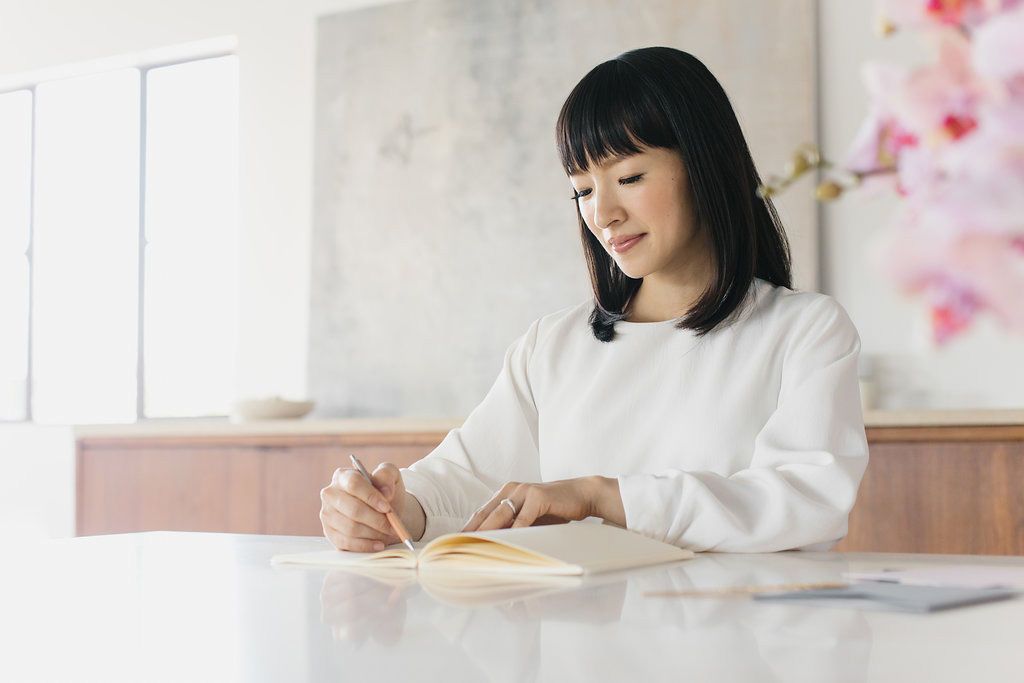
Japanese decluttering diva Marie Kondo started as an organizing consultant while she was a 19-year-old university student in Tokyo. Her 2011 book “The Life-Changing Magic of Tidying Up” has sold millions of copies, and her idea of keeping items only if they “spark joy” has inspired many to toss mountains of household clutter.
Her “KonMari” method has six basic rules: Commit yourself to tidying up. Imagine your ideal lifestyle. Finish discarding first. Tidy by category, not by location. Follow the right order. Ask yourself if it sparks joy.
Kondo recently answered readers’ questions about our complex relationship with stuff. During the chat, she shared something that brings her joy.
The question was: “How many PJs do you think women should have. Summer and winter?” She replied, “The KonMari Method does not set a numerical limit on the number of items you should own. Rather, it is about learning what items spark joy for you. For me personally, I own 15 sets of pajamas — summer and winter. Clearly pajamas spark joy for me!”
But many of us aren’t happy with the state of our closets, kitchens and garages. Sme people can’t seem to get a grip on their towering piles of things for many reasons. Here’s Kondo’s advice on four obstacles that keep some of us buried in clutter.
Space: Don’t blame the size of your home for your lack of organization. Kondo said she successfully organizes homes in Japan, where a 1,000-square-foot home is considered large. Her advice: “When organizing a small house, it is important to store things in the same category together. Don’t scatter them in different places around the house. In order to take full advantage of the storage systems you do have, such as the pantry or closet, make sure you store everything vertically. This will help you save space.”
Sentimentality: Kondo’s main advice for dealing with sentimental items, such as things that remind you of a deceased loved one, is to tidy them up only after you have organized the less emotional categories. So start with clothing, books and papers. “If you encounter any item in one of these categories that brings back a memory … set it aside as part of the sentimental category. By tidying non-sentimental items first, you will give yourself time to sort through your thoughts and emotions before going through the sentimental items you have set aside.”
And those treasures that make you happy every time you look at them? “Keep them proudly,” she said, as it’s not just about looking for things to eliminate, but being thoughtful about what you keep or toss — and cherishing those items you keep.
Guilt: If your parents give you gifts you don’t love, how do you get rid of them without feeling guilty? Ideally, Kondo wrote, you should feel joyful when you get a gift. After you express gratitude, it’s OK to get rid of it. “In order to prevent this kind of thing from happening again and again, it is important to clarify what sparks joy for you in your everyday life. By discussing your favorite things with your parents, the gifts that you want can become the gifts that you get.”
Money: You don’t need to have money for organizational accessories, Kondo said. Just have a donation bag ready. Kondo said you should spend only on items that will help you achieve your ideal vision. “If your kitchen is your favorite space in your home, that might be an area worth spending a little money to upgrade your organization.”
Decluttering phenomenon Marie Kondo shares insight on four obstacles that keep some of us buried in clutter. MUST CREDIT: M.K Sadler for KonMari