






Endangered ferrets making comeback at Colorado refuge
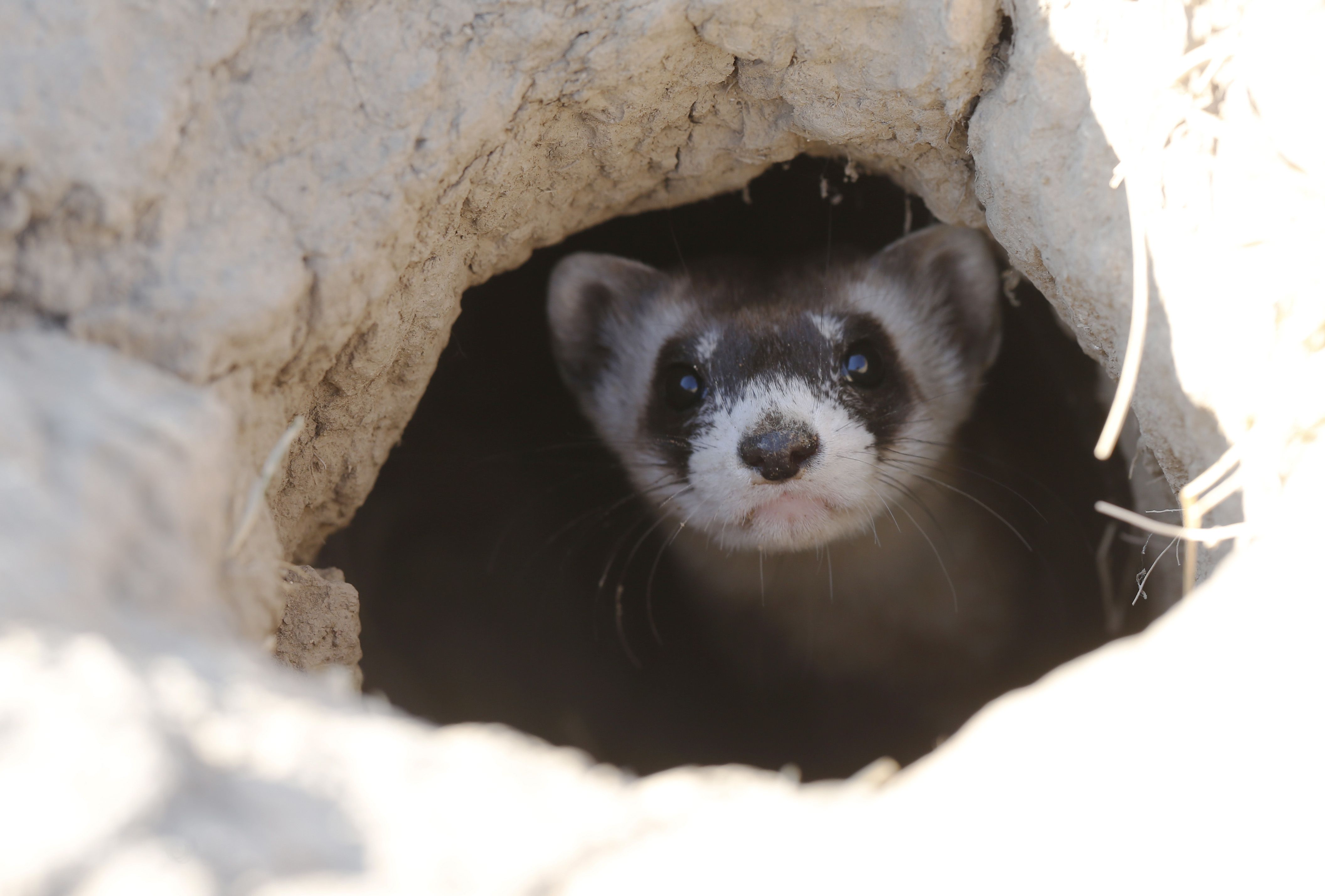
Efforts to rebuild the population of North America’s most endangered mammal are gaining traction right on Denver’s doorstep. A crew of U.S. Fish and Wildlife Service biologists, other employees and seasonal workers so far have found 16 black-footed ferret kits — babies — during nightly searches this past week at the Rocky Mountain Arsenal National Wildlife Refuge in Commerce City.
The crew will go out again this week in the early morning with spotlights to count the nocturnal animals, which prey on prairie dogs and also use burrows dug by prairie dogs. Since captive-bred ferrets were first released at the refuge in 2015, nearly 50 kits have been born in the wild. The total of newborns last year was 30. At least 60 ferrets are roaming on about 3,000 acres of the 15,000-acre wildlife refuge.
“We feel like the whole reintroduction at refuge is going better than we expected. We were given the expected percentages of survival and we’ve exceeded that,” said Dave Lucas, project leader at the wildlife refuge.
It’s going so well that the Arsenal might ship some of its ferrets to a site in Arizona to get more of the animals out on the landscape, improving chances that the creature once thought extinct makes a comeback. Lucas and the others will venture out again after dark in September to wrangle the wily weasels, give them follow-up vaccinations and possibly get some ready to go to a new home.
The lithe, little ferret was thought to be extinct until a ranch dog named Shep carried a dead ferret to his home near Meeteetse, Wyo., in 1981. Wildlife biologists found a small colony of live ferrets in the area and launched a captive-breeding and restoration program. Hundreds of the animals are living in the wild. They’ve been released at nearly 30 sites in eight states and in Canada and Mexico, according to the National Black-Footed Ferret Conservation Center in Fort Collins.
The U.S. Fish and Wildlife Service has released the ferrets on public lands and is working with private landowners, including a ranch family in the Pueblo area, to expand the available areas.
While the black-footed ferret captive breeding program has been successful, keeping the animals alive once they’re released has been a much tougher challenge. One of the biggest problems is sylvatic plague, known as the bubonic plague in humans. Prairie dogs, the ferrets’ main prey, and ferrets are highly susceptible to the disease, carried by infected fleas. An outbreak can ravage prairie dog colonies and then wipe out ferrets.
Biologists are working on vaccines for prairie dogs, including peanut-butter-flavored pellets.
A black-footed ferret looks out of the entrance to a prairie dog tunnel after being let loose during a release of 30 of the animals by the U.S. Fish and Wildlife Service at the Rocky Mountain Arsenal National Wildlife Refuge in Commerce City. Associated Press file photo.
A black-footed ferret looks out of a crate used to take it to a site to be let loose during a release of 30 of the animals by the U.S. Fish and Wildlife Service, Monday, Oct. 5, 2015, at the Rocky Mountain Arsenal National Wildlife Refuge in Commerce City, Colo. (AP Photo/David Zalubowski)
