






The High Ground: Air Force debunks meteor myth
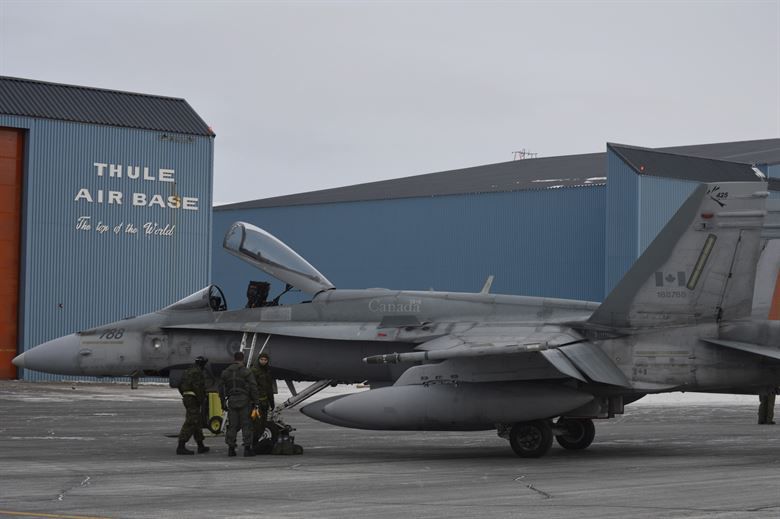
United States Air Force photo by Staff Sgt. Daniel Bickford
No, the Air Force Space Command base at Thule, Greenland, wasn’t blasted to atoms by a giant meteor last month.
Air Force Space Command confirms that a meteorite was spotted near the base in July, but it wasn’t the giant alleged in a number of reports on conspiracy theory websites that migrated phony reports to social media. “There was absolutely no damage,” a spokeswoman confirmed.
Thule, which falls under the 21st Space Wing at Peterson Air Force Base, has long-range radar designed to spot incoming ballistic missiles. It’s America’s northernmost military installation and one of its most isolated.
First step toward new space force likely to land in Colorado Springs
It also has been home to a series of conspiracy theories, many surrounding the 1968 crash of a B-52 bomber near the base that was armed with nuclear bombs. While a meteor did enter the atmosphere over Thule and generate a fireball, it didn’t cause a nuclearlike detonation over the base . Though several websites claimed the Air Force wouldn’t acknowledge the incident, the Space Command public affairs staff was quick to confirm it, but it didn’t confirm the wacky details floating around the darker corners of the internet.
ilitary Wants Space Weather Forecast
If a meteor is the space version of a hailstorm, the Air Force wants a better way to predict the weather in orbit.
The Pentagon’s Defense Advanced Research Projects Agency is looking for inventors to come up with a way to predict space weather in county-sized boxes above the globe. Space weather, which includes radiation bursts from the sun and other factors that inhibit satellite use, is now predicted on a broad scale – a hemisphere at a time.
DARPA wants hourly forecasts of smaller areas of space, allowing satellite operators to plan for interference to radio signals and other hazards. You can learn more at darpa.mil/news-events/2018-07-17a
Ban on fitness trackers
Fitness trackers that are all the rage at military bases nationwide have been banned for troops deploying overseas.
Earlier this year, it was discovered that the devices broadcast GPS data that can be tracked on the internet. If you wanted to find a secret military base overseas, all you had to do was hunt for the joggers in the middle of uninhabited desert in Iraq and Syria.
The Pentagon moved last week to get rid of the devices in combat zones. “This includes physical fitness aids, applications in phones that track locations, and other devices and apps that pinpoint and track the location of individuals,” the Pentagon said.
The new policy also likely will outlaw the use of some cellphones that broadcast location data. “Personal phones and other portable devices also contain apps that rely on GPS technology, and they will be affected. Commanders will be responsible for implementing the policy, and they will be allowed to make exceptions only after conducting a thorough risk assessment,” the Pentagon said.
Contact Tom Roeder: 636-0240 Twitter: @xroederx
Contact Tom Roeder: 636-0240
Twitter: @xroederx
