






Onside kick every time? New NCAA rules have Mountain West coaches pondering possibilities
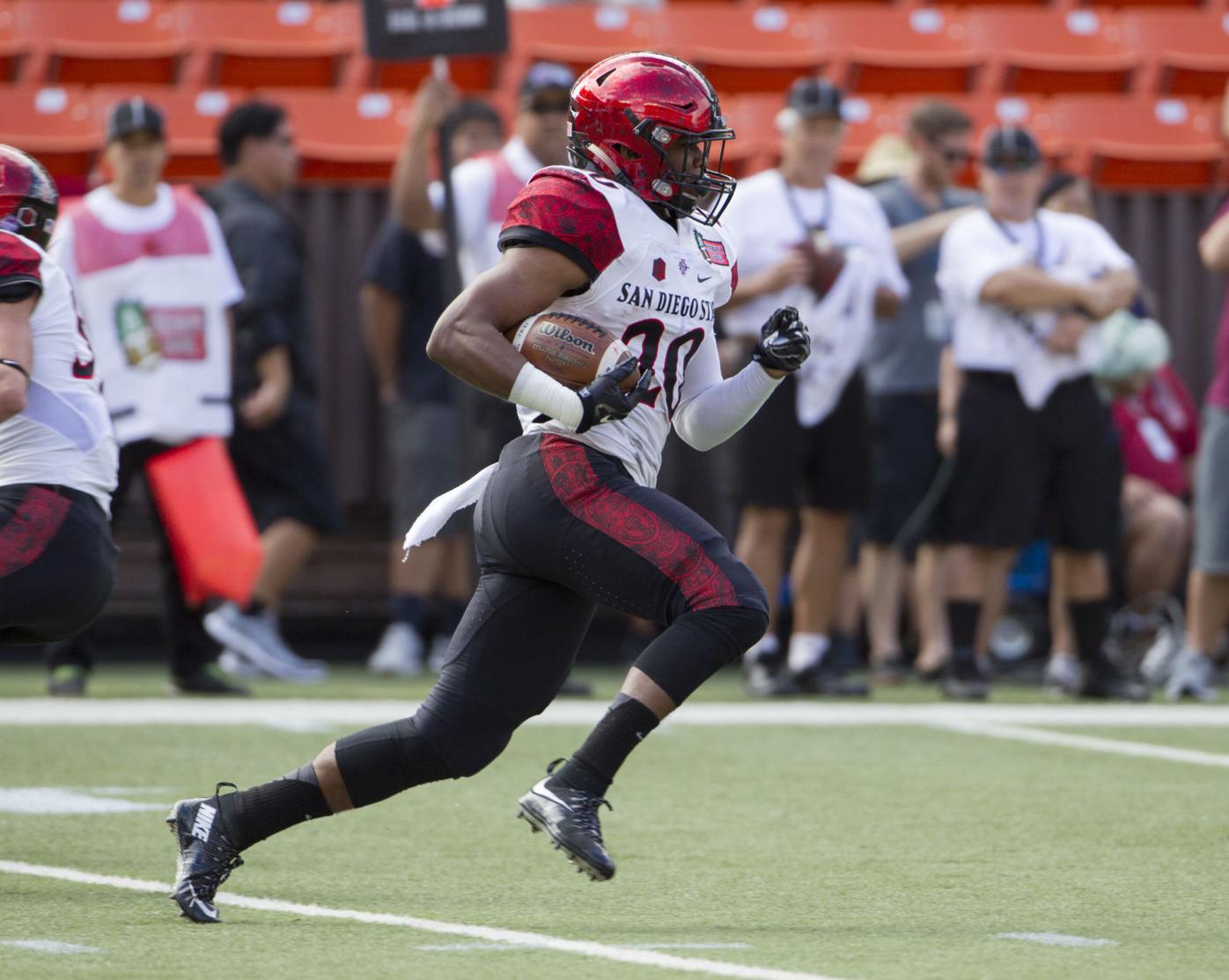
the associated press file
Pondering the impact of the change in kickoff rules, Brent Brennan drew a laugh from a room of coaches and journalists.
“We’re going to onside kick every time,” the San Jose State coach said.
One person not laughing was the coach sitting next to him at this roundtable event at last week’s Mountain West Media Summit in Las Vegas.
“I don’t think that’s as big a joke as people think it is,” San Diego State’s Rocky Long said.
The new NCAA rule allows the return team to fair catch any ball inside its 25-yard line and receive the ball at the 25, the same spot that used to be reserved for kicks downed in the end zone. The hope was the fair catch would be incentivized, fewer teams would attempt returns, and the high-impact play would occur less frequently and the game would grow a bit safer.
But to hear the discussion among Mountain West coaches, it appears kickoffs have never demanded a bigger focus than right now as teams try to figure out how best to leverage the new situation.
“This is going to be really fun for the first year,” Long said. “The first year you’re going to get the personalities of the head coaches. After the first year, statistically they’ll tell you what to do. Everybody will take all the statistics from all the teams in the country and they will determine what the smartest thing to do is. Maybe it’s fair catch every time. Maybe its onside kick every time. They’ll give you the statistics that will tell you how you’re supposed to play it.
“But the first year, nobody knows.”
Surprise onside kicks are recovered roughly 60 percent of the time, but the number plummets to under 20 percent in obvious situations. So don’t expect teams to try it every time.
However, assuming teams under the new rules can post a minimum average starting field position at the 25 — while an onside kick would be recovered around the 50 — the risk of trying an onside kick would be 25 yards or less.
A study from Advanced Football Analytics — “Analytics, I hate that word,” Long said — found that a recovered onside kick is worth an average of 1.2 expected points, while a failed onside kick will cost a team 2.1 expected points.
So, if coaches follow that, the success rate is going to have to be above 60 percent to make an onside kick worth attempting.
But the math will change as the rule brings new strategies.
Teams will be less likely to put bulkier players on the kickoff return team to block, since the kicking team will be more likely to bloop, squib, sky or roll the ball in direction of players it feels are less skilled.
So, while field position might be impacted in favor of the return team because fewer kicks will sail to the end zone and instead come down around the 35, teams won’t be able to bust as many big returns.
Then again, maybe teams will be more apt to place their best player in a kick return role, knowing the wear and tear will be reduced by fewer kickoff returns. So better returners will lead to more big returns. (By the way, the NCAA may need to reconsider the statistic minimum to qualify for kickoff return statistics, as it is currently set at 1.2 per game).
Teams will also be more likely to employ kickers who are able to place the ball with precision instead of booming the ball out of the end zone.
And some coaches may simply lay down the law that any ball inside the 25 is to be fair caught, no exceptions.
“I think it is really interesting,” Brennan said.
“I think every coach staff in the country is talking about it.”
