






‘Jurassic Park’ put dino dung on the silver screen. Here’s the real story.
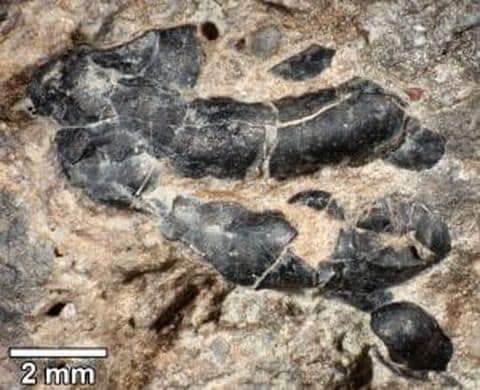
Karen Chin, Denver Museum of Nature & Science
When Karen Chin, a paleontologist at the University of Colorado at Boulder, saw the massive piles of dinosaur dung in the 1993 blockbuster “Jurassic Park,” she began to laugh. It’s a comical amount of waste. Near the midpoint of the film, the mathematician Ian Malcolm (Jeff Goldblum) walks up to a mound left by a sick Triceratops. He takes off his glasses — the poo rises to eye level — and remarks, “That is one big pile of (expletive).”
The camera pivots to paleobotanist Ellie Sattler (Laura Dern), elbow deep in another pile, looking for answers to the dinosaur’s illness. No film before or since has treated dinosaur dung with the same care. 2015’s “Jurassic World” left a bizarre dung-smearing scene on the cutting-room floor. The latest installment in the franchise, “Jurassic World: Fallen Kingdom,” doesn’t have time to squeeze in a fecal examination between its volcanic explosions and dinosaur rampages.
Chin credits the original scene to her former boss, paleontologist Jack Horner, a consultant on the film.
“I think it was his idea to put dung in the movie,” she said. It was the early 1990s, and dino dung was on their minds. Horner and Chin had embarked on a detailed assessment of dinosaur feces found in Montana’s Two Medicine Formation. They identified large mats of chopped-up, digested plant matter as the waste from hadrosaurs.
There’s a rich tradition of studying fossilized feces, which give an intimate look into dinosaurs’ inner workings. “Fossil feces provides insights that we can’t get from the bones themselves,” Chin said. “The most obvious is diet.”
In some cases, scientists can trace the path from fossil poop to dinosaur. When Chin and Erickson were graduate students, they described, in the journal Nature in 1998, a massive tyrannosaur dropping. It was 1½ feet long and 6 inches wide. “I believe it is the largest piece of carnivorous feces ever found on the planet,” Erickson said.
The high levels of phosphate in the dropping indicated that a carnivore produced the waste. Plant-eaters don’t excrete as much of the element. The most likely culprit, they concluded — the only predator big enough to leave it — was Tyrannosaurus rex. Bits of bone studded the dropping, some of the first evidence that T. rex jaws were strong enough to pulverize bone.
Chin has made a career of investigating dung. Erickson called her a “pioneer” in the field.
As for that “Jurassic Park” scene, it shows too much poop for one dinosaur to deposit, even for a 5-ton animal with digestive problems.
