






Colorado Springs creekside camping ban gets initial City Council approval
Jerilee Bennett, the gazette file
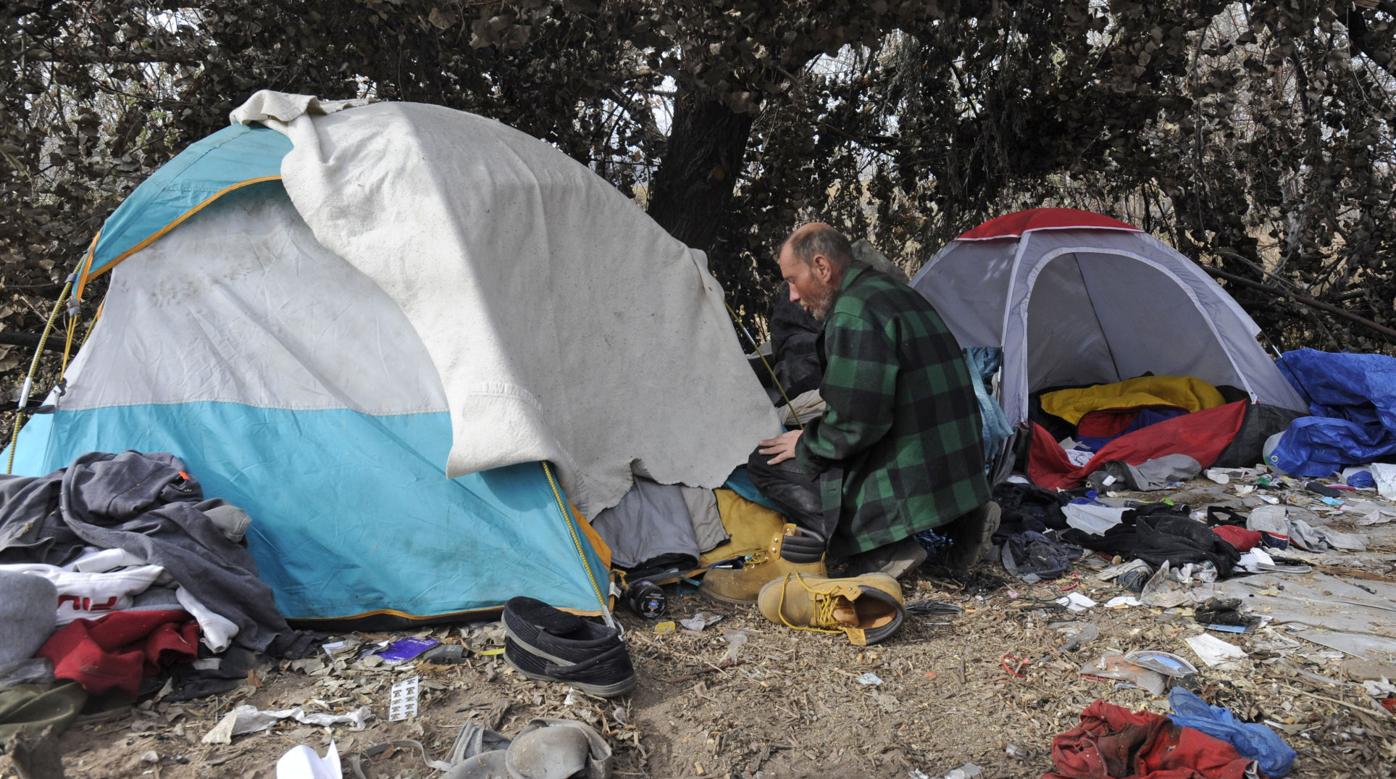
The Colorado Springs City Council gave initial approval Tuesday to a ban on creekside camping, paving the way for a crackdown on homeless people living along waterways within the city.
The council voted 7 to 2 to ban camping within 100 feet of the city waterways and concrete drainage canals. A second vote on final approval is expected July 10.
The decision capped months of debate on how to improve the city’s streams and creeks amid concerns that the ban unfairly targeted homeless people. And it came after a last-minute plea by Mayor John Suthers, who called the ordinance “a serious health safety and welfare issue.”
“We need to clean up our waterways,” Suthers said. “This is something that seems to be fundamental that we need to do, to improve the health of our waterways going forward.”
He added that the city is working with local nonprofits to boost the number of beds in shelters available in the city. At least 300 more beds are needed, Suthers said, and “we will expand our shelter bed capacity.”
The city also is working to establish a “homeless court” at the municipal courthouse, he said. The concept typically allows some people to receive alternative sentences, as well as supportive services, to help address the underlying issues that led to their arrest or citation.
“But, I reiterate, this is something we need to do,” Suthers said of the ban. “We need to begin as soon as possible.”
The city already bans camping on public property, but enforcement under the new ordinance would be far more stringent in creekside areas because police would not have to ensure that shelter beds are available before issuing a summons.
Anyone violating the new ordinance could face up to $2,500 in fines and 180 days in jail.
The proposal has raised concerns among homeless advocates and the American Civil Liberties Union of Colorado that it unfairly targeted people who are homeless, and that it did nothing to address the area’s affordable housing shortage.
Councilman Bill Murray noted Tuesday that no studies have conclusively tied high E. coli levels in the Fountain Creek watershed to homeless campers.
“Therein lies the rub — we can’t really prove that these folks are really the ones contaminating” the waterways, Murray said. “How will we sustain a court challenge?”
“I showed you pictures — there’s a lot of trash and debris within 100 feet of it,” countered Richard Mulledy, who oversees the city’s waterways. “Maybe it’s not the end all be all … but I think it’s a correct first step in my judgment.”
A city attorney added that the ordinance is “defensible.”
Joining Murray in opposition was Yolanda Avila, who said the law’s penalties — including the possibility of jail time — were too strict.
“Can we not have ‘homeless court’ first?” Avila asked. “Can we not look at other solutions for this first, before we go to incarcerate?”
The prospect of additional beds helped sway Councilwoman Jill Gaebler, who previously expressed concern about the ordinance.
And other supporters argued that the ordinance was badly needed as Colorado Springs faces increasing scrutiny by state and federal water regulators to improve the quality of its creeks and streams.
Already, the city is battling a lawsuit by the Environmental Protection Agency and the Colorado Department of Public Health and Environment concerning its stormwater infrastructure and runoff carrying pollutants that flow downstream. And more recently, the state has begun drafting an E. coli standard for the Fountain Creek watershed.
“We need to make a stand,” Councilman Merv Bennett said.
Bennett backed amending the ordinance — or proposing a new one — to require that people clean up their pets’ waste within 100 feet of streams.
“But that can be added later,” Bennett said. “We need to deal with this now.”
Still, the ordinance could face slightly more opposition when it comes up for a second vote in two weeks.
Councilman David Geislinger said he could reverse his support in July if the city doesn’t take additional steps to address homelessness, and to hold other possible polluters of the city’s waterways accountable.
“What we should be focusing on is the actions of people whether they’re campers or not,” Geislinger said.
Contact Jakob Rodgers: 476-1654 Twitter: @jakobrodgers
—
Contact Jakob Rodgers: 476-1654
Twitter: @jakobrodgers
