






‘FAR: Lone Sails’ is a tranquil adventure game
Mixtvision
One of the more elegant games released this year has expansive swaths of shifting-colored landscapes guide much of the experience. “FAR: Lone Sails” is a compact exploration game about a solitary traveler who ventures across a desolate, wind-swept land once covered by an ocean.
Because much of the game’s appeal rests on its atmosphere, comparisons have been made with games such as “Limbo” or “Inside” from Danish developer Playdead. But “FAR: Lone Sails” is much more placid and encouraging of daydreams.
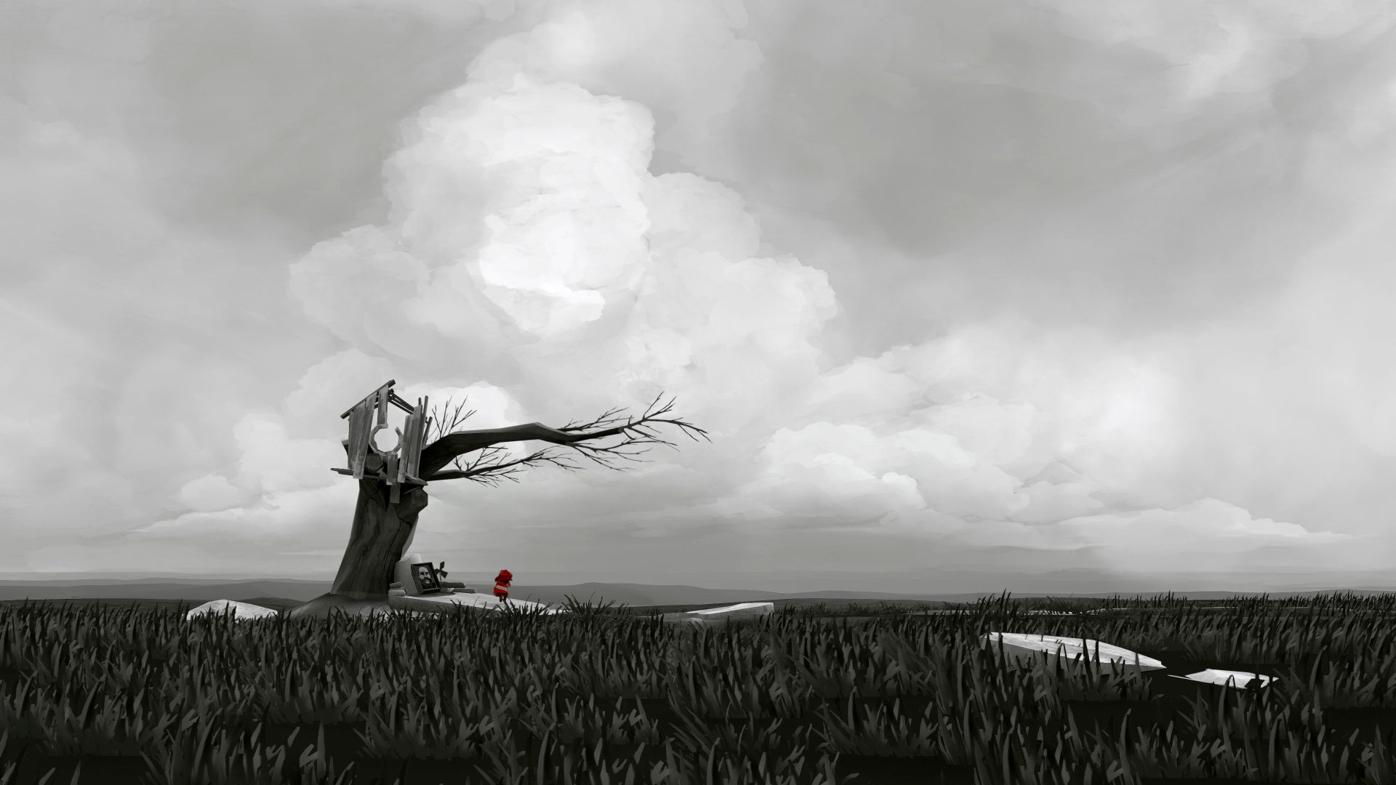
At the start of the game, Lone, a smallish figure who resembles a firefighter, stands before a grave near a leafless, forlorn-looking tree. Barely nested in the tree is a dilapidated treehouse. Lone’s red hat and white-striped red coat are the brightest things in the sight. The grayish, cloud-smeared background dwarfs the figure and accentuates the scene’s melancholic aspect.
Moving Lone to the right leads to a barn with a damaged roof. On the interior wall is a picture of an unusual vehicle, and on the top floor is a bed over which hangs a picture of the main character or someone identically attired. Advancing beyond the building, Lone walks through shallow pockets of water and past scattered, broken boats that stick out of the ground like the bones of long-dead animals. Soon after, Lone comes upon a scaffolding structure designed to accommodate the strange contraption pictured in the barn.
Stepping into the vehicle, which looks like a train crossed with a boat, reveals an interior made up of three levels. An elevator in the center provides access between the floors and roof deck. Lone can access the vehicle’s fuel station by taking the elevator to the second level, where the push of an overhead button raises a small platform. When the platform is loaded with one of the game’s types of fuel sources and then raised, the fuel tank is filled. This allows Lone, after jumping onto a different platform in the middle, to hit the speed button and get the vehicle rolling.
With trial and error, players will fall into the operational rhythms of the machine — moving the character back and forth between the fuel station and hitting the accelerator button and the nearby steam button, which must be occasionally pressed to make sure the engine doesn’t overheat. Strategically building up and releasing steam is useful for doing things such as giving the vehicle a burst of traction up an incline.
Over the journey, the vehicle gets some nifty upgrades. A sail of tattered canvas harnesses the wind, so you can take a break from running around gathering fuel to keep the vehicle moving. Watching the little voyager stand next to the sail and enjoying the scrolling scenery accompanied by the strikingly good soundtrack is to experience the game’s reward state.
When roadblocks arise, it’s usually necessary to get out of the vehicle and search the area for a useful object, such as a button or something that can be winched to the buggy. The puzzles aren’t very demanding. They struck me as excuses to venture outside of the vehicle and inspect whatever curiosities lay nearby.
Ultimately, the game is more about the journey than the destination. The game’s refined art style delights the eye at every turn. Though Lone must dash frantically about the vehicle at times to keep things chugging along, “FAR: Lone Sails” leaves a lasting impression of tranquility.
