






Awash in box office statistics, what do the numbers really mean?
Have you seen the numbers?
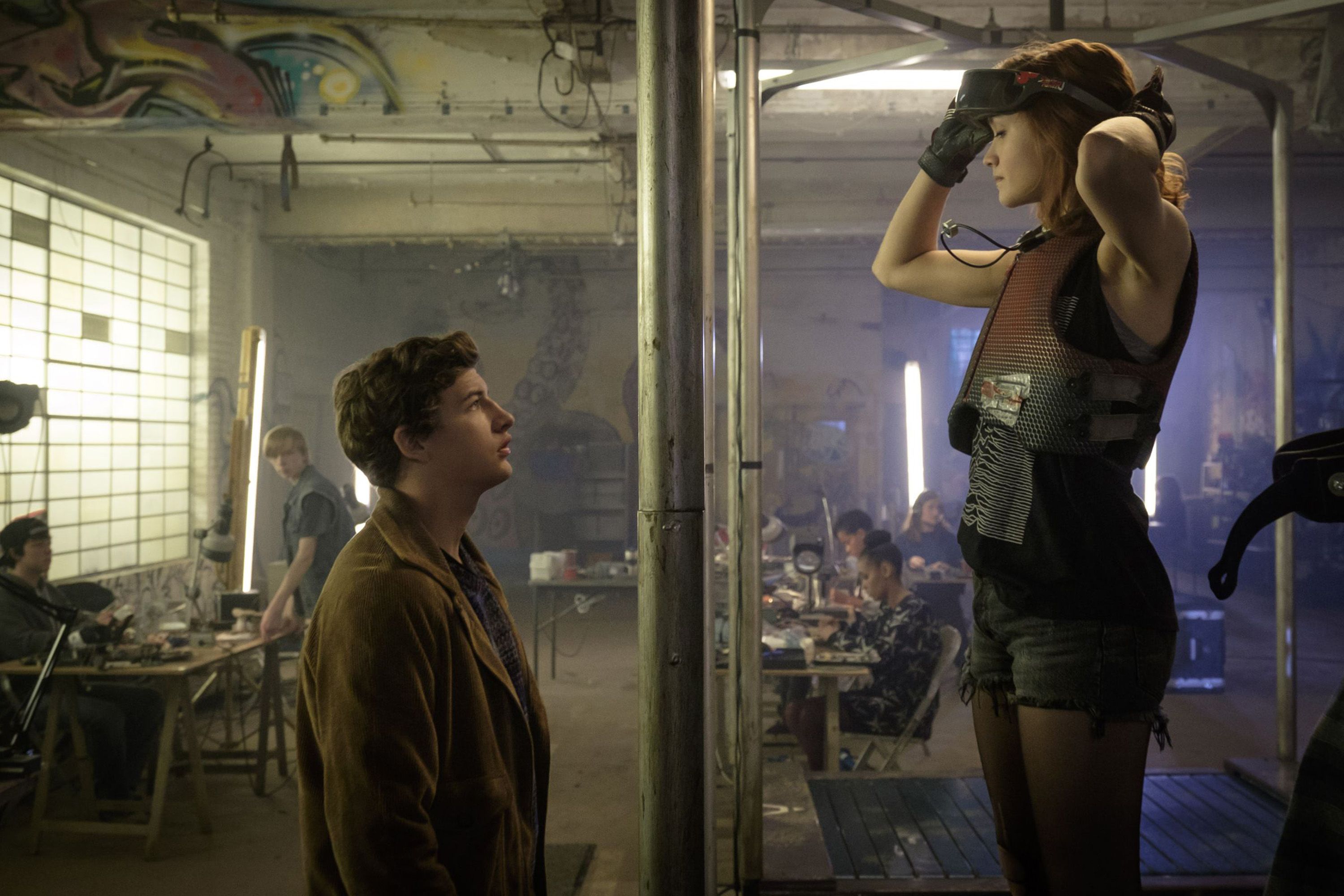
“Black Panther,” Ryan Coogler’s masterful adaptation of the Marvel comic book series, recently crossed $1 billion in box-office receipts worldwide, putting it in the top 10 moneymakers of all time. Steven Spielberg’s “Ready Player One” is another commercial phenom, with its opening-weekend take of more than $40 million counting as the director’s best showing in a decade and its accumulated revenue of $192 million making it one of this year’s biggest triumphs.
Unless it isn’t. In a recent article in the Hollywood Reporter, analyst Pamela McClintock postulated that, with a production cost of $175 million and a sinus-clearing marketing budget, “Ready Player One” might have to earn more than $420 million – maybe $500 million – to break even. (The scratch formula to calculate a studio’s portion of a film’s gross is to divide total box office in half.) McClintock wrote, “While the movie launched ahead of expectations … ‘Ready Player One’s’ debut isn’t enough to guarantee success.”
That might be hard to believe. But as precise definitions of what constitutes a movie are changing, the notion of what constitutes “success” is undergoing a radical shift in Hollywood, as audience expectations evolve and platforms multiply and otherwise solid business models melt into air. In February, Netflix made “The Cloverfield Paradox” available on its streaming service after a surprise teaser during the Super Bowl. According to Nielsen reports, about 5 million viewers watched the movie over the next seven days, a figure that would translate to about $45 million at the box office. They had even better numbers for “Bright,” another straight-to-streaming title starring Will Smith that reportedly garnered 11 million viewers over its first three days.
Why should anyone outside the movie industry care whether a bunch of L.A. fat cats get richer? Because, as with household budgets and government spending, money in Hollywood bears a direct correlation to priorities and values. In that notoriously risk-averse and slavishly imitative business culture, sure things are the collective grail, whether via built-in audiences for superhero spectacles and hit book adaptations, or endless cycles of sequels, spinoffs and reboots of proven properties. The more profitable a movie, the likelier it will be copied, meaning it’s in all our interests to heed what studio executives consider a hit or a bomb. The difference decides whether the movies we love will flourish or die on the vine.
The trick is to look beyond obvious “hits” and “bombs,” definitions becoming vexingly elastic. “Game Night,” a sprightly R-rated comedy that opened in February, hasn’t made any headlines about record-breaking earnings. But it has quietly cracked $100 million at the box office, more than three times its modest $37 million budget.
Ava DuVernay’s “A Wrinkle in Time” has been unfairly labeled a disappointment, even though it’s been in the top five box-office earners since its March opening. Now at $106 million in receipts (about what it cost to make), DuVernay’s fantasy adventure is almost guaranteed to become a staple on DVD and Blu-ray, traditionally dominated by family titles. The charming teen rom-com “Love, Simon,” which already has earned back twice its $17 million budget, has similarly rosy prospects after it leaves the big screen.
Then there are the countless movies that open briefly in theaters only to disappear in weeks – a sure sign of failure. But maybe not: Such blink-and-you-missed-them indies as “Swiss Army Man” and last year’s “A Ghost Story” might not have set the theatrical world on fire, but both performed exceptionally well on streaming sites – an increasingly common pattern whereby a film’s theatrical run is used to raise awareness for future clicks and downloads rather than an end in itself.
Hollywood might finally be accepting these new realities. For the first time, the Motion Picture Association of America has included home-entertainment statistics in its annual survey of demographics, viewing habits and industry trends. This year’s big takeaways: The North American market has matured to the point of flattening; growth is overseas, especially in China. Teenagers still crave getting out of the house, and the multiplex offers an easy, affordable option. Per capita attendance figures are highest among Hispanic and Asian filmgoers. Oh, and guess what: Women still account for 50 percent of the audience.
Those last few data points were proved during the first quarter of 2018, when the highest-performing movies were led by women and people of color. What once might have been considered “niche” is now most assuredly “mass,” and vice versa. Success comes in a variety of shapes, sizes, platforms and packages. As tiny a space as a box office can’t possibly contain it, much less measure it.
T’Challa (Chadwick Boseman) rules over the early reviews of “Black Panther.” Marvel Studios
“Ready player one” (Warner Bros. Pictures)
“A wrinkle in time” movie (Disney)
“A wrinkle in time” movie (Disney)
Nick Robinson in “Love, Simon.” Ben Rothstein – Twentieth Century Fox.
T’Challa (Chadwick Boseman) rules over the early reviews of “Black Panther.” Marvel Studios
“Ready player one” (Warner Bros. Pictures)
“A wrinkle in time” movie (Disney)
“A wrinkle in time” movie (Disney)
Nick Robinson in “Love, Simon.” Ben Rothstein – Twentieth Century Fox.