






Colorado Springs chef offers tips for making ceviche appetizer
Before embarking on the “Delectable Peru” culinary trip in September, we visited Carlos Echeandia, owner of Carlos’ Bistro, who grew up in Peru. On dishes not to miss, he had one word: ceviche. And now, fresh from that trip, we’re left with lingering memories of the delicious flavors experienced in wildly different versions of that raw fish appetizer.
The origin of ceviche – popular in coastal regions of Latin America and the Caribbean – is hotly debated, but it’s most closely associated with Peru. (You might have seen it spelled “seviche” or “cebiche,” but “ceviche” is most common in Latin countries.)
The first of three lessons in making ceviche was at Gaston Acurio’s La Mar Cebicheria in Lima.
“The key to making ceviche is the leche de tigre, or tiger’s milk, a citrus-based marinade that cures the seafood,” Acurio said.
Tiger’s milk is the liquid left from the marination of the raw fish. The flavorful liquid picks up spicy notes of other ingredients added to the lime juice. Peruvians believe ceviche is a hangover cure and aphrodisiac.
Acurio’s basic ceviche recipe was cubed fish, finely diced onion, cilantro, chile, salt, garlic, celery, lime juice and fish stock. He first squeezed the juice of two limes over the raw fish.
“This will cure or cook the fish,” he said. “It must be done just before you serve the dish. Otherwise the fish will get ‘overcooked’ and mushy.”
The other ingredients were combined with the fish. He garnished the dish with fried corn nuts and avocado.
No single species of fish is favored for ceviche. Acurio used Lisn, the Spanish word for a smooth white fish.
In Peru, ceviche is garnished with thinly sliced onions, lime slices and aji amarillo (mild-flavored yellow peppers) or rocoto chili peppers (similar to bell peppers). Some chefs serve sweet potato slices and fried large-kernel Andean corn with ceviche. Colorful edible flowers also dress up the appetizer.
At Wayra Restaurant in Urubamba in the Sacred Valley near Cusco, executive chef Nacho Selis made ceviche with lake trout identical to wild-caught salmon. He sliced the trout into thin strips and smeared it with a thick, creamy, bright-green sauce. His version of tiger’s milk was made green with chopped cilantro.
At another class in Cusco, Leo Almamiza, sous chef at Belmond Palacio Nazarenas hotel, didn’t use fish at all in his black quinoa and lima bean ceviche.
“Ceviche is a technique,” he said, “another way of cooking without heat.”
Back from our travels and eager to make the fish dish, we picked up tips from Ben Hoffer, executive chef at Till Kitchen.
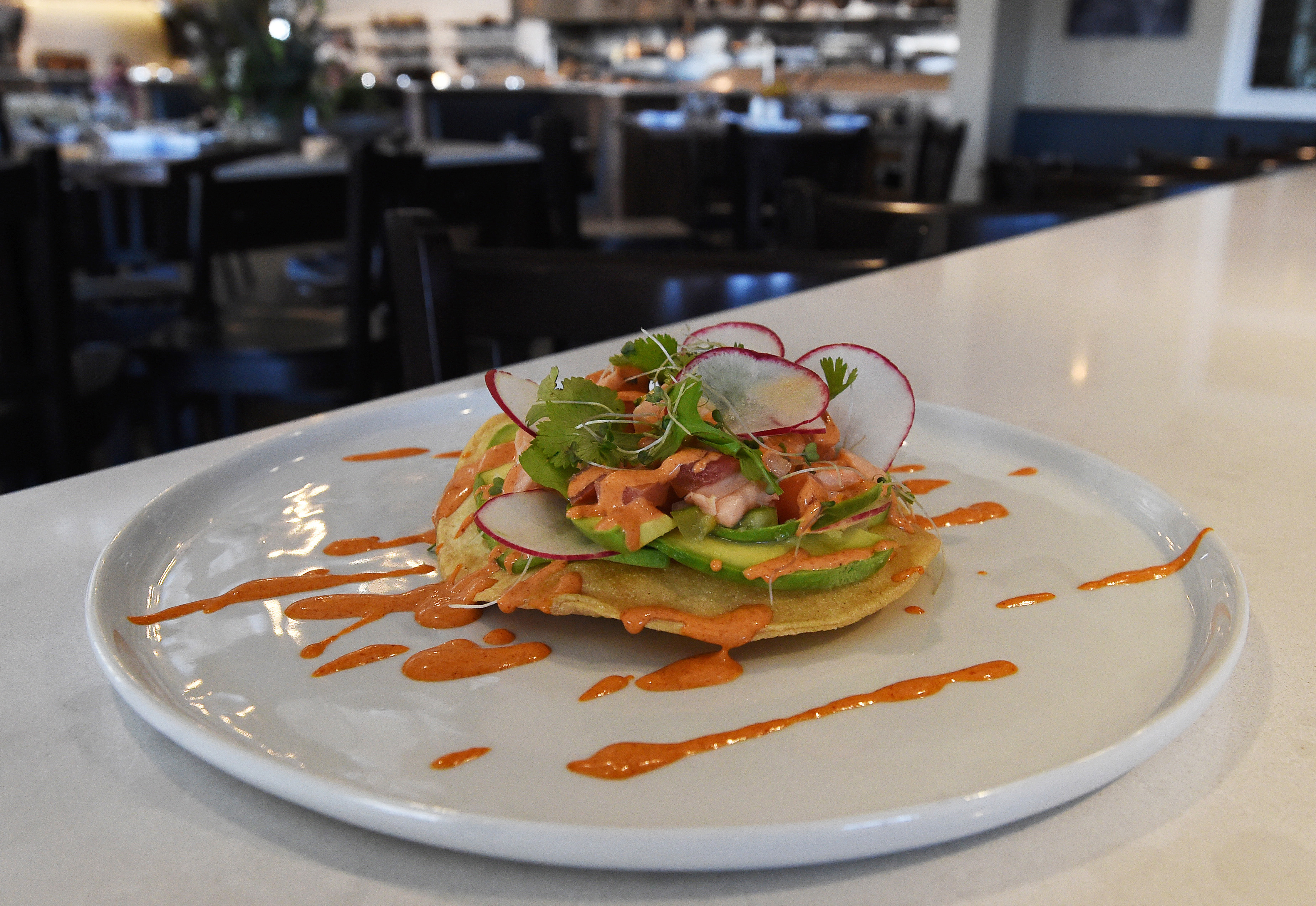
“We have an awesome salmon ceviche on the menu, which we will feature as a tostado with fresh avocado, cilantro and spicy aioli,” he said.
Shopping for sushi-quality fish in landlocked Colorado can be a challenge.
But Hoffer said, “Whole Foods Market is probably the best go-to for quality and variety. However, if you are persistent, you can score some really good stuff from the Asian Pacific Market and even the seafood counters at Safeway or Kroger (King Soopers).
“Almost any fish will work. Shrimp, salmon and scallops are a great place to start.”
He said the process to “cook” the fish is “a little mystifying.”
“Basically, you are achieving the same result through a chemical reaction instead of the application of heat. As it sits in the marinade,” Hoffer said, “the flesh will change to a much more opaque appearance and will firm up considerably.
“Cut the fish as uniformly as possible. This will ensure that the acidulation process can happen evenly. Stir your ceviche often as it’s marinating, which helps the process along,” he said.
“Remember, the fish you are using for ceviche is really fresh and most likely could be consumed raw like sushi or sashimi. If it isn’t, you shouldn’t be making ceviche out of it.”
#4 Till Kitchen Ceviche is a popular raw fish dish in Peru and showing up on US restaurants too. It’s on the menu at Till Kitchen. Ceviche from Till Kitchen on Wednesday, October 25, 2017. Photo by Jerilee Bennett/The Gazette
Nacho Selis, executive chef at Wayra Restaurant, in Urubamba in the Sacred Valley near Cusco, Peru, prepares to teach a ceviche class. Photo by Teresa Farney
In Peru ceviche is often served with sweet potatoes and large- kernel Andean corn. Photo by Teresa Farney
Gaston Acurio, owner of La Mar cevichirea in Lima, Peru, taught a ceviche class during Ericka La Madrid’s “Delectable Peru Culinary Tour.” Photo by Teresa Farney