






11 deaths on Colorado fourteeners this summer prompt conversation around mountain safety, preparedness
ASPEN — With 11 people dead on Colorado’s highest peaks so far this summer — including seven on the treacherous fourteeners around Aspen — rescuers and climbers are scrambling for a plan to prod the swarming masses to make better decisions in dangerous terrain.
Luckily, they have a route already mapped out. Avalanche-awareness workshops — brief introductions to the risks of backcountry travel in winter — was birthed in the late 1980s by Mountain Rescue Aspen, and the group of weary rescuers is seeding a new plan for warm-weather backcountry travel training called Peak Awareness.
“Because of everything that has happened in the high peaks around us, we realized we need a second cousin to our avalanche-awareness program,” said David Swersky, a 37-year member of Mountain Rescue Aspen who helped formulate the now ubiquitous avalanche training nearly 30 years ago.
It’s been a rough season in Pitkin County’s Elk Range, home to seven of the state’s most technically demanding fourteeners. Since July, the midpoint of the busiest summer ever for the Roaring Fork Valley, the group has been called out on more than 30 rescues. Eight of those were body recoveries. Five were on the daunting Capitol Peak.
Read more at denverpost.com.
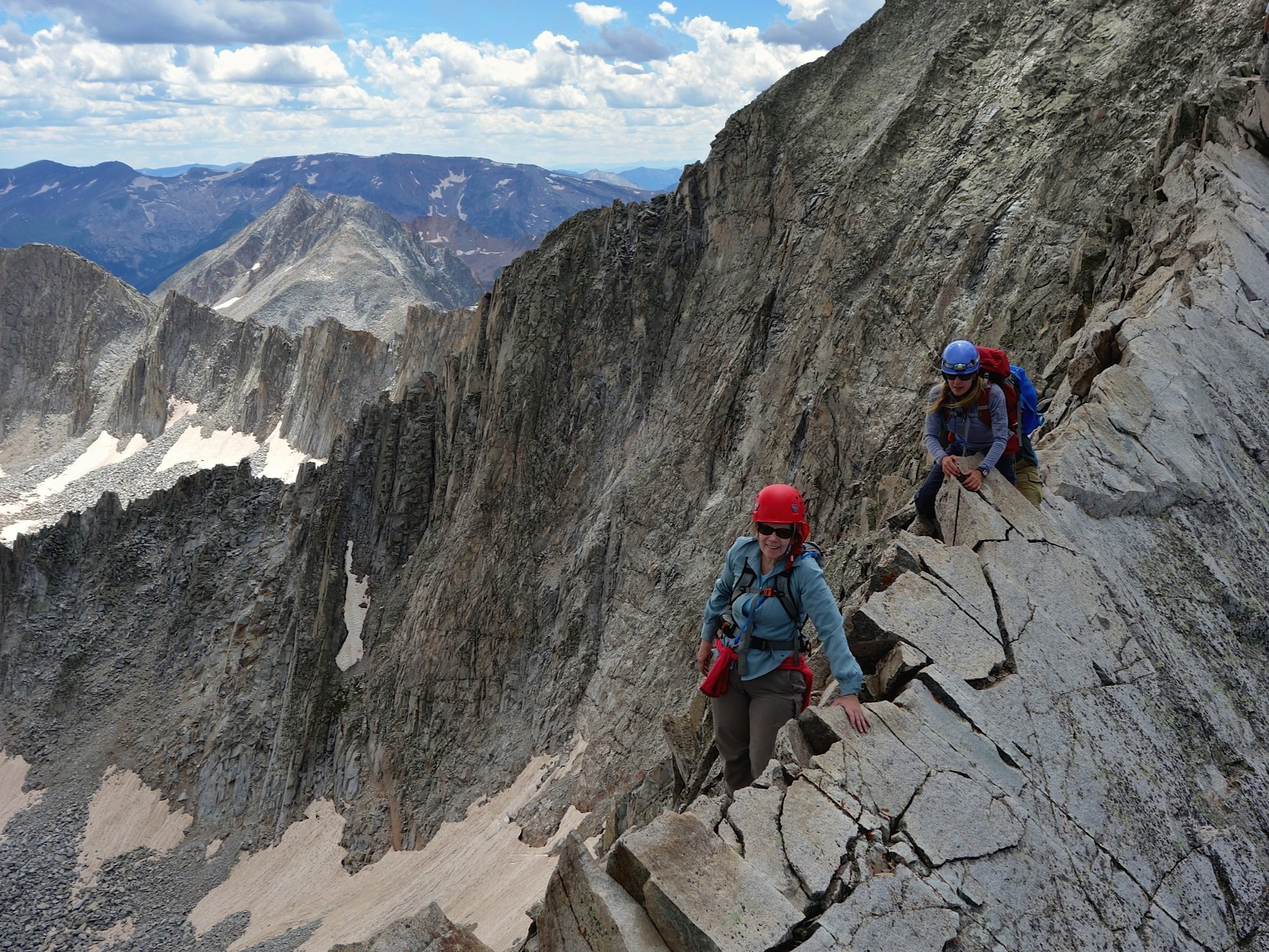
Colorado Springs man Roger Austin traverses Capitol Peak’s Knife Edge. Photo credit: Roger Austin
Colorado Springs man Roger Austin last month traverses Capitol Peak’s Knife Edge. The mountain claimed five lives between July and August. Photo credit: Roger Austin