






Trump considers major changes amid escalating Russia crisis
President Trump and his advisers, seeking to contain the escalating Russia crisis that threatens to consume his presidency, are considering a retooling of his senior staff and the creation of a “war room” within the White House, according to several aides and outside Trump allies.
Following Trump’s return to Washington on Saturday night from a nine-day foreign trip that provided a bit of a respite from the controversy back home, the White House plans to far more aggressively combat the cascading revelations about contacts between Trump associates, including Jared Kushner, the president’s son-in-law and senior adviser, and Russia.
White House officials are also trying to find ways to revive Trump’s stalled policy agenda in Congress and to more broadly overhaul the way the White House communicates with the public.
That includes proposals for more travel and campaign-style rallies throughout the country so that Trump can speak directly to his supporters, as well as changes in the pace and nature of news briefings, likely including a diminished role for embattled White House press secretary Sean Spicer.
While much remained fluid Saturday, the beefed-up operation could include the return of some of Trump’s more combative campaign aides, including former campaign manager Corey Lewandowski, who was fired nearly a year ago, and former deputy campaign manager David N. Bossie, who made his name in politics by investigating Bill and Hillary Clinton for two decades. Both of them have already been part of ongoing discussions about how to build a “war room,” which have been led in part by chief strategist Stephen K. Bannon.
Other Trump players who have drifted from his orbit in recent months, such as Sam Nunberg, are also being courted to play more active roles, either officially joining the White House or in an outside capacity, working through confidants of the president.
“Go to the mattresses,” a line from “The Godfather” film about turning to tough mercenaries during troubled times, has circulated among Trump’s friends, according to two people close to the “war room” discussions.
White House counselor to the president Kellyanne Conway has been involved in related talks, including with prominent Trump backers outside Washington and on Capitol Hill, and has contacted people from Trump’s campaign network, asking them to be more involved in supporting the president, according to three GOP consultants working with the White House.
Meanwhile, White House counsel Donald McGahn is mulling expanding his office, and an outside legal team led by Marc E. Kasowitz is readying to meet with Trump and guide him, including on whether he should continue to comment on the Russia probes on Twitter.
Kushner has played an active role in the effort to rethink and rearrange the communications team, improve the White House’s surrogate operation, and develop an internal group to combat the influx of negative stories and revelations over the FBI’s Russia probe, said someone with knowledge of the coming changes.
“The bottom line is they need fresh legs; they need more legs,” said Barry Bennett, who served as a political adviser to Trump during the general election. “They’re in full-scale war, and they’re thinly staffed.”
As Trump has participated in meetings with world leaders in recent days, senior aides — including Chief of Staff Reince Priebus, Bannon and Kushner — have met in the White House to discuss a potential reshuffle.
Kushner’s own role has emerged as a particularly sensitive topic of discussion within the White House, as his actions have come under increasing scrutiny in the FBI investigation of Russian meddling in last year’s presidential election.
The Washington Post reported Friday night that Kushner and Russia’s ambassador to Washington discussed the possibility of setting up a secret and secure communications channel between Trump’s transition team and the Kremlin, using Russian diplomatic facilities in an apparent move to shield their pre-inauguration discussions from monitoring.
Some White House aides have discreetly discussed among one another whether Kushner should play a lesser role — or even take a leave — at least until the Russia-related issues calm, but they have been reluctant to discuss that view with Kushner himself, and Kushner’s network of allies within the West Wing has rallied behind him.
Those close to Kushner said he has no plans to take a reduced role, though people who have spoken to him say that he is increasingly weary of the nonstop frenzy.
In recent weeks, the White House also brought on Josh Raffel as a spokesman to handle many of the issues in Kushner’s portfolio; Raffel works out of a shared office in the West Wing, although he also has space in the Eisenhower Executive Office Building.
During a lunch Friday, Kushner and Priebus talked about how Trump’s foreign trip had gone and began outlining what is coming up in the weeks ahead. Earlier in the day in Kushner’s office, the two briefly discussed the stories involving Kushner and Russia.
The president’s lawyers have urged Trump not to author adversarial Twitter messages or make off-the-cuff comments about the Russia probe, explaining that those utterances could further hurt him if it seems as if he’s trying to obstruct the investigation.
Underscoring the uncertainty of what lies ahead, some Trump associates said there have been conversations about dispatching Priebus to serve as ambassador to Greece — his mother is of Greek descent — as a face-saving way to remove him from the White House. A White House spokeswoman strongly denied that possibility Saturday.
The president has expressed frustration — both publicly and privately — with his communications team, ahead of the expected overhaul.
Though no final decisions have been made, one option being discussed is having Spicer — who has been parodied on NBC’s “Saturday Night Live” — take a more behind-the-scenes role and give up his daily, on-camera briefings.
Sarah Huckabee Sanders, the deputy White House press secretary, is being considered as a replacement behind the lectern. White House aides have also talked about having a rotating cast of staff brief the media, a group that could include officials such as national security adviser H.R. McMaster. Having several aides share the briefing responsibilities could help prevent Trump — who has a notoriously short attention span — from growing bored or angry with any one staffer.
The White House has already been testing this strategy, sending Spicer to the podium along with another top staffer to talk about the news of the day: Office of Management and Budget Director Mick Mulvaney on budget issues, for instance, or McMaster on questions of national security.
On Trump’s foreign tour, Spicer conducted only one briefing, an informal gaggle with the small, traveling press pool. Otherwise, he served more as an emcee, introducing other senior administration officials at more formal briefings.
On Saturday, it was Gary Cohn, the National Economic Council director, and McMaster who headlined the U.S. news conference at the conclusion of the Group of Seven summit in Taormina, Italy. Spicer introduced them and then retired to the corner of the room to watch McMaster and Cohn parry questions from journalists.
The episode highlighted how difficult it is to drive Trump’s agenda, with Russia so prominently in the news. The briefing grew testy after several questions related to Kushner’s activities were posed to McMaster, who largely deflected them.
The expected revamp in White House operations comes at a key juncture in Trump’s presidency, as his job approval ratings continue to sag and he presses for progress on several marquee campaign promises — including revamping the Affordable Care Act and tax restructuring — before Congress takes its August recess.
A White House aide said Saturday that Trump is also considering pushing more modest initiatives in Congress that would stand a better chance of quick passage.
The aide, who spoke on the condition of anonymity to talk more freely, said that could include measures on immigration or infrastructure-related initiatives that are well liked by most Republicans.
“They need accomplishments on issues that affect jobs,” said one Trump adviser. “If the White House and Congress have nothing in hand to tout by this summer, members of Congress are going to come back after their August recess freaking out.”
Conversations about what some are calling a “war room” have focused on a model similar to what emerged during President Bill Clinton’s tenure to cope with the Monica Lewinsky scandal and other crises. Clinton pulled together a team of lawyers and communication and political aides to deal with those issues apart from the regular White House structure, with the aim of letting other business proceed as normally as possible.
Read the full story at The Washington Post.
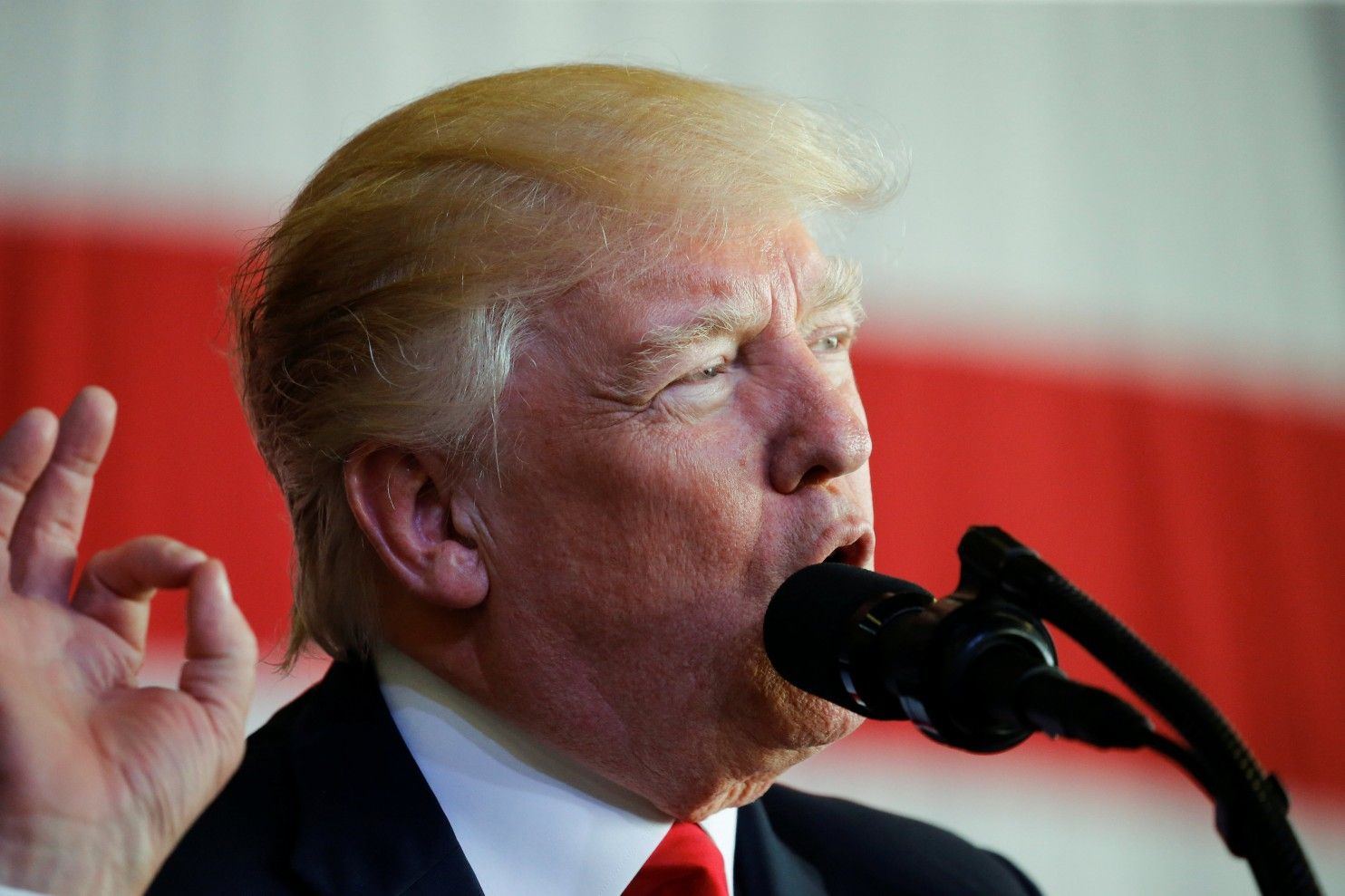
President Trump speaks to U.S. troops at Naval Air Station Sigonella in Sicily, Italy, on May 27. (Jonathan Ernst/Reuters)
President Trump speaks to U.S. troops at Naval Air Station Sigonella in Sicily, Italy, on May 27. (Jonathan Ernst/Reuters)