






Feds: Denver I-70 project isn’t perfect, but it’s better for civil rights than alternatives
Federal civil rights investigators found in a review of the plan to expand Interstate 70 in northeast Denver — and lower the widened freeway below grade through heavily Latino neighborhoods — that the project wasn’t without flaws.
But in a report that sides with the Colorado Department of Transportation, the Federal Highway Administration concluded that the current plan would be less discriminatory toward the long-neglected neighborhoods of Elyria-Swansea and Globeville than any other option studied.
Those include a “re-route” option, long promoted by some opponents and dismissed by CDOT after some study, that would dismantle I-70 through northeast Denver and channel its traffic onto interstates 270 and 76.
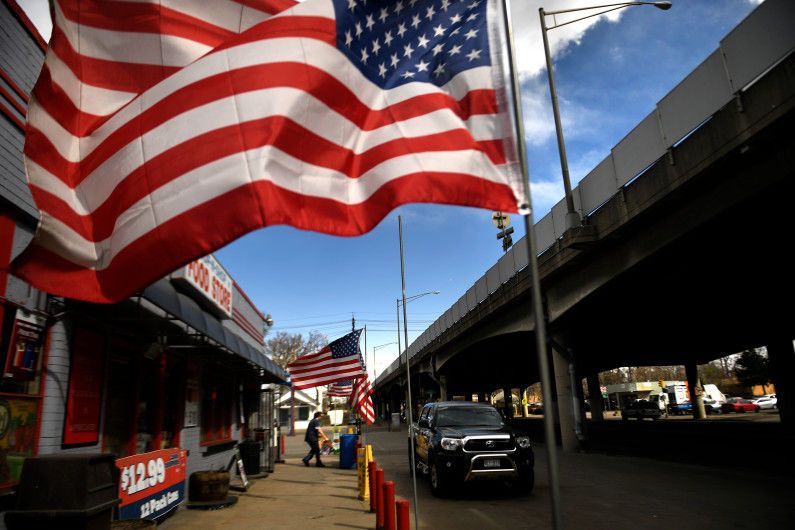
The Sanchez family has run their business the Stop-N-Stop food store near the I-70 viaduct for over 30 years but are moving soon as part of the Central 70 project proposes to reconstruct a 10-mile stretch of I-70 East, add one new Express Lane in each direction, remove the aging 50-year old viaduct, lower the interstate between Brighton and Colorado boulevards, and place a four-acre cover over a portion of the lowered interstate. March 23, 2017, Denver, Colorado. (Photo by Joe Amon/The Denver Post)
The Sanchez family has run their business the Stop-N-Stop food store near the I-70 viaduct for over 30 years but are moving soon as part of the Central 70 project proposes to reconstruct a 10-mile stretch of I-70 East, add one new Express Lane in each direction, remove the aging 50-year old viaduct, lower the interstate between Brighton and Colorado boulevards, and place a four-acre cover over a portion of the lowered interstate. March 23, 2017, Denver, Colorado. (Photo by Joe Amon/The Denver Post)