






Small Army unit that tracks ballistic missiles has global mission
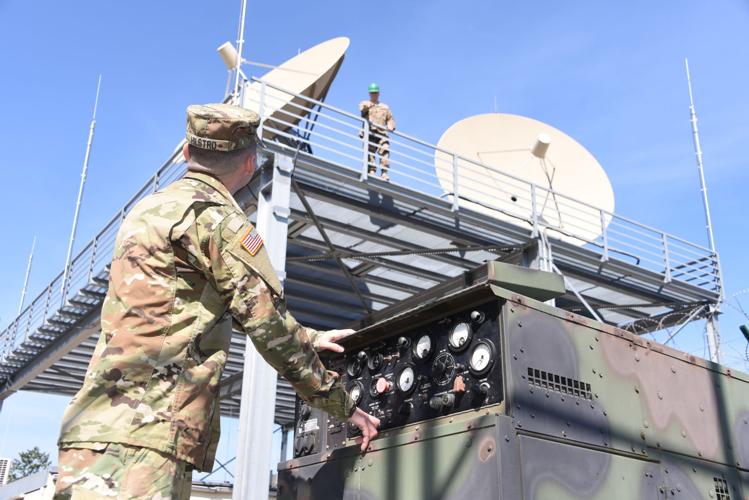
A tiny Army unit from Colorado Springs is keeping troops safe from ballistic missiles around the globe.
The 1st Space Company, with fewer than 200 soldiers now based in an office building off Powers Boulevard, operates missile warning sites in the Middle East, Germany and Japan that use infrared satellite images to track launches across the globe. And their job could get easier in 2017 as the unit begins using a new system of ground stations to track missile threats.
“The mission is the most important thing; it can never fail,” said the company’s Chief Warrant Officer Manny Marrero.
The company is part of the Army Space and Missile Defense Command’s contingent in Colorado Springs. Its sister units here provide satellite communications and operate the Army’s ballistic missile interceptors.
The unit has its origins in the Persian Gulf War, when Iraqi dictator Saddam Hussein used short-range ballistic missiles to attack American and allied installations and Israel in the run-up to the 1991 ground war.
The company’s soldiers pull data from the Air Force’s Defense Support Program and Space-Based Infrared satellites to spot the heat blooms that come with rocket launches.
Marrero said the number of missiles and rockets on the battlefield has jumped dramatically in the quarter century since the Persian Gulf War.
“It’s the poor man’s artillery,” he said.
That growing threat has led to an increased responsibility for the company, with soldiers overseas attached to the nation’s major regional combat commands.
Leading troops around the planet is a tough task for the company’s leaders, Marrero said.
Electronic communications are used to span the continents and keep soldiers connected to their officers and sergeants.
“We email them to death,” Marrero joked.
That communications web will be tested mightily next year as the unit begins training on its new ground stations. The new system, built by Northrop-Grumman, replaces a 1990s era set of computer terminals that were used to track missiles.
It’s like switching from a checkers board to a PlayStation.
“Without a doubt its a big-time change,” Marrero said.
Training teams will fan out to bring the company’s far-flung detachments up to speed on the new system. Marrero said the new gear provides easier to use data and comes with new training tools that make it simpler to use.
But during the training, the company won’t catch a break. There’s no downtime in the missile warning business, Marrero said.
“You can’t call the enemy and ask them to take a few days off,” he said.
–
Contact Tom Roeder: 636-0240
Twitter: @xroederx
