






As Bourbon Street sees yet another mass shooting, La. politician fears ‘thugs’ will ‘kill tourism’
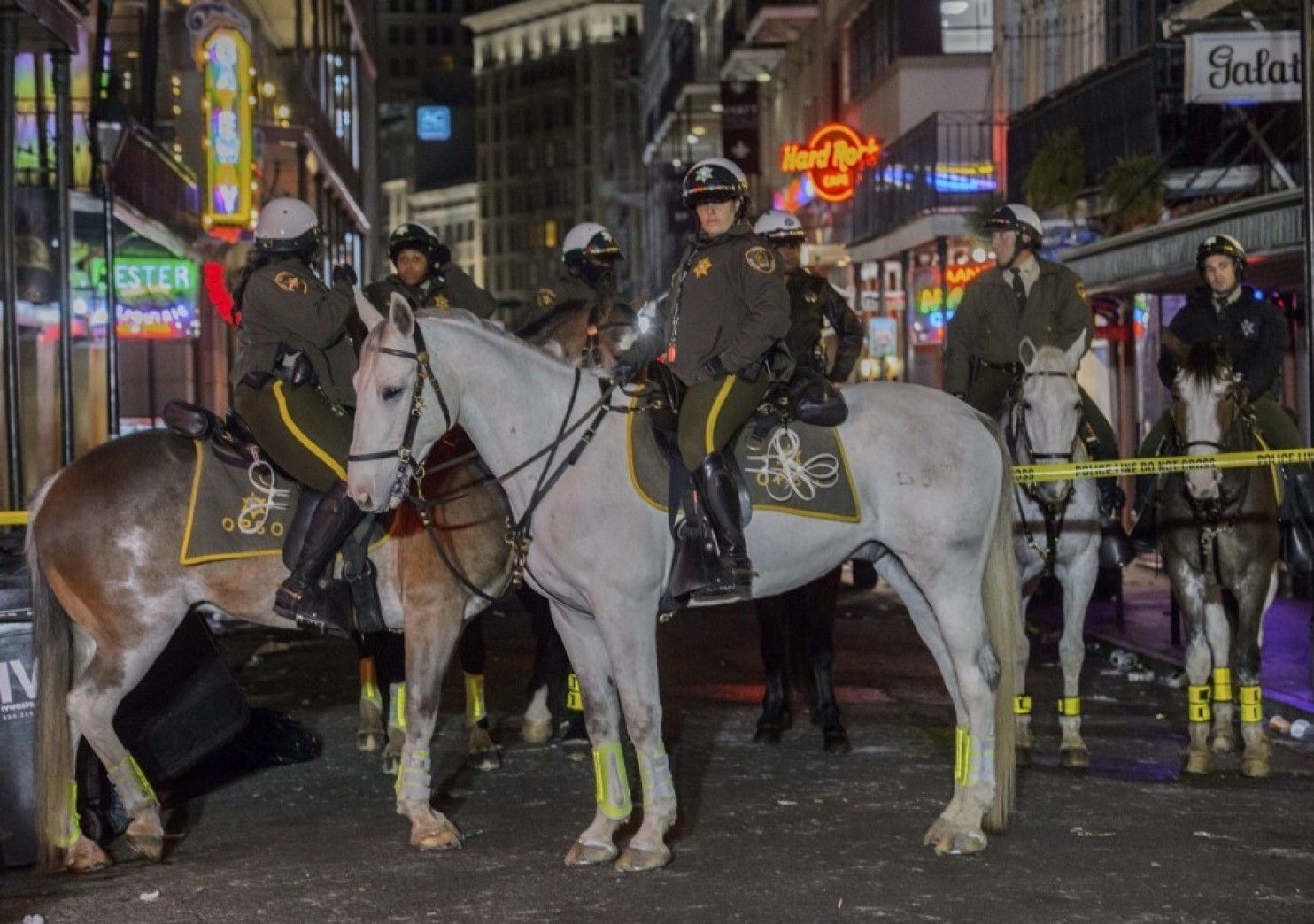
The day after a shooting on Bourbon Street in the French Quarter of New Orleans left one dead and nine injured, Louisiana’s Lt. Gov. Billy Nungesser (R) said he feared the state would “let thugs kill” the city’s multibillion-dollar tourism industry.
On Sunday, the French Quarter was packed when a 1:30 a.m. argument between two tourists turned into the city’s latest mass shooting.
Though more than three dozen police officers were patrolling the Quarter because the city was hosting the Bayou Classic — an annual college football game between Grambling State and Southern University — 10 people were struck by stray bullets. One of them, 25-year-old Demontris Toliver, died.
“It’s the one thing that can destroy the tourism industry,” said Nungesser, who oversees the state’s Office of Tourism, according to Monroe, La.’s News Star on Monday. “Something has to change. We have to do something now before we let thugs kill tourism.”
It’s been a long-running concern for a city in which murders were sufficiently prevalent. The local newspaper created a digital “murder map” to track their locations.
This, after all, isn’t the first shooting the busy street has seen in recent years. In 2014, a shooting on an early Sunday morning on Bourbon Street injured nine people — several of them tourists. And in 2011, a shooting on the famous street left one dead and seven hurt.
Since 2010, Bourbon Street has been home to at least 10 shootings.
In the aftermath of each Bourbon Street shooting, the same questions have been asked by many New Orleans residents and politicians: If the city’s most famous street becomes known to the world as unsafe, what happens to the tourism industry? If its iconic signage, installed into the stone ground, appears on social media covered in blood, will people still visit?
In 2015, when Sen. David Vitter (R-La.) was running for governor, he said the city was “one high-profile murder away from seeing [the] tourism economy going into the cellar.”
Politicians aren’t the only ones airing these concerns.
Pam Fortner, co-owner of three Tropical Isle locations — a chain of bars famous for a strong drink, popular among tourists, called a Hand Grenade — told NOLA.com that the violence could be problematic for tourism.
“It is news and people do read about it and it does make them nervous,” Fortner said.
Worrying about tourism so quickly after violence might seem uncouth, but the hospitality industry is one of the city’s most vital economic drivers.
In 2015, 9.78 million people visited the city, a post-Katrina record. In 2004, the year before the catastrophic storm, 10.1 million tourists visited the Crescent City. Even so, last year’s tourists spent a record-shattering $7.05 billion, nearly 50 percent more than 2004’s $4.9 billion.
(The city’s entire proposed operating budget for fiscal year 2017, by comparison, is $614 million.)
And the tourism industry has been rising as of late. Compared to the previous year, 2015 saw a 2.7 percent rise in visitors with a 3.5 percent spending increase.
Stephen Perry, president and chief executive of the New Orleans Convention and Visitors Bureau, told NOLA.com that everyone in the city feeds off the tourism industry.
“That is capital imported from all over the world into the city of New Orleans,” Perry said. “It gets spread through virtually every business, every family, every store, every shop. And it all comes down at the end of the day to jobs, right?”
Hospitality officials hope to increase the number of tourists to 13.7 million by 2018, which marks the city’s tricentennial.
New Orleans isn’t the only city to fear that crime rates could hurt its tourism industry.
Officials in Chicago, which has suffered 681 murders thus far in 2016 according to DNA Info, have worried about the potential impact of crime. After violence began to surge in 2015, as the Chicago Tribune reported, “Convention bookings are down, tourism advertising has been scaled back and Chicago’s image is suffering because of gun violence” among other issues.
New Orleans residents have aired these concerns before, and their fears have not come to fruition.
“This has done real damage to us here,” Perry told the Associated Press in 2007. “We’re in a multibillion-dollar perception- and image-driven business. Whenever there is a wave of violence here it has an immediate chilling impact on those leisure consumers that don’t really know our city.”
As of early Tuesday morning, three days after Sunday’s mass shooting, there was fear of a damaged hospitality industry but not many proposals for how to avoid a negative impact on the industry.
“We’ve had four straight record years of tourism, but that won’t continue if we don’t do something,” Nungesser said, just before admitting he has no idea what, exactly, to do.
Nungesser continued, “I don’t have the answers, but we better fix it. We have a short window to correct it before we begin feeling a hit to the industry.”