






Standardized testing yields ‘no big surprises’ for Colorado Springs-area students
“No big surprises” seems to be the reaction from the initial release of spring assessment scores from Colorado’s new testing system that debuted in 2014.
Locally, schools and districts that have historically performed well on standardized tests continued to do so, although some had high opt-out rates for the second year, which skews analysis.
“It’s still a new assessment and we’re teaching kids at an increased rigor to meet new state standards,” said Devra Ashby, spokeswoman for Colorado Springs School District 11, the Pikes Peak region’s largest district with about 28,000 students. “Overall, there were no big surprises for our district.”
Along the lines of the state-level results, local school districts saw some areas of improvement over the 2014-2015 testing season – and the need for additional work.
D-11 fourth-graders demonstrated growth by increasing scores in every subject in which they were tested, Ashby said. Third-graders held their own, and fifth-graders increased science scores by 4 percent. Students who took the social studies tests showed 4 percent improvement of meeting or exceeding expectations.
“It’s just one snapshot of what we’re looking at across the board,” Ashby said. “Parent refusals had a lot to do with the overall data as well.”
Participation rates for D-11 are being calculated, but are thought to have reached the federal goal of 95 percent at the elementary level. Participation was at 80 percent for middle schools and fell to 50 percent for high school students.
The data, along with new district-administered testing for K-12 students, will help assess individual students’ needs, Ashby said.
“We’ll look at providing additional support to schools identified as needing it,” she said.
Falcon School District 49, the region’s third-largest with enrollment nearing 22,000 students, has been working to develop “personalized pathways” for each student, said board president Marie LaVere-Wright.
That strategy helped improve ACT scores at every district high school, she said.
Peter Hilts, D-49’s chief education officer, said a multi-year focus to build foundations on mastering primary literacy also is netting results.
“Our dramatic improvement in literacy performance is elevating all content areas, which contributes to our rising scores in fifth-grade science,” Hilts said.
Statewide, students in grades 3 through 5 improved in math over the previous year, 11th-graders scored the highest composite ACT in five years, science results remained stable, and some black and Hispanic subgroups improved scores in English language arts.
Across the Pikes Peak region’s 17 public school districts, 11th-graders scored slightly below the state average on the ACT college prep exam, with an average composite score of 19.4. The average score statewide is 20.4.
Tenth-graders took the PSAT for the first time last school year, in preparation for the state switching 11th-graders from the ACT to the SAT this school year. Local students also scored slightly below the state average on the PSAT, with an overall mean score of 933.5, compared to average score of 944 statewide.
In general, students in the region performed slightly higher than the rest of the state in science. In the fifth grade, 34.9 percent of the students who took the test in the region’s 17 school districts met or exceeded expectations, compared to 33.6 percent of students statewide.
And 32.4 percent of local eighth graders met or exceeded expectations, compared to 30.2 percent of students statewide. Among 11th graders, 23.1 percent of the students in the region met or exceeded expectations, compared to 24.3 percent of the students statewide.
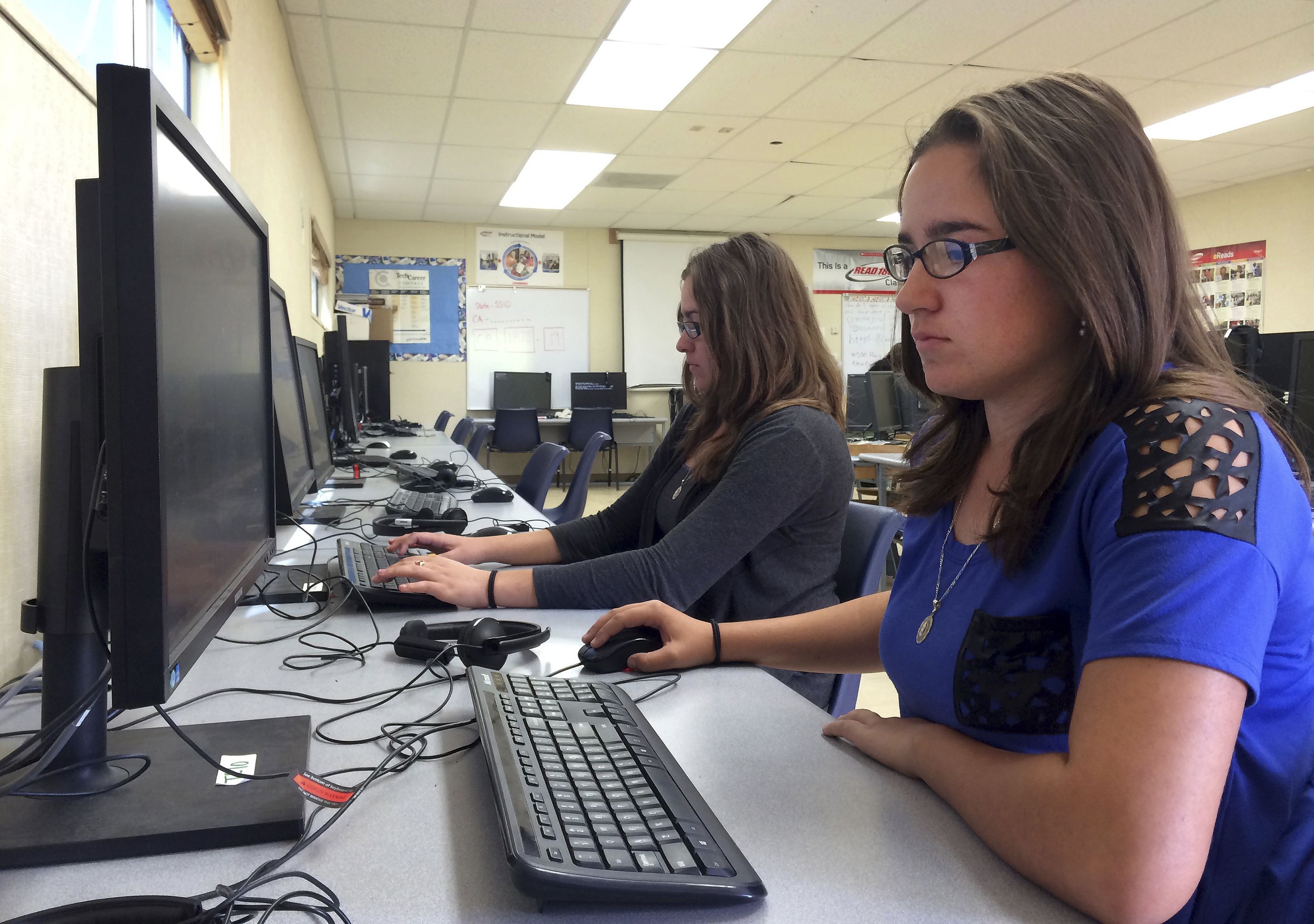
Locally, schools and districts that have historically performed well on standardized tests continued to do so, according to the initial release of spring assessment scores from Colorado’s new testing system that debuted in 2014. (AP Photo/Christine Armario)