






Project leader hopes Colorado Springs public market will sprout on third try
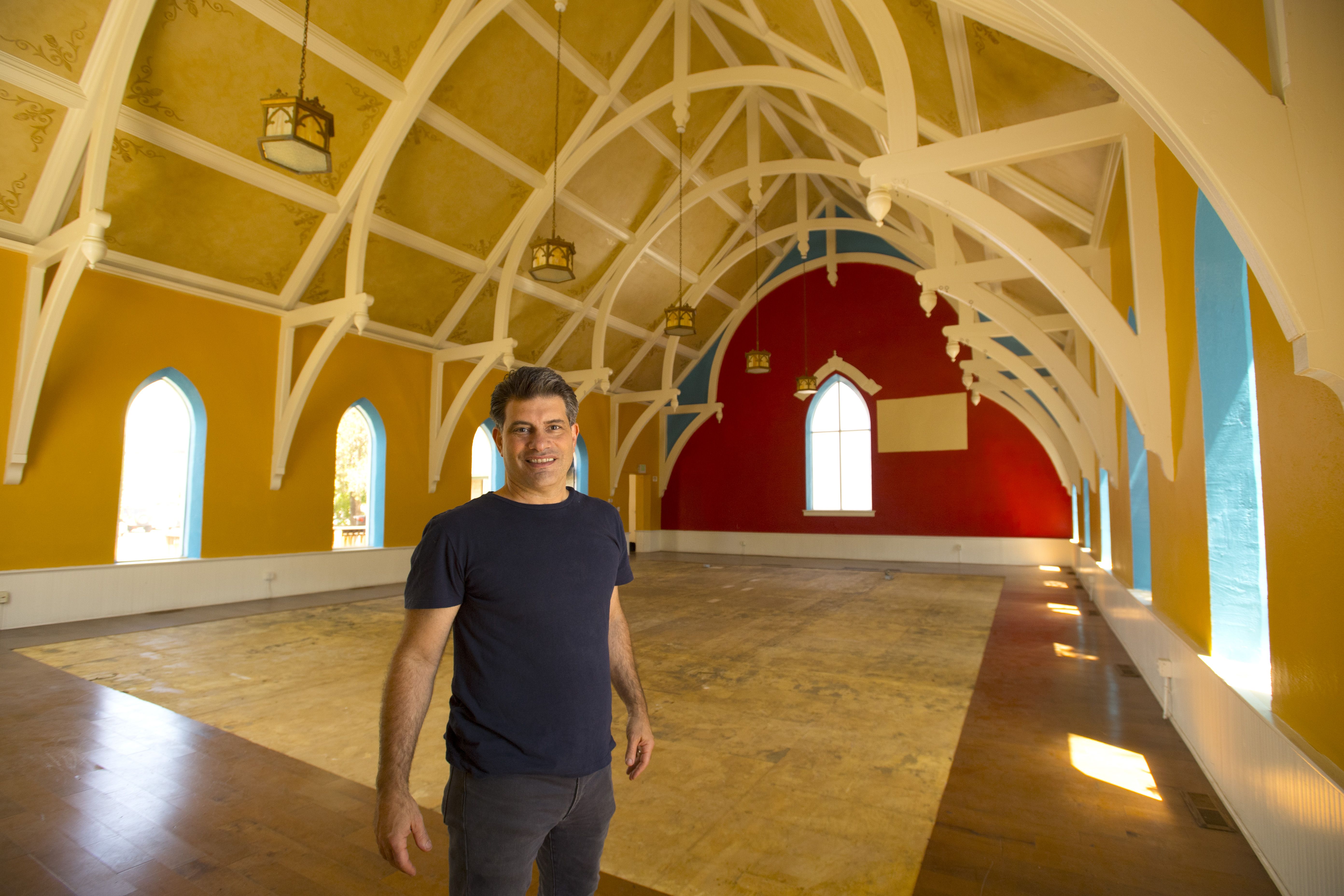
Funding challenges and changes to leadership and location have stalled the creation of a public market in Colorado Springs, but a new leader said the project will launch soon.
The project is working on its third proposed site and is now under at least its third leader, Jon Khoury, executive director for Cottonwood Center for the Arts. As of a couple of weeks ago, it had raised only about half of its prelaunch fundraising goal.
“My approach is to reconcile bad feelings, look at the needs of the community and the viability of the public market,” Khoury said. “It’s my hope to be the new voice of this market and help propel it into the next stage.”
He hopes the market will open by Labor Day, in time for the fall harvest.
The idea for the public market was first publicly discussed in the summer of 2012, and in June 2013, a feasibility study showed the market would be a good way to revitalize downtown.
The idea was that the Colorado Springs version of the market would be similar to what has been done across the country. It will create a space for community gatherings and allow people to shop for healthy and locally grown food.
That feasibility study hoped a version of the market would open by 2015, but there have been challenges.
At first, it was suggested the market go into the old 36,000-square-foot Crissy Fowler Lumber building, 117 W. Vermijo Ave. Next, the former Gazette building, 30 S. Prospect St., was suggested, but that was a bit too far east to meet the needs of the downtown base. Finally, the committee decided on the 6,500-square-foot historic Payne Chapel, 320 S. Weber St. Even that building isn’t quite perfect, Khoury said, but it will be a good place to start.
“It won’t be our permanent location,” he said. “We hope to have a larger and better-suited location in the future.”
Along with the location changes, there has been a leadership shake-up. Along with the top leadership change, Khoury said, the original board members will be replaced to help keep the new board focused on the next steps.
The market could launch with the $20,000 it had on hand as of a few weeks ago, Khoury said, but he would feel more comfortable if they had $40,000 to ensure the project had enough for the renovations needed for the chapel.
The funding will all have to come from private donations.
“This is a tough city to ask for funds,” Khoury said. “If we prove our viability first, then maybe the funds will follow.”
The funding, location and leadership challenges have contributed to the delays in getting the market started, Khoury said.
But challenges like those, and difficulties getting started, are normal for public markets, said David K. O’Neil, a market consultant for the Project for Public Spaces. He was a consultant in the beginning stages of the Springs market.
“Boston just built one, and they were at it for 20 years,” O’Neil said. “Portland, Ore., is working on a permanent market, and they are past 10 years now. I’m telling you, three to four years to get a market started is not too bad. I wouldn’t get a complex over that.”
Starting without funding from the city will be a challenge, O’Neil said.
“In general, markets are self-sustaining and they raise their money from cities and public and private donations,” he said.
What may happen, he said, is that as the market becomes more established, the city will help more.
In Khoury’s vision, the market will serve as a place for people to gather and to offer a healthy alternative to groceries in the downtown area – where there are no regular sources for food other than convenience stores and restaurants.
“This will be a seven-day-a-week, 365-day-a-year market,” he said. “It will offer healthy, affordable options for people who might not be aware of healthy alternatives to their food. It will be a center for food education.”
That vision of opening as a year-round market may be the toughest part of the plan to pull off, O’Neil said. Most of the public markets in the country started on a seasonal basis and worked their way up to being open year-round.
“Many of the historically successful markets evolved,” he said. “They started out modestly and not as many days and maybe seasonal. . This way, you learn as you go and you are building clientele as you go, and you are not overextending yourself.”
Khoury acknowledges not all of the dreams for the market will be possible – immediately, at least.
While it was a hope that everything in the market be locally sourced, that’s not possible at this time, he said.
“Our vendors will have mostly local, but not exclusively local products,” he said.
The market has to be cost-effective to its vendors, or they won’t be able to stay in business, he said. Also, the market will strive to fill the grocery needs of nearby residents, and their shopping needs won’t always coincide with local growing seasons, Khoury said.
That, too, is normal for markets, O’Neil said.
“There’s only one market in the country that’s a year-round, indoor public market that’s all local, and that’s in Boston,” he said.
Even with the challenges to come, O’Neil thinks the city has the right elements to get the project off the ground.
“Colorado Springs has a great group of core supporters advancing the public market,” he said. “Their tenacity and vision will ultimately make it happen. A lot of cities don’t have that base – so that is definitely in your favor.”
Jon Khoury poses Tuesday, July 12, 2016 inside the Historic Payne Chapel on south Weber Street, which will be the new site of the Colorado Springs Public Market. Khoury is the new director of the market. Photo by Mark Reis, The Gazette
GAZETTE FILE: Sometime in 2017, the historic Payne Chapel on south Weber Street will reopen as a taproom for Local Relic Brewing Co. The Gothic-era church was constructed in the late 1890s on land donated by city founder Gen. William Jackson Palmer. Photo taken Tuesday, July 12, 2016 by Mark Reis, The Gazette.