






Speedskating nationals take place in Colorado Springs as sport tries to rebound
In the mid-1990s, the leaders of the inline speedskating community had a feeling the sport was about to hit the jackpot.
Roller hockey was one of three demonstration sports at the 1992 Summer Olympics in Barcelona and inline speedskating was gaining exposure in the Pan American Games. By 1997, inline skates and accessories would become a billion-dollar industry.
“We all thought we were going to the Olympics,” said Kelly Springer, a longtime inline coach who now operates out of Colorado Springs. “We thought we were a shoe-in.”
But as the Olympics came and went, inline speedskating was left in the past. Springer says it peaked in the 1990s and hasn’t been able to reach the level of national prominence that it held during that time.
Inline speedskating was on the shortlist to become an Olympic sport in the last two summer Olympic cycles, and is being considered for the 2020 Summer Olympics in Tokyo, but Springer says the lack of financial support and understanding from the U.S. Olympic Committee makes it difficult for inline speedskating – and any other roller sport – to grow.
“They see the value and success that we’ve had,” Springer said, “but they’re not putting the investment in to make the most of it.”
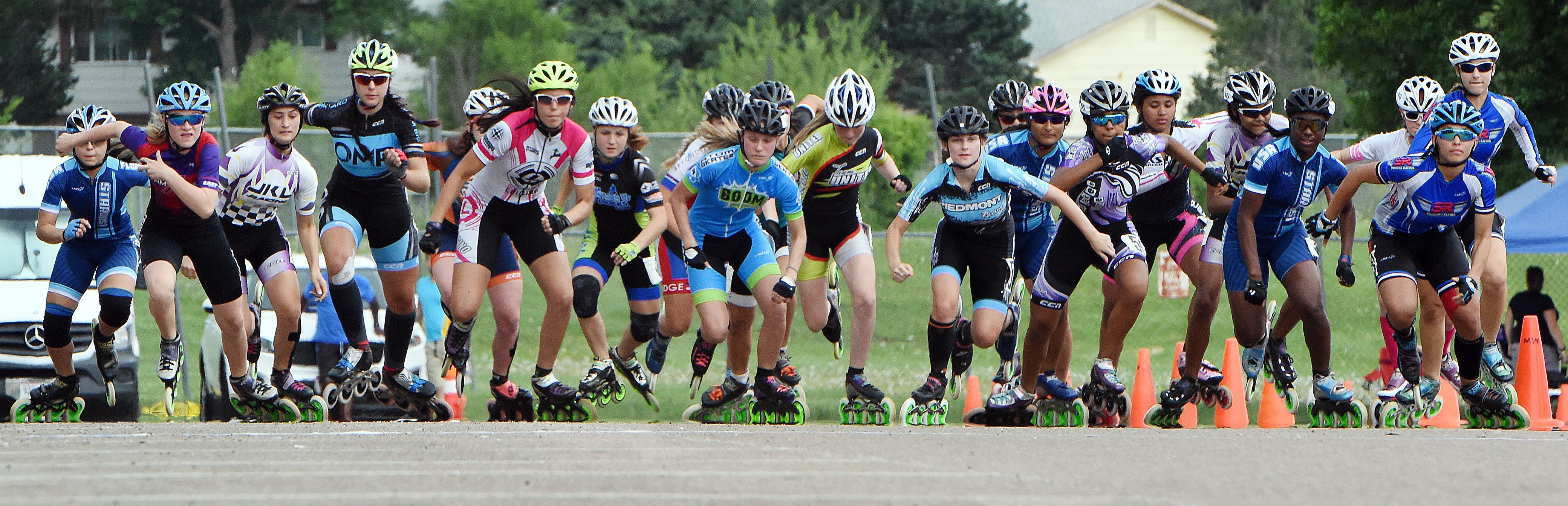
The sport is much like ice speedskating, but on rollerblades. Athletes compete in various races around short and long tracks both indoors and outdoors. The national team trials took place this week in Colorado Springs at the USOC velodrome and the outdoor national championships took place in the Doherty High School parking lot.
National team manager Jay Ingram watched the competitions Tuesday afternoon from the high school parking lot with a sense of disappointment. A couple of hundred fans and competitors circled the lot’s coned-off track, a sad sight for a once-promising sport now struggling to stay relevant.
“Realistically, it should be packed in here if we did our job as far as getting the word out to the public,” Ingram said. “Maybe if people would have known Olympians would be here, and this is the sport most of them started with, we would have had people come.”
The lack of publicity is one of inline speedskating’s struggles – people just don’t know much about the sport.
Inline skating’s greatest claim is its history of producing Olympic ice speedskating medalists. Eight-time Olympic medalist Apolo Ohno started out as an inline national champion. So did four-time Olympian KC Boutiette, who competed Tuesday in the world-class men’s division.
“I started ice skating to cross-train for inline and I picked it up fast enough,” Boutiette said. “Six weeks later I made the Olympic team. I was the first inline skater to make that transition.”
A cooperation between the US Speedskating and USA Roller Sports could also help athlete development, Springer said. The similarities between racing inline skates and ice are vast, but history shows a trend of inline skaters switching to ice for Olympic glory – not the other way around.
“We’ve lost most of our top athletes to the ice and they’ve done well there,” said national team coach Renee Hildebrand, “but it hurts our sport.”
If both governing bodies work together, a cross-beneficial system of training and results could emerge. US Speedskating has begun to develop local programs in roller sports because inline is cheaper and athletes can build physical endurance on the outdoor track before transitioning to ice.
Springer hopes those athletes don’t forget their roots.
“It’s coming together but it took people like KC (Boutiette) and Apolo (Ohno) that not only were willing to go (to ice) and succeed,” Springer said, “but also had to be willing to come back and stand up and say, ‘Yes. I won these Olympic medals on ice, but I started on that roller rink.'”
World Class competitors were competing for a position on the 2016 FIRS World Inline Speed Skating Championship national team during a competition at Doherty High School on Tuesday, June 21, 2016. Competitors begin a 20,000 meters World Class Ladies race. photo by Jerilee Bennett/The Gazette