






Trail running with your four-legged best friend
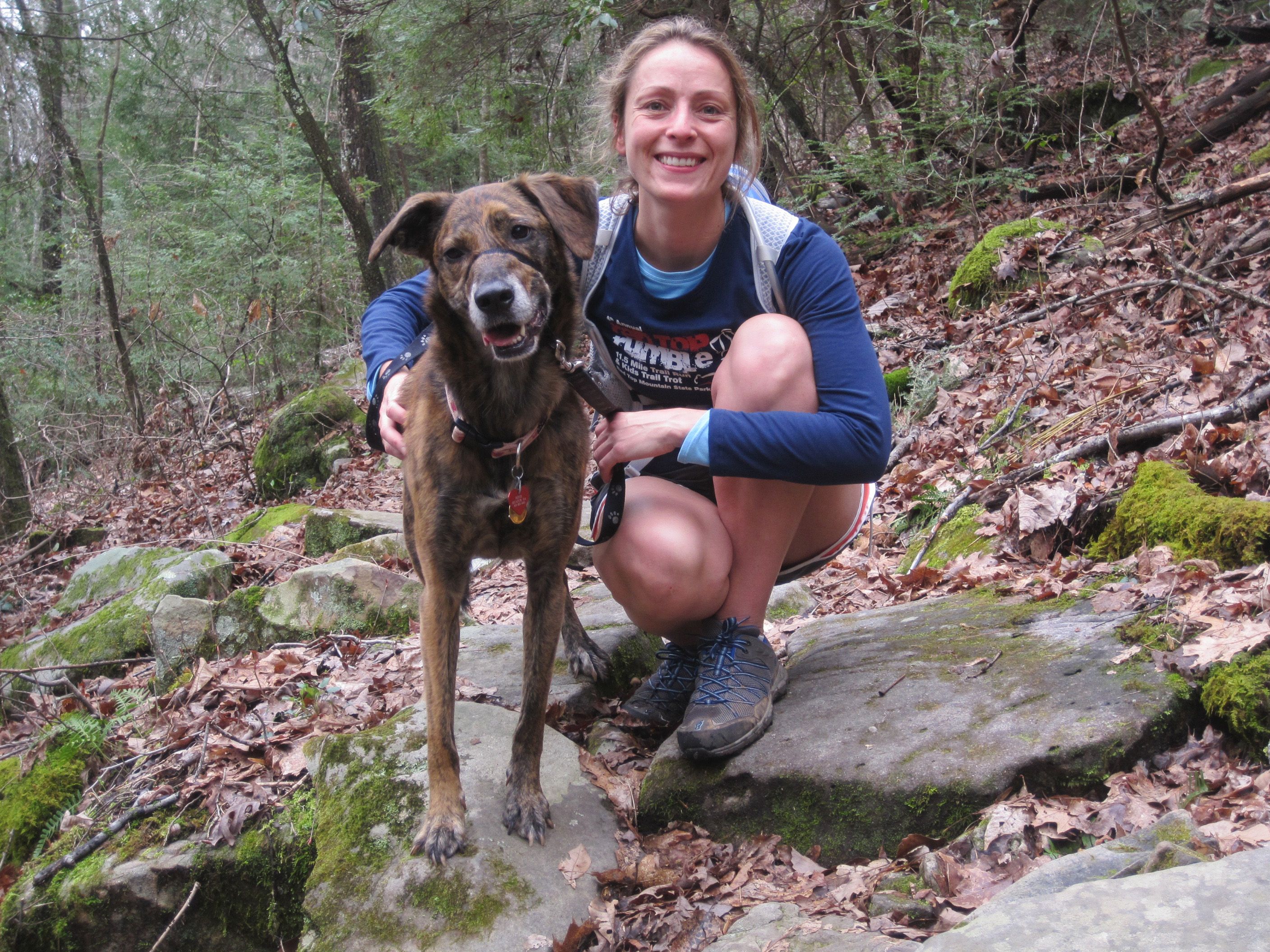
When Amanda Tichacek began running eight years ago, she found a friendly sidekick in Roxie, her 2-year-old greyhound mix. They started out slowly, but soon began running longer distances on wooded trails.
“We have grown together as runners,” says Tichacek, who now logs 40 to 60 miles a week.
In her prime, Roxie ran near-marathon distances, averaging more than 600 miles a year. Even at age 10, she still can run 6 or more miles with her owner.
For many runners, dogs offer companionship and fun. But while dogs clearly love to run, not all are built for long-distance running with people. Don’t push your dog too hard, and stop if you see the dog lagging.
Runners who want to share their love of the trail with a dog must consider the animal’s age, breed and fitness, says Dr. Jeff Gerlesits, a veterinarian at Homeward Bound Animal Hospital in Arvada. Start by getting the dog a checkup.
“You want to make sure things are at a good starting point,” Gerlesits says. A vet will check for respiratory, cardiovascular and orthopedic issues.
Never run with a dog younger than a year, Gerlesits says. Dogs, like humans, have growth plates that need to close before they can run safely beyond a playtime scamper.
Dog breeds reach skeletal maturity at different times; smaller dogs generally faster than larger breeds. “For a Labrador, that’s about 12 months, but for a Great Dane, it’s more like 18 months,” Gerlesits says.
And not all breeds make ideal running partners; for instance, those with squished faces – the technical term is brachycephalic – will have a more difficult time running distances because it’s harder for them to breathe. Those include pugs, bulldogs and boxers.
Better runners include the working and sporting breeds, says Gerlesits, who runs with an English setter. However, he doesn’t rule out any breed completely.
“If we’re aware of a dog’s abilities and slowly work up from there, any dog has potential,” he says.
Climate is another factor. Because dogs only sweat through their paws – and cool down via panting – they overheat faster than we do.
Gerlesits advises against running a dog in the heat of a summer day and recommends offering water to a trail-running dog every 30 to 45 minutes at least. Provide food, too; if you need fuel during a long run, so does your dog. Gerlesits recommends a high-protein, high-calorie snack.
“You can tell when you’re pushing your dog too hard – you know your dog. They should be next to you or a little in front, where they like to be,” Gerlesits says. “If your dog is behind you, the workout is too hard.”
Tichacek always keeps Roxie leashed and by her side.
“On the single-track trails, you can’t have a dog going nuts,” she says. “I’ve run with friends whose dogs lacked that etiquette, and it’s frustrating.”
Likewise, Gerlesits leashes his dog, Dawson. “It’s in the best interest of your dog, other runners, other dogs and wildlife,” he says.
Many local and state parks require that dogs be leashed, while most national parks exclude dogs from trails altogether. Check a park’s rules before you visit, recommends ranger Ken Low of the National Park Service.
Low works at the Santa Monica Mountains National Recreation Area, which has 500 miles of trails east of Los Angeles. Longer trails may cross several parklands, each with its own canine rules.
“You need to do your advance homework and make sure dogs are allowed,” he says. “It’s always good to have a leash on you.”
This 2011 photo provided by Amanda Tichacek shows Tichacek, of Skokie, Ill., and her sidekick, Roxie, a greyhound mix, on a trail in Signal Mountain, Tenn. Tichacek took up running – then trail running – with Roxie eight years ago. We have grown together as runners, says Tichacek. (Todd M. Brown/Amanda Tichacek via AP)
In this March 2016 photo veterinarian Jeff Gerlesits runs with his dog, Dawson, an English setter, on a train in Arvada, Colo. While working and sporting breeds make the best runners, Dr. Gerlesits doesn’t rule out any breed completely. “If we’re aware of a dog’s abilities and slowly work up from there, any dog has potential,” he says. (Andra Gerlesits/Jeff Gerlesits via AP)