






Pikes Peak not immune to avalanche danger
When it comes to natural hazards on Pikes Peak, wind, frigid temperatures and snow might come to mind. Rarely, if ever, does the phrase “avalanche danger” come up.
Christmas week in Colorado saw high avalanche danger across the state – from the San Juan ranges in the southwest to the Front Range – and Pikes Peak was not exempt. A week after the storm dumped snow on several mountain passes, the Colorado Avalanche Information Center rated Pikes Peak as having moderate danger, or a chance of seeing some avalanche activity.
It has been two decades since someone was killed in a Pikes Peak avalanche, and it has been years since a big avalanche was reported on the peak. There are a few things – like windy weather and less human traffic – that make Pikes Peak less of an avalanche zone, said Scott Toepfer, a forecaster with the center.
“One of the things that Pikes Peak has going for it – or against it, depending on your point of view – is wind,” Toepfer said.
Considered a massif, or a mountain that stands alone, the peak is often pummeled by strong west, north, south and sometimes east winds that blow much of its snow toward Kansas or southern Colorado, Toepfer said.
“At the same time it (the wind) does load up a number of avalanche paths,” he added.
These slopes, dubbed wind-loaded, build up layers of unstable snow that are prone to avalanches. Glen Cove is an infamous spot for slides. In 2007, a major avalanche in the Glen Cove area tore down the northeast side of the mountain, ripped out trees and in two places buried the highway under 8 feet of snow. It was the worst avalanche since 1995, when four skiers triggered a spring avalanche on the peak; two men were injured, one was killed.
The fact that Pikes Peak is not a popular place for skiers, and that its road is often closed in adverse conditions, might mean the mountain’s avalanches go unreported, Toepfer said.
“We can’t really say that Pikes Peak is immune to the avalanches that places in the rest of the state see,” he said.
More people in other backcountry areas, like around Berthoud Pass, could be the cause of more slides and mean that more slides are reported. While avalanches on Pikes Peak may happen regularly, if people don’t reach the site quickly, weather will often obliterate all evidence, Toepfer said.
“We oftentimes kind of jokingly say that avalanches are camera shy,” he said, since evidence of them can be hard to capture.
For many Front Range backcountry skiers, Pikes Peak is off the beaten path, unlike the Seven Sisters, chutes off Loveland Pass that are popular backcountry spots and the sites of many avalanches.
When avalanche danger is high on Loveland Pass, the road is shut down, disabling travel until the road is safe to drive. But if avalanche danger threatens travel along the Pikes Peak Highway, it is more likely to go unnoticed.
“The luxury with Pikes Peak is they just shut down the road,” Toepfer said.
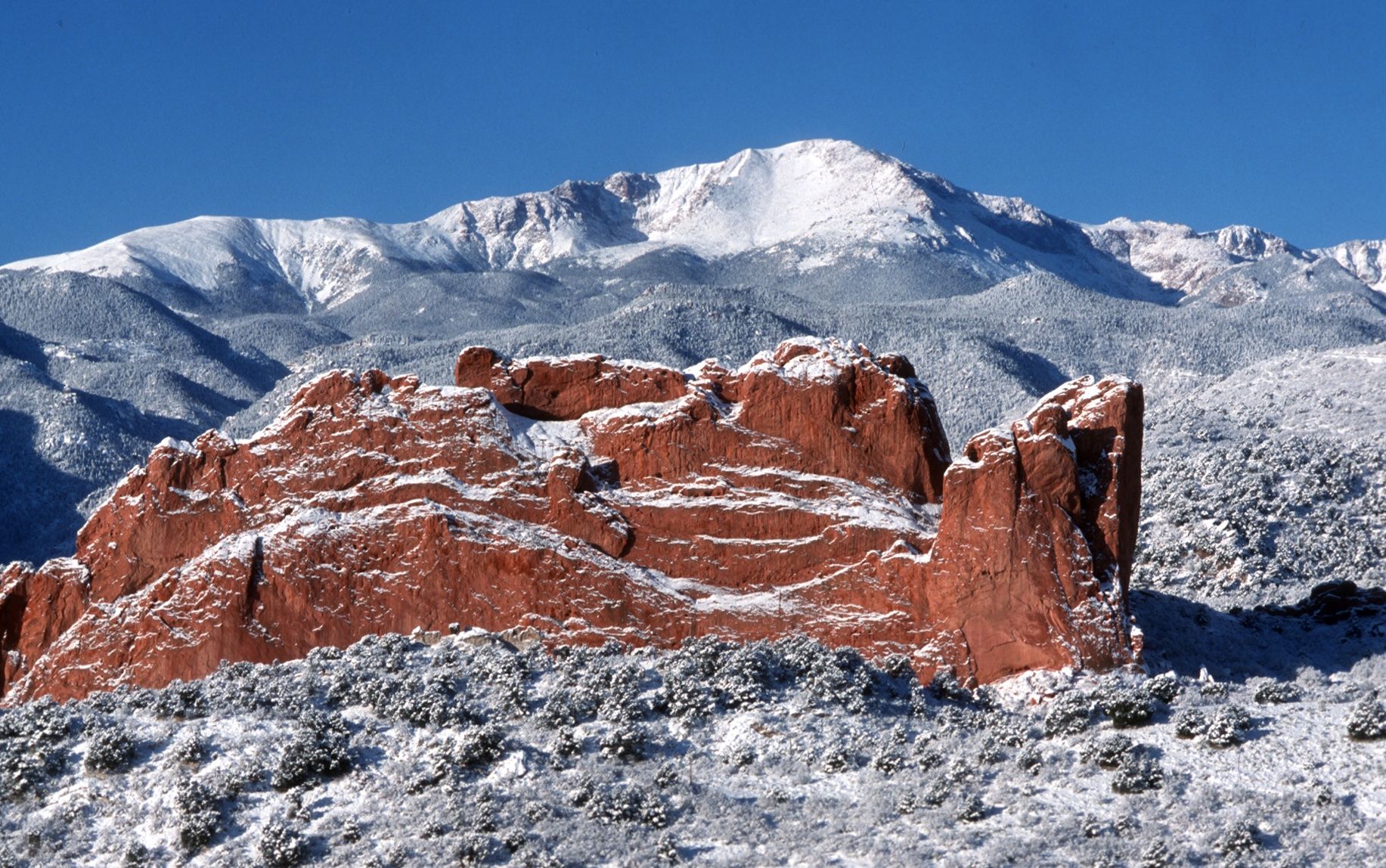
Pikes Peak towers over Garden of the Gods in this Jan. 29, 2000 photo. Photo by Christian Murdock/The Gazette
Pikes Peak for masthead 5/8/01. Mark Reis photo