






El Paso County weakened some fire codes after destructive Black Forest fire
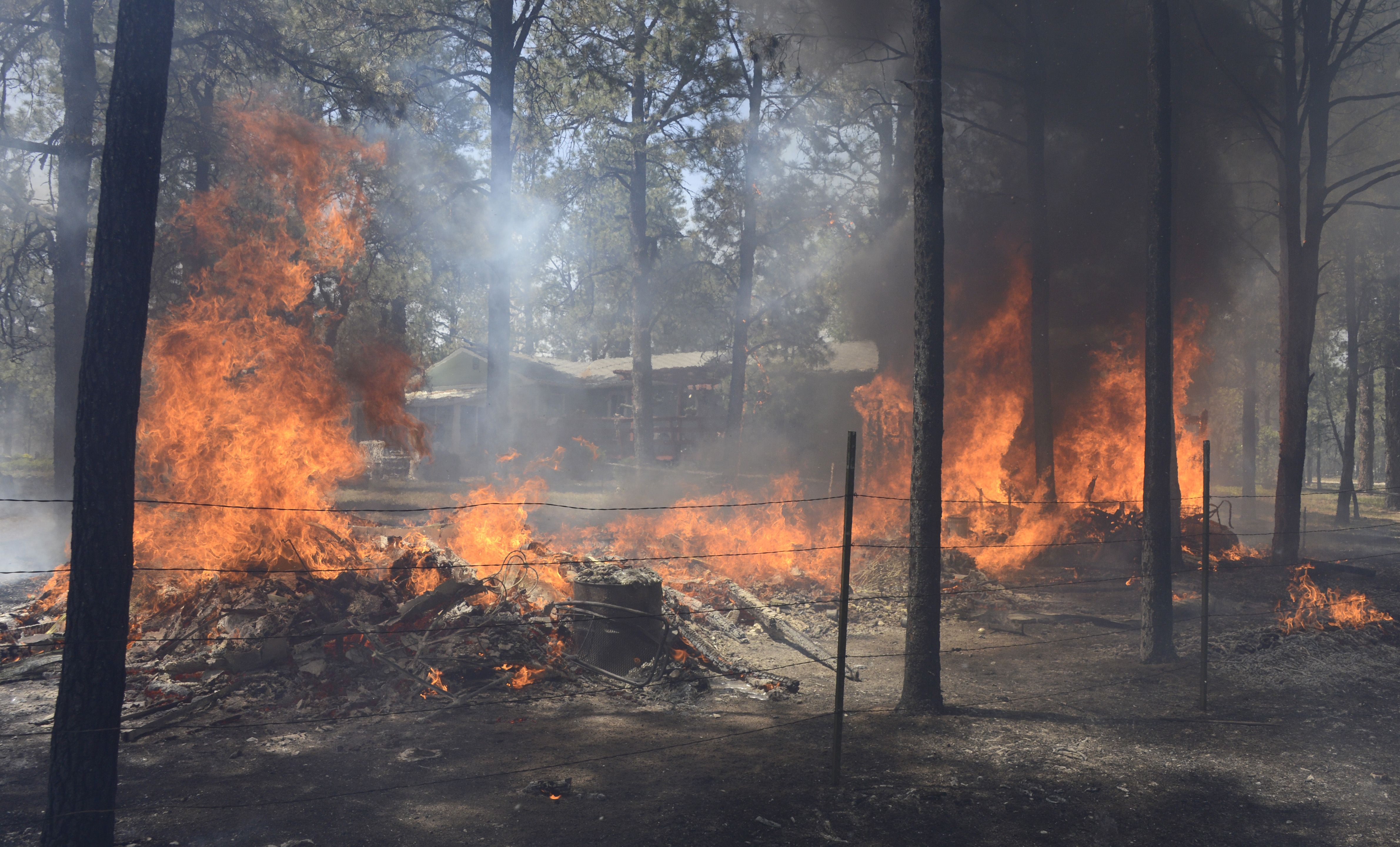
In the wake of the most destructive wildfire in state history, seven small fire districts asked the El Paso County commissioners to adopt new wildfire-specific codes.
The answer was no.
Not only was it no, but the commissioners also made the districts’ existing code less restrictive.
Facing economic concerns and pressure from Black Forest residents who lost their homes in the 2013 fire there, the commissioners opted to eliminate some provisions for water supply that had been part of the code. Now, large homes in some of the most fire-prone areas of El Paso County aren’t required to have sprinkler systems, something that was mandatory before the fire.
Disasters: Recovery, Reflection
County firefighters and fire marshals say that the elimination of sprinkler systems as well a refusal to pass more wildfire-specific codes puts them at a disadvantage. The commissioners, however, have stood by their decisions as the best ones to make in the interest of rebuilding neighborhoods.
Fire codes are complex, and have a long history of stirring controversy in communities faced with implementing new ones, especially in the wake of a destructive wildfire. Although many firefighters advocate for sprinkler systems and research shows that building regulations save homes in wildfire zones, in 2013 the economic concerns of implementing new codes outweighed what some consider to be basic safety concerns.
“Here’s the deal, would a sprinkler system in a home be a good thing? Sure, it would be,” said Jim Reid, executive director of the county’s Public Services Department. “But if that sprinkler system prevents someone from rebuilding in Black Forest – which is worse?”
When compared to the post-wildfire decisions made by other Colorado counties, El Paso’s lack of a county-wide fire code and more stringent wildfire-specific codes is rare. The commissioners recognize that the fire danger in Black Forest persists, and that many homes pack the unburned areas of the forest and the plains that surround it. A Gazette investigation in July found that thousands of new homes have been built in El Paso County’s wildfire zones since recent major wildfires.
Danger at your Doorstep: A guide to prepare for Colorado’s disasters
While Reid and the commissioners argued that scaling back the some of the fire codes was an economic necessity, others view the move as ignoring basic safety precautions and lessons learned.
Like all safety regulations, fire codes are borne of mistakes and painful consequences, said Bob Harvey, former chief of the Black Forest Fire Rescue Protection District.
“Fire codes are not written to make everybody’s life miserable,” said Harvey in early October. “Fire codes are written in blood, literally.”
Seeking change
Months after the Black Forest fire destroyed 488 homes, the county commissioners passed a new fire code for seven county fire departments, the culmination of a more than two-year update process. The seven departments are: Cimarron Hills, Wescott, Falcon, Security, Hanover, Peyton and Black Forest. The county has a patchwork of codes for the more than 30 fire districts within its boundaries, something commissioners say is necessary because of the diversity of the districts and the areas they serve.
While the seven district’s codes were updated to 2009 standards, the commissioners did not carry over codes from the previous adoption, in 2006, and also made requirements for sprinklers in commercial buildings less restrictive. While the adopted code was on par with some aspects of the code used by the city of Colorado Springs, it was a step back from what the county had on the books for years.
The 2003 code, adopted in 2006, required that homes in fire zones and with more than 3,600 square feet have sprinkler systems. That code also had requirements for commercial buildings to have sprinkler systems, but those requirements were more restrictive than national recommendations.
In 2013, the expensive sprinkler systems were seen as an obstacle to rebuilding destroyed homes in Black Forest. The commissioners, ever conscious of the economic challenges of enforcing a new fire code, also rejected suggestions that they create a special code for wildfire zones, and instead decided to table the idea for further discussion – although developing new codes was eventually determined to be too expensive. The commissioners also rejected several fire departments’ aggressive push for sprinkler systems in all homes, which would help in a neighborhood without fire hydrants, such as Black Forest.
Among firefighters and fire experts, these decisions have solidifed El Paso County’s reputation as a government that took regressive steps following a wildfire – typically the kind of catastrophic event that inspires progressive action, particularly when it comes to fire codes. While firefighters insist that the county made fire codes “worse” after the Black Forest fire, County Commissioner Dennis Hisey doesn’t see it that way.
“No, I don’t think it really became less restrictive,” said Hisey of the fire code following the 2013 changes. “We did our best to not make the problem worse, including not making it impossible financially for people to rebuild on their sites. We did eliminate that sprinkler provision, but that was on huge homes already.”
Support for sprinkler systems is divided, with homebuilders associations typically opposing them and fire departments supporting them. In 2009, partly due to a push from fire departments, the International Fire Code included a provision that required sprinkler systems in all homes, said Roger Lovell, head of the Pikes Peak Regional Building Department. While the codes can be adopted at will and amended – and most American cities don’t require sprinklers in homes – it’s only a matter of years before they become the new seat belts, required in every home, Lovell said.
Even though installing costly systems might have been an economic barrier to rebuilding in Black Forest, Reid said there is no question that they can help save homes, especially in rural areas where fire crews have further to travel.
“A sprinkler system in the country makes absolute sense,” he added.
For county firefighters like Harvey, sprinkler systems at any level help under-resourced and under-staffed county fire departments. It takes them longer to get to fires, and crews often have fewer options for water, so showing up to save a burning home with a built-in sprinkler system only adds to the home’s chances for survival, Harvey said.
But the systems are extremely expensive to install and require regular maintenance. Reid supported the 2013 decision to cut out some sprinkler requirements, even though he is a self-proclaimed proponent of sprinkler systems in homes. But when it comes to money, he thinks doing fire mitigation on properties and building with non-combustible materials are far better options – yet those requirements also don’t apply to individual homes in El Paso County.
Ultimately, concerns about infringing on property rights took precedence over the expansion of the fire code, he said.
“(The code) is not supposed to prevent people from coming home,” said Reid.
Disaster brings change
Fire departments often use the impetus of a wildfire to push for more stringent fire and land development codes. Wildfires also demonstrate the power of a strong fire code – in areas where homes are built to survive wildfires, research shows that fire codes made a difference.
While El Paso County has codes that require wildfire mitigation and special construction, those apply only to large developments and parcels of 40 acres or more.
It seems unlikely that the county will adopt more expansive wildfire codes in the future. Hisey has expressed concerns that a standard wildfire code throughout the county would create a poorly functioning one-size-fits-all system. In the 2013 adoption of fire codes, the commissioners rejected an appendix proposed by fire departments that was similar to the city of Colorado Springs wildfire code, which regulated how homes were built and required wildfire mitigation in red zones.
While she voted in favor of the new code without additional restrictions, in 2013 Commissioner Sallie Clark talked about the importance of bolstering communities against another disaster, particularly by using a wildfire code.
“My concern is that if we reject (the appendix) and we work with the land development code to establish a wildland urban interface code, what exists in the meantime?” she said at the time. “One of the things that I think has become very apparent nationally is that communities need resiliency. And if you continue to make the sins of the past happen in the future, there is no resiliency for the future.”
The county’s effort to create its own code ultimately died when it was determined to be cost prohibitive.
The story is different elsewhere in the state where big fires have burned. Boulder and Douglas counties passed new fire codes following massive wildfires in 2010 and 2002. In 2012, the Colorado Springs Fire Department garnered national attention when it pushed a revamping of fire codes for the hillside overlay, after the Waldo Canyon fire destroyed 347 homes in western Colorado Springs. The code, which requires fire-resistant construction materials, has been handed out to homeowners in other states as an example of what they should be doing.
Recently, wildfires in the Pacific Northwest burned hundreds of thousands of acres, going down in history as the largest on record. Most of Colorado’s recent destructive fires have been small in acreage by comparison – yet their destruction has been colossal. Fire experts say that homes are fueling some wildfires, and are transforming them from forest fires into urban fires. Often, when flames launch embers for miles, whole neighborhoods will burn down while a wildfire is miles away. As with the destruction the Mountain Shadows neighborhood in Colorado Springs, homes burn each other.
The best way to stem the tide of a fire’s destruction – and to give crews a fighting chance – is to design homes and mitigate properties to survive a wildfire, said Jack Cohen, a U.S. Forest Service researcher at the Rocky Mountain Research Station in Montana.
One solution is to not build in wildfire-prone areas. But Cohen doesn’t think that extreme of a measure is necessary.
“I am not talking about getting people out of the woods,” he said in late September at the Colorado Wildland Fire Conference. “I’m talking about houses that are already there.”
When it comes to wildfires, firefighters are up against many variables that are hard to control – overgrown forests, weather and climate concerns among them. But experts say that codes regulating the construction of homes and developments in red zones would give firefighters an edge, and possibly limit the scope of the fire’s destruction.
By changing what’s in the fire’s path, counties might be able to change what kind of fire they are facing, Cohen said.
“Basically, the (fire’s) spread through the community has nothing to do with the fact that the wildfire started in the area,” he added. “It was what the fire found when it burned.”
Fire consumes a structure next to a home on Greentree Road in Black Forest Wednesday, June 12, 2013. Photo by Mark Reis, The Gazette
Tom Smith works to remove tree limbs to protect a friend’s home from advancing flames Wednesday, June 12, 2013 near Burgess Road and Armonia Ranch Ct. in Black Forest. Photo by Mark Reis, The Gazette
Flames continue to burn off Burgess Road through the night early Thursday morning, June 13, 2013 as crews work to contain the Black Forest fire. Michael Ciaglo/The Gazette