






EDITORIAL: Thank you, Mayor Bach
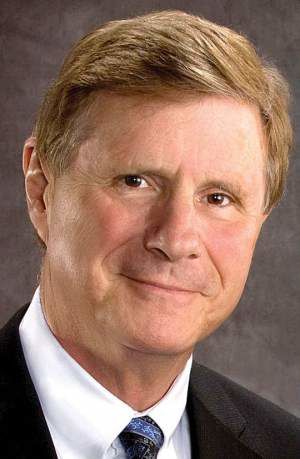
Tuesday’s swearing in of former Colorado Attorney General John Suthers as the second executive mayor of Colorado Springs marks the dignified exodus of Steve Bach. He was the first to serve as mayor after voters created an independent executive branch to replace the outdated council-manager system, in which an employee ran City Hall under the direction of the City Council.
Suthers will inherit a city bureaucracy Bach overhauled.
After four years in office, Bach won’t be crowned Mr. Congeniality. He is known for a contentious style and a dearth of traditional political diplomacy. However, if substance and results trump style and perceptions, the fruits of Bach’s only term at the helm could minimize his willful lack of political charm.
Bach inherited a mess the public has largely forgotten. Before he took office, the council-run government attracted national attention for initiating a passive-aggressive feud with taxpayers. After voters declined a tax increase, the council allowed its city manager to shut off one-third of the streetlights. She removed garbage cans from parks, sold police helicopters, instructed law enforcement to ignore most property crimes and allowed street medians and parks to go unmaintained. She instructed her communications director to pitch stories to the national media about darkened streets and unmaintained parks.
For several years preceding Bach, city government actively worked against the people who funded it.
Upon taking office, Bach quickly put an end to the shenanigans. He fired anyone who declined to make efficient customer service the primary focus of city agencies.
Employee compensation mostly reflected seniority under the old system. Bach transitioned the city from its tenured pecking order to one of performance-based compensation. Employees were required to justify their positions and departmental expenses while discovering ways to do more with less. Bach called it the “continuous improvement process.”
He created efficiencies by outsourcing the city’s fleet maintenance and IT services. He used savings from those decisions and others to accumulate more than $50 million in an emergency reserve that was almost depleted when he took office.
Though many have forgotten, Bach insisted City Council reconsider a plan to turn over Memorial Health System to the hospital’s management. Under the direction of then-CEO Larry McEvoy, the hospital’s upper management had proposed a nonprofit organization to take ownership. After the proposal fell apart, City Council allowed Memorial’s board of trustees to award McEvoy a $1.15 million severance — an amount just below the combined severances paid to all employees terminated by Bach over four years. Bach’s insistence on an open-bid process for Memorial helped achieve a voter-approved, 40-year lease of Memorial for $1.9 billion to the University of Colorado Health. The deal comes with a new Colorado Springs branch of the University of Colorado medical school and a health care foundation.
Bach’s approach to transportation policy may be just as enduring. He ended the city’s Front Range Express (FREX) bus service between Colorado Springs and Denver, a service that served riders with average incomes of $72,000. His action freed capital to add more intra-city service for people who, on average, have far lower incomes. Bach’s elimination of FREX nudged the Colorado Department of Transportation to take responsibility for inter-city service that should begin in July with the anticipated launch of Bustang along Interstates 25 and 70. Bach also demanded the Department of Transportation deliver a more equitable distribution of transportation funds to the Pikes Peak region.
Bach leaves office with an array of positive economic indicators, including new employers bringing high-wage jobs. He clearly had no interest in gaining public affection and the approval of his political peers. But his achievements speak for themselves and clear the way for a new kind of leader who can advance the velocity of our community’s forward momentum.
