






Side Streets: Online archive and unique museum keeps Colorado Springs’ long love affair with bowling alive
Before there was bumper bowling, midnight bowling, cosmic bowling, color-pin bowling or elf bowling, Colorado Springs had plain old 10-pin bowling. Strikes and spares. The basics.
Had it nearly forever. The region’s love affair with the sport dates to 1873, when Johnnies Ten-Pin Bowling Alley opened at Pikes Peak Avenue and Tejon Street, just a block from where founding Gen. William Jackson Palmer had a crew to drive the first stake to lay out his resort town in 1871.
Johnnies was followed in 1902 by alleys built in Palmer’s Antlers Hotel, as well as the New Brunswick Billiard Parlor and Bowling Alleys, also at Pikes Peak and Tejon.
By 1905, the City Directory listed a handful of alleys, including the Alta Vista, its eight lanes billed as the city’s “best equipped and largest” alleys, and boasting room for 500 spectators.
At least three dozen alleys came and went locally over the years as the sport peaked in the 1960s with about 12,000 alleys nationwide.
Page Dew, 74, and Robert Knight, 53, of the Pikes Peak Bowling Association, are working to keep those memories alive even as bowling’s popularity slides in the U.S.
Just 4,000 or so bowling centers remain nationwide. And the number of league bowlers has plunged, though casual bowling has climbed. (Worldwide, bowling is more popular than ever.)
Dew is compiling and rolling out an exhaustive online history archive at the associations’ website, www.pikespeakusbc.com. He has lots of old photos and decades of newspaper clippings, tournament results and more to add in the coming months.
And he wants to help attract fans to the sport he has loved since skipping school at age 17 with buddies to spend the day bowling.
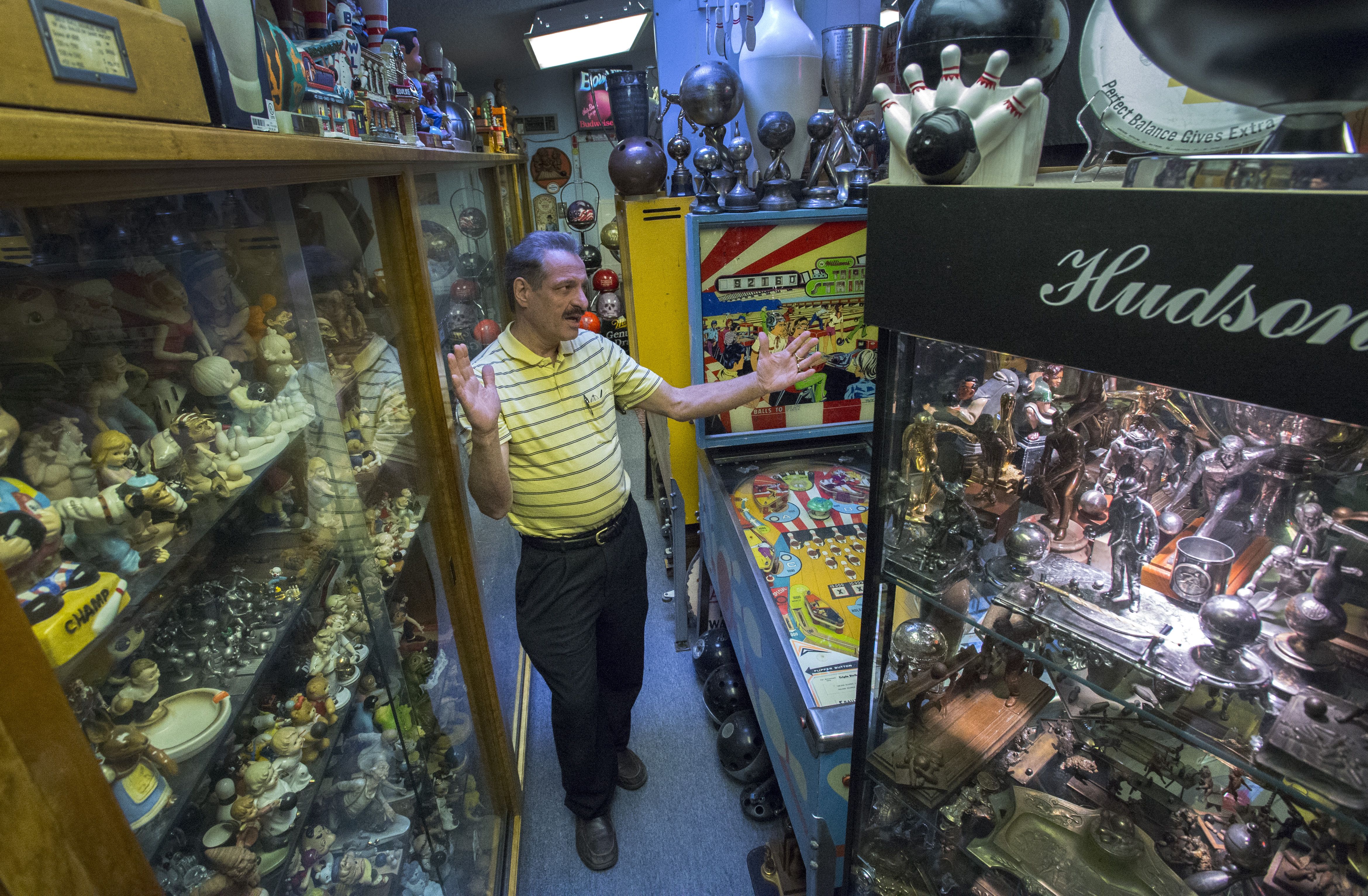
Knight, meanwhile, has built one of the most amazing, yet unknown, bowling museums anywhere.
Even if you are not a fan, prepared to be bowled over when you enter the Knight’s Bowling Hall of Fame and Museum in Old Colorado City. He has amassed thousands of pieces of bowling memorabilia, ranging from large scoring tables, ball racks and polishing machines to cloth patches, belt buckles, match books, lighters and much more.
He has valuable bronze bear figurines dating to the 1880s, and thousands of ceramic, wood and plastics figurines from 45 countries.
There are dozens of gold rings designating perfect 300 games, and historic medals, including the one awarded by the American Bowling Congress to retired major league baseball pitcher Frank Brill after he won the first national championship in Chicago in 1901.
Knight has historic wooden bowling balls and pins of every size and shape and brand as far back as the 1790s.
It’s a collection that started in 1981 after his Colorado Springs junior bowling team won a national championship in Omaha, Neb., and Knight was stricken with appendicitis. To cheer him as he recuperated in the hospital, Knight’s late mother, Marie, brought him a walnut bowling souvenir inscribed “I’m a Bowling Nut.”
He has lived up to the name. Knight amassed so much memorabilia in the next few years that he opened his museum behind his west-side home in 1989.
“So much bowling history was being destroyed, and I wanted to save it,” Knight said.
Admission is free, but only open by appointment. Over the years, only a few hundred lucky people have toured, including bowling greats and even a few Olympians.
It’s not all historic memorabilia. You’ll see legendary cartoon bowling mementos, including plastic Fred Flintstone items in his “Water Buffalos” bowling shirt and a Homer Simpson bowling lamp. And did I mention the slot machine and three pinball machines?
Bet Johnnie never dreamed of that when he opened his Ten Pin Alley back in 1873.
–
Please follow me on Facebook at facebook.com/sidestreets.billvogrin.
Robert Knight gives a tour in his bowling museum in Colorado Springs Tuesday, May 26, 2015. (The Gazette, Christian Murdock)
Bill Vogrin – Side Streets
Bowling trophies from the 1910s line the top shelf of Robert Knight’s bowling museum in Colorado Springs Tuesday, May 26, 2015. (The Gazette, Christian Murdock)