






Side Streets: Last of Cripple Creek’s legendary Mackin family selling out after nearly 70 years
This summer, Manitou Springs resident Bonnie Mackin plans to sell her family home in Cripple Creek, a beautiful century-old Victorian that she and her husband, Stephen, bought in 1971, and where they raised their two children.
The sale will end the Mackin family’s near 70-year association with the famous gold camp of Teller County, where they built businesses and helped keep the town alive during the lean years, after the mines closed, until gambling bought a renaissance in the 1990s.
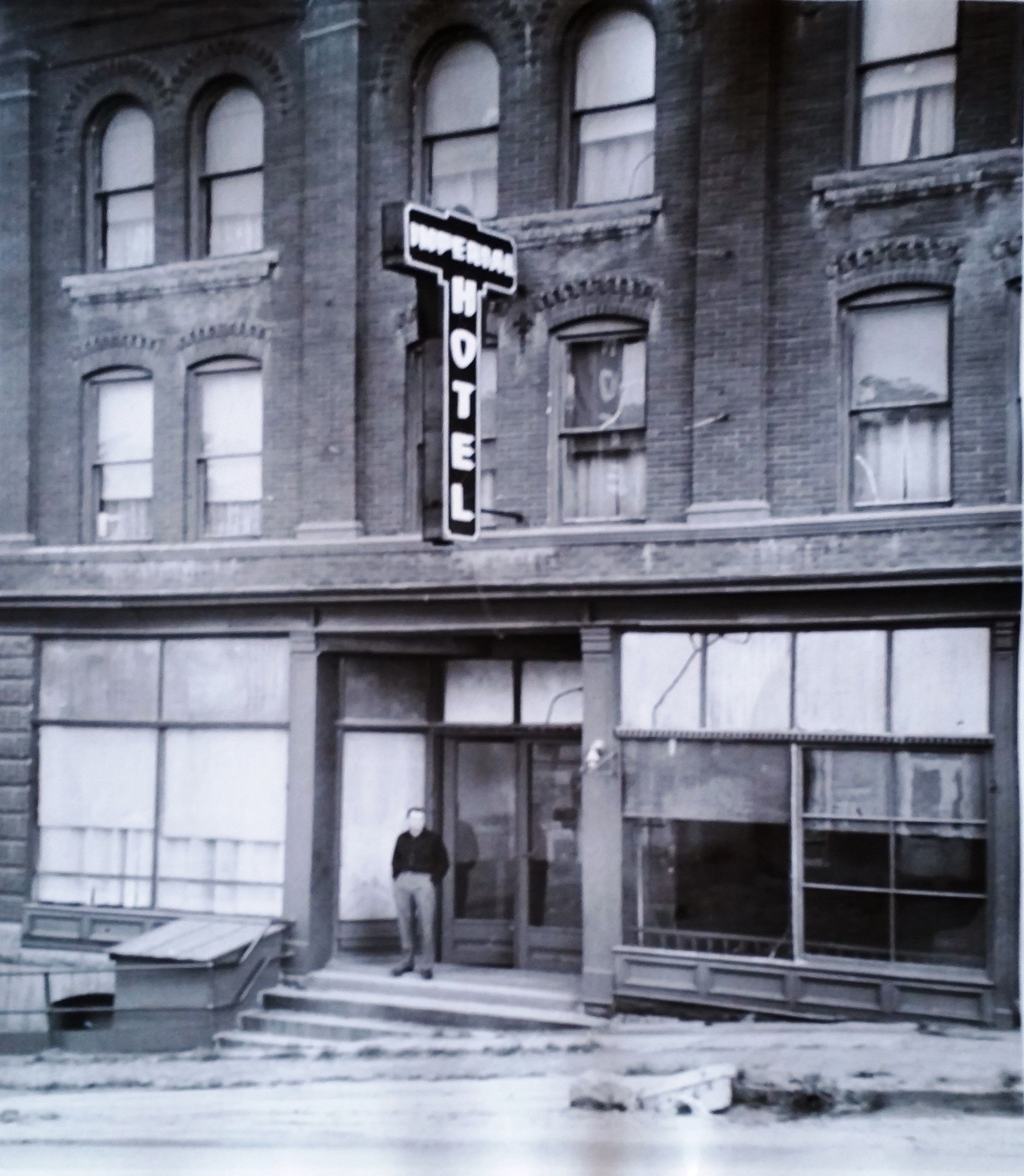
The Mackin family roots date to May 1946 when Stephen’s parents, Wayne and Dorothy Mackin, bought the broken down and closed Imperial Hotel. They were newlyweds who had gone exploring, looking for a business to buy. Wayne was recently home from serving in the 10th Mountain Division during World War II and flush with money he won playing poker on the voyage home from Europe.
“They drove around and ended up on Tenderfoot Hill overlooking Cripple Creek and fell in love with it,” Bonnie said. “It was pretty much a ghost town. And people said they were crazy.”
A year later, they introduced a summer melodrama series – classic Victorian plays with exaggerated heroes and double-crossing villains. The light-hearted plays, accompanied by a piano player, were serious business, bringing tourists to Cripple Creek and filling their struggling hotel. In 1948, they formed the Imperial Players and before long were putting on two shows a day, six days a week, each summer.
“It was hard for them for a lot of years,” Bonnie said.
Their business sense was confirmed when the melodramas became a huge attraction, eventually flooding the town with upwards of 35,000 guests each summer and creating jobs for dozens of college students. National media took notice: Time magazine praised the players, and the troupe was featured in Life magazine in 1955.
In 1967, that reputation attracted Bonnie to Cripple Creek at age 21 from her home in Salina, Kan. She answered an ad seeking a $100-a-month secretary.
“I arrived in April during a snowstorm and it looked awful,” Bonnie said. “I thought: ‘What have I done?’ But it turned out to be the most fun summer of my life.”
The next year was even better as she met Stephen, who was back from a tour of Europe. They married in 1969 and joined Wayne and Dorothy running the businesses, which had grown to 90-some beds, restaurants, gift shops and more, including the Cripple Creek Hospitality House and RV Park, the former hospital they bought in 1964 and converted to a hotel.
But the family wasn’t all about business. They were involved in all aspects of Cripple Creek. Stephen, for example, was volunteer fire chief, president of the Chamber of Commerce and a school board member, and he held many other community service positions.
“It’s amazing all the Mackin family has done for this community,” said Marc Murphy, general manager and partner at Bronco Billy’s Casino. “They were such concerned citizens, instrumental in the history of Cripple Creek and its continued success. They are absolutely a legendary family here.”
The Mackins supported the legalization of gambling in November 1990, viewing it as key to securing the town’s future. But it was the beginning of the end for them. Wayne and Dorothy sold the Imperial in 1992 and it was converted to a casino.
The melodramas ended a few years later. Dorothy died in 1996 and Wayne in 2003. Stephen died in 2012, and Bonnie sold the Hospitality House last spring.
Now she is selling the old Victorian, but she isn’t abandoning Cripple Creek.
“I still play the organ at St. Andrews Episcopal Church every Sunday,” she said. “Stephen designed the stained glass windows and the tabernacle door. It’s our family church.”
–
Please follow me on Facebook at facebook.com/sidestreets.billvogrin.
Wayne Mackin stands outside the Imperial Hotel in Cripple Creek shortly after he and his new bride, Dorothy, bought the closed and decrepit bulding in May 1946. They restored the hotel and launched a summer melodrama series in a basement theater, transforming their business into a nationally known attraction that many credit with rescuing Cripple Creek from becoming a ghost town. Bonnie Mackin, their daughter-in-law, is selling her family home in Cripple Creek, ending 69 years association with the gold camp. Photo courtesy Bonnie Mackin.
Bill Vogrin – Side Streets
Bonnie Mackin at her home in Manitou Springs. Mackin is selling her family home in Cripple Creek, ending the family’s 69 years association with the gold camp. It dates to May 1946 when newlyweds Wayne and Dorothy Mackin bought the closed and decrepit Imperial Hotel in May 1946. They restored the hotel and launched a summer melodrama series in a basement theater, transforming their business into a nationally known attraction that many credit with rescuing Cripple Creek from becoming a ghost town. Bill Vogrin / The Gazette
Bonnie Mackin looks over posters for melodramas that were key to sustaining her family’s Imperial Hotel in Cripple Creek. Mackin is selling her family home in Cripple Creek, ending the family’s 69 years association with the gold camp. It dates to May 1946 when newlyweds Wayne and Dorothy Mackin bought the closed and decrepit Imperial Hotel in May 1946. They restored the hotel and launched a summer melodrama series in a basement theater, transforming their business into a nationally known attraction that many credit with rescuing Cripple Creek from becoming a ghost town. Bill Vogrin / The Gazette
Wayne and Dorothy Mackin with their children Stephen and Susan in the back row and Jeffrey in the middle of the front row in an undated photo circa 1960. Courtesy Bonnie Mackin
A poster for a melodrama that were key to sustaining the Mackin family’s Imperial Hotel in Cripple Creek. In May 1946, newlyweds Wayne and Dorothy Mackin bought the closed and decrepit Imperial. They restored the hotel and launched a summer melodrama series in a basement theater, transforming their business into a nationally known attraction that many credit with rescuing Cripple Creek from becoming a ghost town. Bill Vogrin / The Gazette