






Side Streets: Colorado Springs pioneer home gets historic grant after column reveals threat
Last August, members of the McAllister House Museum Committee shed tears when they learned they had been denied a grant to restore the crumbling brick-and-stone exterior of the landmark pioneer home.
“We all cried,” said Terry Thatcher, co-chair of the nonprofit that oversees the house built in 1873 by Civil War Maj. Henry McAllister, one of the most trusted associates of Colorado Springs founder Gen. William Jackson Palmer.
Today, smiles abound among the committee members.
The McAllister House Museum was awarded a nearly $105,000 grant from the State Historical Fund, which will be combined with $39,400 in matching funds to begin extensive repairs on the Victorian home/museum at 423 N. Cascade Ave.
Thatcher called to announce the grant and to say “thanks” because she credits a November “Side Streets” column with raising awareness of the importance of the house and getting the attention of History Colorado officials about the serious threat of decay.
“I know it had a lot to do with us getting the grant,” Thatcher said, adding that other readers responded with more than $1,000 in donations to help with a long list of repairs.
The McAllister House is an important historic treasure in Colorado Springs. McAllister and Palmer were Quakers from Philadelphia who met in 1862, when Palmer was recruiting members to the Union Army to fight in the Civil War.
They served together, and after the war, McAllister joined Palmer’s railroad- and town-building efforts in the Colorado Territory. When Palmer left for an extended trip, he turned his Colorado Springs Co. over to McAllister.
The historic value of the house is further enhanced by the fact that dollar-a-day carpenter Winfield Scott Stratton helped build it, 20 years before his Independence mine in Victor made him a millionaire and then a legendary philanthropist.
But the house is in obvious distress. Decades of rain, snow, wind, hail and lightning left pock marks in the red brick that wraps the two-story home in two layers, 20 inches thick.
Unfortunately, previous attempts at restoration actually compounded the damage.
Historic preservation consultant Charise Boomsma described how modern mortar was too strong, squeezing and damaging the old brick. Efforts to seal the brick left it more vulnerable to decay, she said. The sealant prevented the brick from breathing, forcing moisture into the house rather than shedding it down the exterior.
And after an old coal chute into a cellar collapsed, faulty repairs to the foundation left the structure unstable.
“We’ll be doing foundation stabilization and masonry restoration,” Boomsma said.
An architect must draw up detailed plans before the project can be put up for bids and a contractor selected.
Then crews will begin gently removing the sealant, chiseling out the modern, mismatched mortar, fixing missing and deteriorated mortar, removing cracked and broken bricks and replacing them with bricks from the inner layer.
“We’ve got our architect on board,” Boomsma said. “We hope to put this out to bid early summer, have a contractor doing work late summer and early fall this year and get it done this year.”
She estimates the work will take two to four months.
During the construction work, the museum committee intends to invite the public to learn historic preservation techniques from the experts on site. More details will be available in the fall online at http://mcallisterhouse.org.
Thatcher is excited to get started.
“We didn’t stop to celebrate,” she said. “We just want to get started. It will be a slow process.”
The museum will remain open during the work.
–
Please follow me on Facebook at facebook.com/sidestreets.billvogrin.
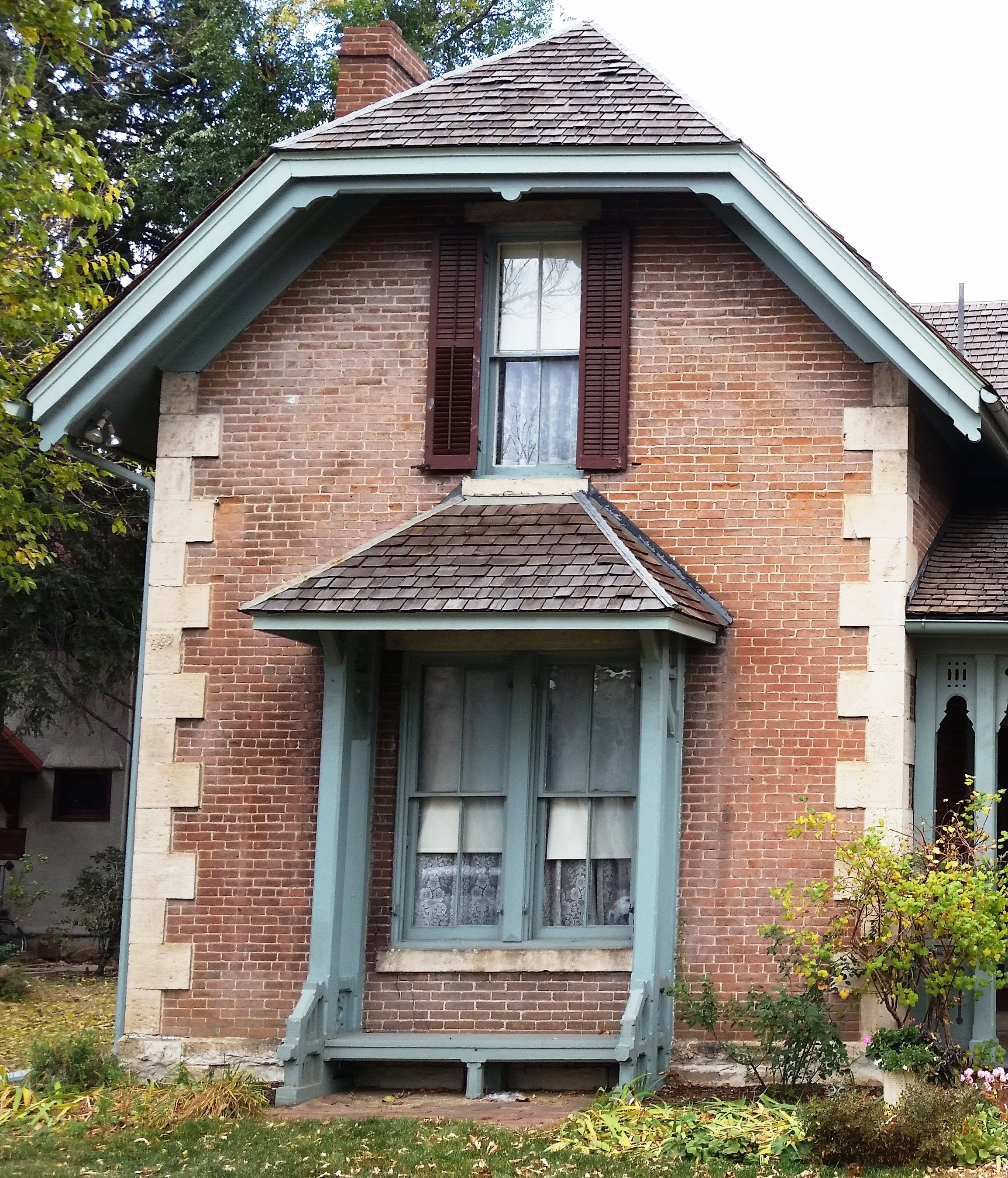
The exterior of the McAllister House Museum, built in 1873 by Civil War Major Henry McAllister as a brick-and-stone symbol of the stability of fledgling Colorado Springs, will be restored thanks to a $105,000 grant from the State Historical Fund, and $39,400 in matching funds. Much of the brick is pock-marked and cracked, as seen in this Nov. 3, 2014, photo. Its limestone foundation is sagging. And misguided repairs in the past, including a damaging sealant and mismatched modern mortar, compounded problems. Bill Vogrin / The Gazette
Bill Vogrin – Side Streets
The exterior of the McAllister House Museum, built in 1873 by Civil War Major Henry McAllister as a brick-and-stone symbol of the stability of fledgling Colorado Springs, will be restored thanks to a $105,000 grant from the State Historical Fund, and $39,400 in matching funds. Much of the brick is pock-marked and cracked, as seen in this Nov. 3, 2014, photo. Its limestone foundation is sagging. And misguided repairs in the past, including a damaging sealant and mismatched modern mortar, compounded problems. Bill Vogrin / The Gazette
The exterior of the McAllister House Museum, built in 1873 by Civil War Major Henry McAllister as a brick-and-stone symbol of the stability of fledgling Colorado Springs, will be restored thanks to a $105,000 grant from the State Historical Fund, and $39,400 in matching funds. Much of the brick is pock-marked and cracked, as seen in this Nov. 3, 2014, photo. Its limestone foundation is sagging. And misguided repairs in the past, including a damaging sealant and mismatched modern mortar, compounded problems. Bill Vogrin / The Gazette
The exterior of the McAllister House Museum, built in 1873 by Civil War Major Henry McAllister as a brick-and-stone symbol of the stability of fledgling Colorado Springs, will be restored thanks to a $105,000 grant from the State Historical Fund, and $39,400 in matching funds. Much of the brick is pock-marked and cracked. Its limestone foundation is sagging. And misguided repairs in the past, including a damaging sealant and mismatched modern mortar, compounded problems. The museum is seen in an undated 2014 photo courtesy of the McAllister House Museum Committee.