






Muddled Colorado Springs charter has precipitated conflict between mayor and Council
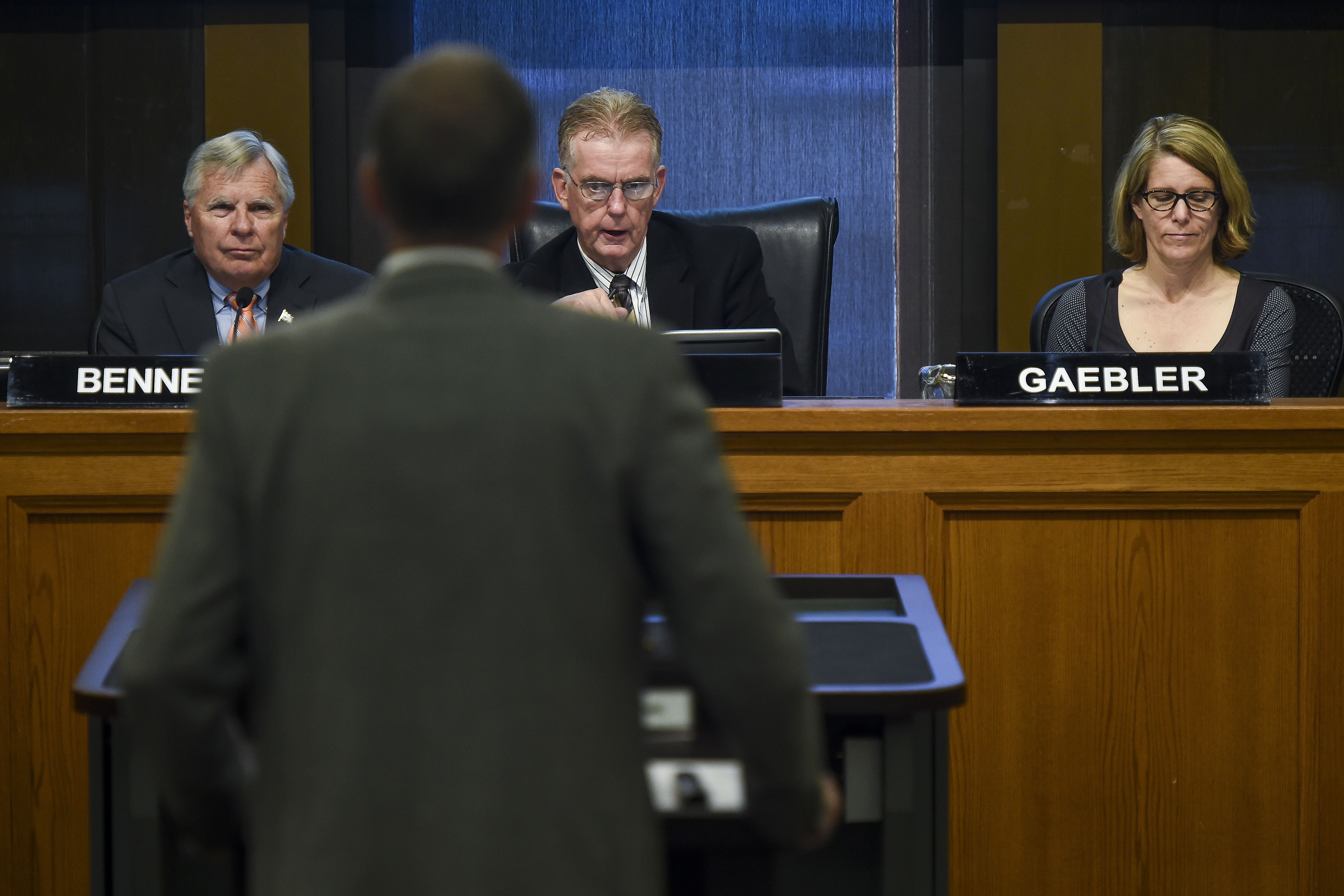
When a new mayor and new City Council members are sworn in this year, they’ll look to the Colorado Springs city charter to guide them on their roles and responsibilities.
The charter, for example, says the mayor shall enforce all city laws and ordinances. The mayor shall present a budget each year to the City Council, and the mayor is the city’s chief executive who hires and fires all city employees.
For its legislative body, the city’s charter says the City Council may establish departments, divisions, offices or agencies, and the City Council shall maintain a strategic plan with goals and measurable outcomes.
It sounds simple, but it’s not easy.
In 2010, Colorado Springs voters changed the city’s form of government from council-manager to council-mayor. But the charter was not changed at every point to reflect that the mayor was no longer part of the City Council.
It left Colorado Springs with a confusing charter and city government in conflict over the city’s budget, hiring and firing and the role of the City Attorney.
Some believe the conflict will be solved with a new mayor and blame the past four years of fighting on personalities. They want to hold off on making sweeping changes to the city’s charter until a new administration takes office.
However, others are convinced the charter is flawed, and the only way to resolve the conflict is to ask voters to revamp the charter and explicitly define the responsibilities of mayor and Council.
“I believe the charter needs a major overhaul looking at what are the expected duties of the mayor and how should the City Council function,” said June Waller, president of the League of Women Voters of the Pikes Peak Region.
From the launch of the new form of government, the League of Women Voters raised concerns that the charter was not in step with what the voters decided in 2010, Waller said.
So torn are the City Council and mayor over how to interpret the charter, that Mayor Steve Bach refused in 2013 and 2014 to enforce a City Council-approved law about city budget departments. He said the law was in direct violation with the city’s charter and the mayor’s budget responsibilities – even though the charter says the mayor must enforce all City Council-approved laws and ordinances.
Councilwoman Jan Martin, who is term limited, said a review committee could be set up to go through the charter line by line to find and clean up the conflicts.
“But I also think that we may need a little bit more time with a second administration to really determine where the pressure points might be,” she said. “It doesn’t hurt us as we transition to a new mayor to wait a little bit longer.”
At the time of the council-mayor proposal in 2010, proponents did not want to muddle things with multiple ballot questions about charter changes, said Bob Loevy, political science professor emeritus at Colorado College. And that left room for conflicts.
However, the worst thing that could happen is to set up a committee and say “go rewrite the charter,” Loevy said. “My advice to council is to be very specific about what they want the (charter review) commission to do,” he said.
He might start with changing how City Council members are elected and paid, which in his view would even the playing field. Now, the mayor is paid an annual salary of $103,370 and must get more than 50 percent of the vote in the April 7 election to win. If there is no majority winner, the top two vote getters go to runoff in May. Meanwhile, the City Council members, who are paid $6,250, are elected by plurality, which means they only have to appeal to a small amount of voters, Loevy said.
Loevy would advocate for a full-time salary for council members and runoff elections.
“We have a mayor with a broad constituency dealing with a council that is highly parochial and responsive to maybe 20 percent of the electorate,” Loevy said. “Council members, having a constituency that more closely resembles the mayor’s, would be more willing to go along with broad citywide programs.”
City Council president Keith King said there should be changes to the charter to balance the power between the legislative and executive branches. The City Council, for example, was barred last year from making budget amendments midyear. King argues a limited City Council throws checks and balances out the door.
“We need to definitely look at the budget process,” King said. “We need to look at how council is able to bring forward ideas and initiate ideas.”
The role of the City Attorney also needs to be immediately addressed, King said. For the past four years, the City Council has said it receives legal opinions interpreting the charter to favor the executive branch.
“I would like some process for the ability for council to have unlimited access to lawyers to accomplish their role,” King said. “Now, council has a half-time (city) lawyer. It is very difficult to have the things we want to initiate.”
Colorado Springs voters are being asked in Tuesday’s election to amend the city’s charter in two areas, including removing a requirement that the mayor sign all Colorado Springs Utilities contracts. That rule was written when the mayor was part of the nine-member City Council and did not change when the council-mayor form of government was voted in.
But cleaning up the charter one amendment at a time won’t work, said Gary Casimir, who was a member of the city’s charter review committee in 2004 when the group came up with 26 proposed changes. It could take two to three years to make all the fixes, he said.
To start, he said, the new mayor and City Council need to immediately set up a charter review committee.
“Then, go through it and say City Council is responsible for this and this is what the mayor is responsible for,” Casimir said. “You can’t piecemeal a charter.”
The Colorado Springs City Council approved two resolutions that will allow voters to decide whether or not approve a sales-tax increase to fund roads fixes and a request to keep $2.1 million in revenue that exceeded the limit under the Taxpayer’s Bill of Rights (TABOR). Michael Ciaglo, The Gazette