






Side Streets: Manitou Springs history told through artifacts carried in the pockets of pioneers
Atop a large granite boulder in Manitou Springs’ Memorial Park stands a statue of a World War I doughboy.
To most park visitors, it’s just a typical, weathered war memorial.
But once a “History Pockets” project is completed, this summer, visitors to the Manitou Springs Heritage Center will understand why the statue and the park represent an important episode in the history of the tourist village west of Colorado Springs.
The history pockets are being created thanks to the efforts of author Molly Wingate and teacher Betsey Niebuhr, who want to tell Manitou’s history through artifacts of the pioneers who settled there and the colorful characters who lived there the past 150 years or so.
The pockets actually will be baskets filled with things such as an authentic doughboy’s helmet, photos of a gas mask worn by soldiers in World War I and other materials from the era. Students and other visitors to the center will try to figure out who the artifacts are related to and why they are important.
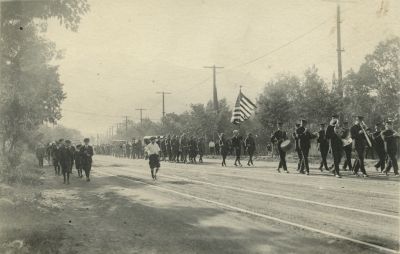
In the case of the statue and World War I artifacts, Molly and Betsey hope the students will conclude they relate to Eber Duclo, the first Manitou resident to die in the war – a death that sparked an outburst of patriotic displays and emotion and resonates still at the American Legion post where Duclo, a Marine machine-gunner, remains a hero. In fact, the park is dedicated to Duclo along with the legion post.
“My goal is for the students to do historical thinking,” said Betsey, a sixth-grade social studies teacher at Manitou Springs Middle School. “The way we learn about the past is by analyzing primary sources, reading eyewitness accounts of events, viewing photographs, holding objects people owned.”
The “pockets” concept is an exercise Betsey learned at a teaching workshop at Thomas Jefferson’s Monticello, the Founding Father’s Virginia plantation that is now a national historic landmark.
“Various artifacts were in the center of four different tables,” Betsey said. “We had to figure out who the person was and what they did.”
Turned out the collections were from Jefferson, his wife, his slave/mistress and a cook.
“I want students to learn about people who lived in Manitou by analyzing the things that were in their pockets,” Betsey said.
Soon, she and Molly were pursuing grants for the Heritage Center “History Pockets” project. Molly had another goal when she began seeking grants and donations of artifacts.
“We want to get people into the Heritage Center,” Molly said. “It’s a small space packed with lots of lovely displays. It’s not a musty old museum.”
The museum opened in 2009 at 517 Manitou Ave., but it remains something of a secret.
“I’m interested in making the Heritage Center more accessible to kids,” Molly said. “It pains me that people live here and don’t have any sense why this town is here, how it came to be and why it’s preserved as one of the last intact Victorian-era communities on the Front Range.”
She sees the history pockets as a way to connect kids and their parents with the center and the community’s rich history.
“I want them to learn Manitou Springs was the gateway to the West,” she said. “The only way west was right up the pass. I want them to learn that Manitou was about more than mineral springs and shops.”
Molly raised $6,300, which she is using to pay for her research and the amassing of artifacts, display materials and the baskets that will hold the pocket artifacts. Besides Duclo, Molly is preparing baskets on pioneer writer George Ruxton, photographer W.E. Hook, New York Times reporter Grace Greenwood, who owned a cottage here in the 1870s and visited often, Indians who passed through and early settlers.
–
Please follow me on Facebook at facebook.com/sidestreets.billvogrin.


