






Miller’s no-nonsense, questioning approach splits some Colorado Springs voters
Joel Miller has been called divisive.
But it’s not a term he shies from. He believes there are two political camps in Colorado Springs: one that he calls “go along to get along politicians” and one willing to question special interest groups.
Miller has heard on the campaign trail that citizens are upset with the political fighting at City Hall. He said he’s not one to ignore problems or issues.
“There has been a lot of talk of the airing of dirty laundry,” Miller said. “I would submit that we are long overdue for some laundry to be aired. As soon as we acknowledge the existence of the dirty laundry, we can get in there and start to clean it.”
In a surprise move in November, Miller resigned from City Council and announced his intention to run for mayor. He still had two years left on his four-year term, so District 2 voters will choose a council member in April to complete his term.
Miller said he was motivated to run for mayor because he believes city government is closed to the public and focused on major tourism projects when it ought to focus on delivering core services like fixing the pothole-riddled roads, watering the grass in parks and providing police and fire protection.
“I believe with the right person in City Hall we can make this a better place to live, work, play and do business,” he said. “I think it’s the government who should be working for the citizens.”
Miller, 44, is a retired Air Force officer and airline pilot who is married with four children. He recalls the day he arrived in Colorado Springs. He was 18 years old and a freshman at the Air Force Academy.
His impression: “Wow, this place is awesome.”
Years later, he would maneuver to get back to the Springs and retire from the Air Force. He proposed to his wife, Anita, on top of Pikes Peak and spends as much time outdoors with his family as he can.
“I really do love the people here,” he said.
Miller was sworn into office in April 2013 along with five other new council members.
Right out of the chute he was at odds with Mayor Steve Bach over a tourism proposal dubbed the City for Champions, a plan for four tourism projects unveiled in June 2013 with big fanfare.
Miller seized on the proposed financing of one of the projects, which at the time was a downtown baseball stadium. That plan morphed into a downtown sports and events center but remained a $90 million proposal that called for creation of a city and county tax increment finance district, where a portion of sales taxes from the district would be used to pay off construction debt.
Miller cried foul.
Government, he said, should not be in the business of building and financing sports and events centers. He and four other council members signed a letter pledging to voters that they would demand a vote of the people before local tax money was spent on a downtown venue.
That is when businessman Trevor Dierdorff said he became disillusioned with Miller, who Dierdorff believes is acting on his principles rather than politics. Still, Dierdorff, who has testified at City Hall in favor of City for Champions and other projects, views Miller as an obstructionist to the city’s progress, he said.
“I felt that when we won the award from the (Regional Tourism Act) everybody ought to be celebrating,” Dierdorff said.
City for Champions, he said, is the best downtown proposal he has seen in 22 years, and one he believes could be a catalyst for other economic development.
“There is a groundswell for our city, and people are really ready to move this city forward,” he said. “At this point I see him (Miller) as trying to get in the way of that.”
In addition to Miller’s fight against the downtown stadium, Dierdorff was disappointed that Miller wanted to cut city and Colorado Springs Utilities funding from the Regional Business Alliance in October 2013. The city’s support of economic development was critical in determining which path the city was about to take, he said.
“I felt like we were at a tipping point and our city was on the verge of breaking out, where we are about to be vibrant and attract young professionals or where we are putting the nail in the coffin of outside investment and we wouldn’t be attracting young professionals,” Dierdorff said.
Miller argued then, and still believes, that the city should not give money to organizations like the Business Alliance, which makes endorsements of political candidates and issues.
One week before ballots are mailed out, Miller has raised $11,265 for his campaign, falling behind opponents John Suthers (who reports $279,023 in campaign contributions), Mary Lou Makepeace ($53,800) and Amy Lathen ($66,720).
Miller is in fourth place in community polling surveys. A local mayoral candidates’ survey by Springs Unigroup, an advocacy group that formed in 2002, shows Miller with 11 percent of the vote. Rick Wehner, who runs the survey, said the Unigroup surveys have been 82 percent accurate in candidate races and 91 percent accurate on issues.
When Unigroup combined its totals with The Gazette and KKTV online surveys – which ran on their websites Feb. 19 for 24 hours – the combined percentages shake out the same way.
Miller smiles at hearing about the reports, and said that anything is possible. Remember Eric Cantor, the House majority leader who spent $1 million in his 2014 bid for re-election in Virgina while opponent Dave Brat had $100,000? Cantor lost in the primary.
“Nobody saw that coming,” Miller said.
Some have pegged Miller as a one-issue candidate who is building his campaign around City for Champions. But Miller has taken up plenty of other issues, including calling out his own city for not putting its fair share of funds into the voter-approved Pikes Peak Rural Transportation Authority, 1 percent sales tax for transportation and transit projects. Since 2010, Colorado Springs has fallen short in its promise to spend $5.7 million a year on transit as part of the PPRTA program.
Miller’s attempt to get the city to keep its funding promise impressed Jim Egbert, who is a member of the PPRTA Citizen Advisory Committee and has been concerned about the city’s shortfall in transit funding.
Under the PPRTA promise, the city said it would maintain the $5.7 million a year funding and that new tax money would be an addition – not a substitute – to the existing budget.
Miller tried to get the rest of the City Council to force the city to pony up the funds, about $1.8 million a year, but failed.
“He was the first city councilor who was a member of PPRTA to take ownership of the issue,” Egbert said.
Egbert said Miller’s take-charge attitude at PPRTA would transfer to the mayor’s office, where he believes Miller would keep a close eye on the city’s budget and ensure the city pays for core services.
“He says the words, but he practices them,” Egbert said.
Last May, Miller took up property rights as his mission. He proposed a city law that would have made it more difficult for the city to use its power of eminent domain to take private property for public use. Miller was, and still is, concerned that the city’s Urban Renewal Authority can declare property “blighted” and start proceedings to buy the land or eventually use eminent domain to take it. His proposal would have more narrowly defined blight and would have given property owners a chance to correct problems.
Although supporters outnumbered opponents at City Hall in favor of Miller’s plan, he lost his battle in a 5-4 split vote.
“There is a big denial of the fact that eminent domain is a big issue,” Miller said. “There is this idea that we don’t use eminent domain. But it is a threat. You could say, if you are a criminal, ‘Yes, I did take her purse, but she gave it to me willingly when I pointed a gun at her.'”
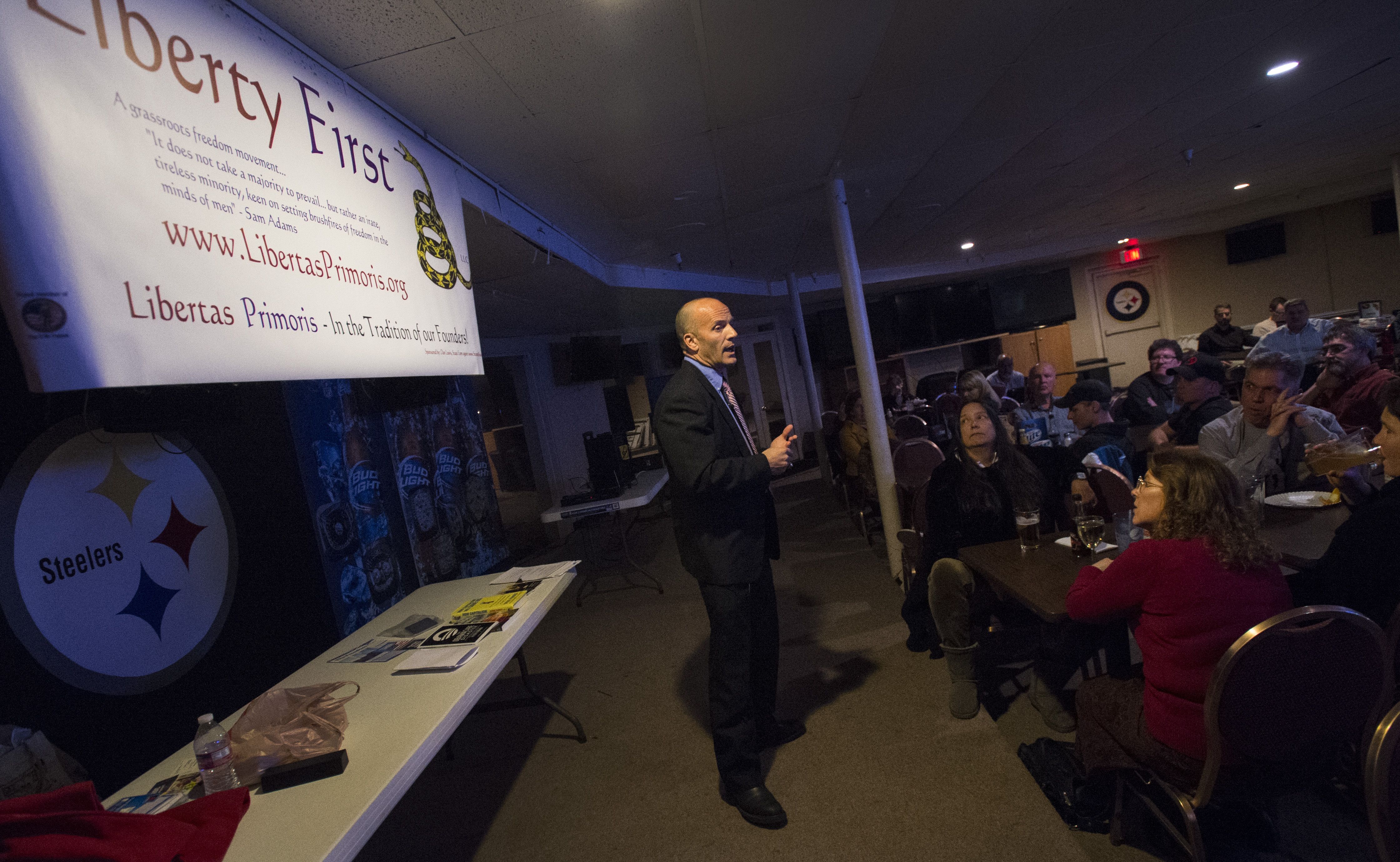
Miller does not have the greatest bedside manner, said David Kelly, founder of Liberty First. Kelly, who said he was speaking for himself and not the group – which has not endorsed anyone for mayor – said Miller has a no-nonsense approach that he finds refreshing.
“Some people might feel uncomfortable,” Kelly said. “He is direct. But I don’t fault him. I don’t think it’s a negative thing. I want someone who will ask questions.”
Miller said that of all the mayoral candidates, he is the only one who has worked in the new form of government, which voters changed in 2010 from a council-manager to a council-mayor form.
“I’m the only candidate that has lived through this on City Council,” he said. “I am familiar with how government works, the roles of each branch and how that affects City Council, and how that affects the staff and how we deliver city services to the citizens.”
–
Contact Monica Mendoza: 636-0187
Twitter @Mendo1987
blog, City Hallways
Colorado Springs mayoral candidate Joel Miller speaks to members of the Liberty First Tuesday, Feb. 17, 2015, at their meeting at the Dublin House in Colorado Springs. (The Gazette, Christian Murdock)