






Many see potential for new era dawning with Colorado Springs city election
This is the moment when Colorado Springs voters can change things.
In April, they will elect a new mayor and could elect a new-majority City Council.
Bankers, economists, small-business owners, community activists and neighborhood organizers say they want change – in the economy, in core city services and, most of all, in attitude. They want elected officials to host more neighborhood meetings and forums, and they want to be included in decisions such as making a capital improvement priority list.
When they look at the horizon, they feel mostly hopeful that the April city election could bring that change.
“We are in a position to do something different,” said Lawrence Wagner, a 35-year-old defense contractor who this year launched Connect! Colorado Springs to get new city residents engaged in local activities. “The city is on the cusp of being cool.”
Connect! Colorado Springs is hosting “job interviews” – a series of upcoming Q&A meetings for the mayoral candidates, which are open to the public. Wagner expects to ask questions about budgets and plans, but he also wants to hear about problem- solving and leadership skills.
Voters will elect three at-large City Council members, and in District 2, they will elect a council member to replace Joel Miller, who resigned his seat to run for mayor. In December, resident Deborah Hendrix, backed financially by the newly formed Colorado Springs Government Watch group, launched a recall of District 4 Councilwoman Helen Collins. The watch group was successful, and the recall question will be on the ballot. Collins has no challengers. If she is recalled, the City Council will pick a District 4 council member for southeast residents.
It means there could be five new members on the nine-member City Council.
“The city is growing,” Wagner said. “There is an undercurrent of change that is coming. The new administration can usher it in or stifle it.”
Small-business owner and community volunteer Bill Layton said the recall effort makes him nervous because it smacks of an outside group trying to tell District 4 voters what is best for them. Those fears aside, voters remain in control, he said.
“There is always a moment of hope. A free public election is a moment of hope,” he said. “It has to be. You have to still have hope and you have to believe that your vote counts – maybe you influenced the decisions of the future with your vote.”
This is a chance, he said, to elect officials who give as much attention to regular citizens as they do to special interest groups and developers. For example, he said, there is no attention to what young adults want, and they are hightailing it to Denver and other cities. Young adults want to live downtown and move around the city without a car, he said.
“They are planning a stadium when they should be considering mass transit or light rail,” Layton said.
The past four years, under the new council-mayor form of government, have included endless hours of public discord among City Council members, the mayor and the city attorney surrounding the roles and responsibilities of the executive branch and the legislative branch. Clashes in the City Charter and city’s code left the roles of each branch open to interpretation. The council felt it was on the losing end of opinions from the city attorney.
Not much was resolved, and the council discussed asking voters to change the City Charter.
Last month, council members dropped the idea of taking a proposed charter change related to budget responsibilities to voters and instead said they would wait for a new mayor, hoping that roles and responsibilities can be worked around the table and without changing the charter.
The hostile political climate left its mark on the business community and halted progress, said Robin Roberts, president of Pikes Peak National Bank. Any time business owners perceive uncertainty, they step back and wait on expansions or hiring, she said.
“Let’s face the fact that we are near the bottom of the leaderboard in Colorado,” she said. “That requires some different thinking so we can change that scenario. It’s time for the citizens to really pay attention to the candidates and ask them the tough questions about where that candidate sees the future of our city in 2025.”
For example, she said, the city should have one strategic plan that includes transit, infrastructure, parks and details about how to pay for that. She wants elected officials to decide if their economic development plans include incentives and what kind of businesses the city wants to attract.
Whatever the plan, it should include ideas from the community and then elected officials need to set priorities and start writing policies specific to the priorities, she said.
“I really hope people will participate in this election, engage with candidates and look at the candidates not from the money they have raised, or their past titles – all of that takes away from what is the heart of the matter. What will the candidate do for the future of the community and what leadership have they demonstrated in the past?”
Nearly everyone agrees that an attitude adjustment among elected officials is needed. Council candidates are using phrases such as “bring back civility,” and mayoral candidates are saying they would set up regular roundtable discussions with the council and host community forums.
That is music to Dave Munger’s ears. He is president of the Council of Neighbors and Organizations and says that change will begin by allowing citizens to give input before decisions are made.
“I think that we have had an administration that has been a bit uncomfortable and unfamiliar with the idea that lots of participation, really robust citizen participation from business and nonprofit communities, will lead to better answers and answers everyone can own,” Munger said. “I would like to see a city where neighborhoods feel much more empowered, feel they are being heard. People then believe that government is working for them and they are part of the government and they trust what is happening.”
Economist Tom Binnings said that what happens in the next five years will determine the economy for the next generation. But that work cannot begin until discussions at City Hall take a new tone.
“You could have respect for a family, until they start airing their dirty laundry in front of you,” he said. “We don’t have to have the exact same vision. But we need them (elected officials) talking to each other and need them to be at least 70 percent on the same page.”
No one wants a rubber- stamping, Kumbaya-singing council and mayor.
But Councilwoman Jan Martin, who is term limited, said the council cannot be left on an island. In recent years, the council was cut off from city staff. When individual council members wanted to ask questions that required data and research, the council member had to get four other council members to join them in asking for the data and the council had to give the staff two weeks to get the answers.
“It is the executive branch that has authority to run the city however they choose to do that without any input,” Martin said. “It really changes the way the public is informed, as well as council.”
It will take time for the council and the mayor to define their roles in the new form of government, but it does not have to be hostile, she said.
Martin said she is hopeful that the candidates in the race have heard the message that there needs to be more cooperation between the executive and legislative branches.
“Just think what we could accomplish if we were all pulling in the same direction versus all going in different directions,” she said.
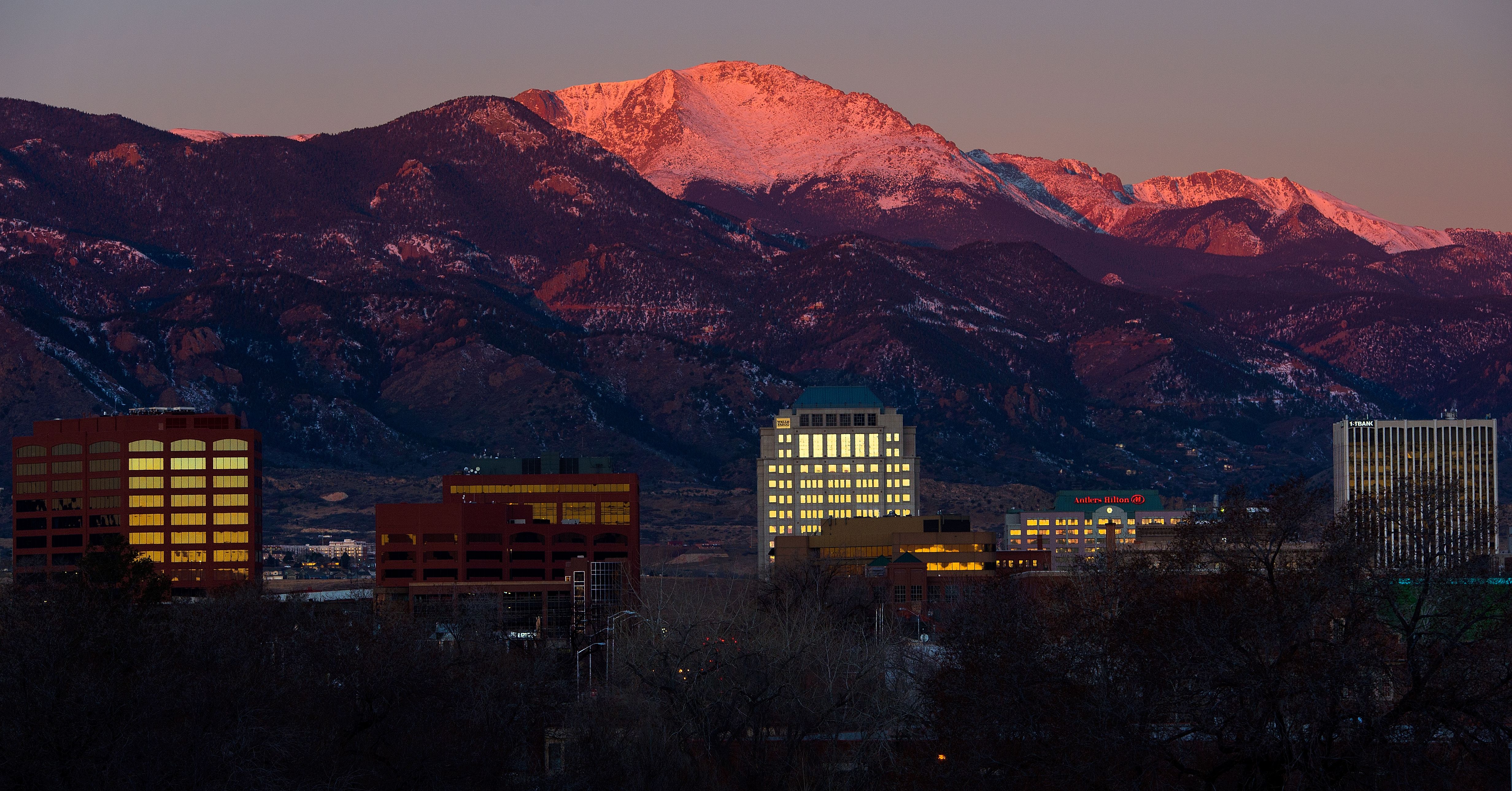
The sun rises over downtown Colorado Springs Friday, Feb. 13, 2015. Bankers, ecomomists, small business owners, and community acitvists are hopeful that the April city election will begin a new day in Colorado Springs politics. (The Gazette, Christian Murdock)