






Violin master an advocate for the strings
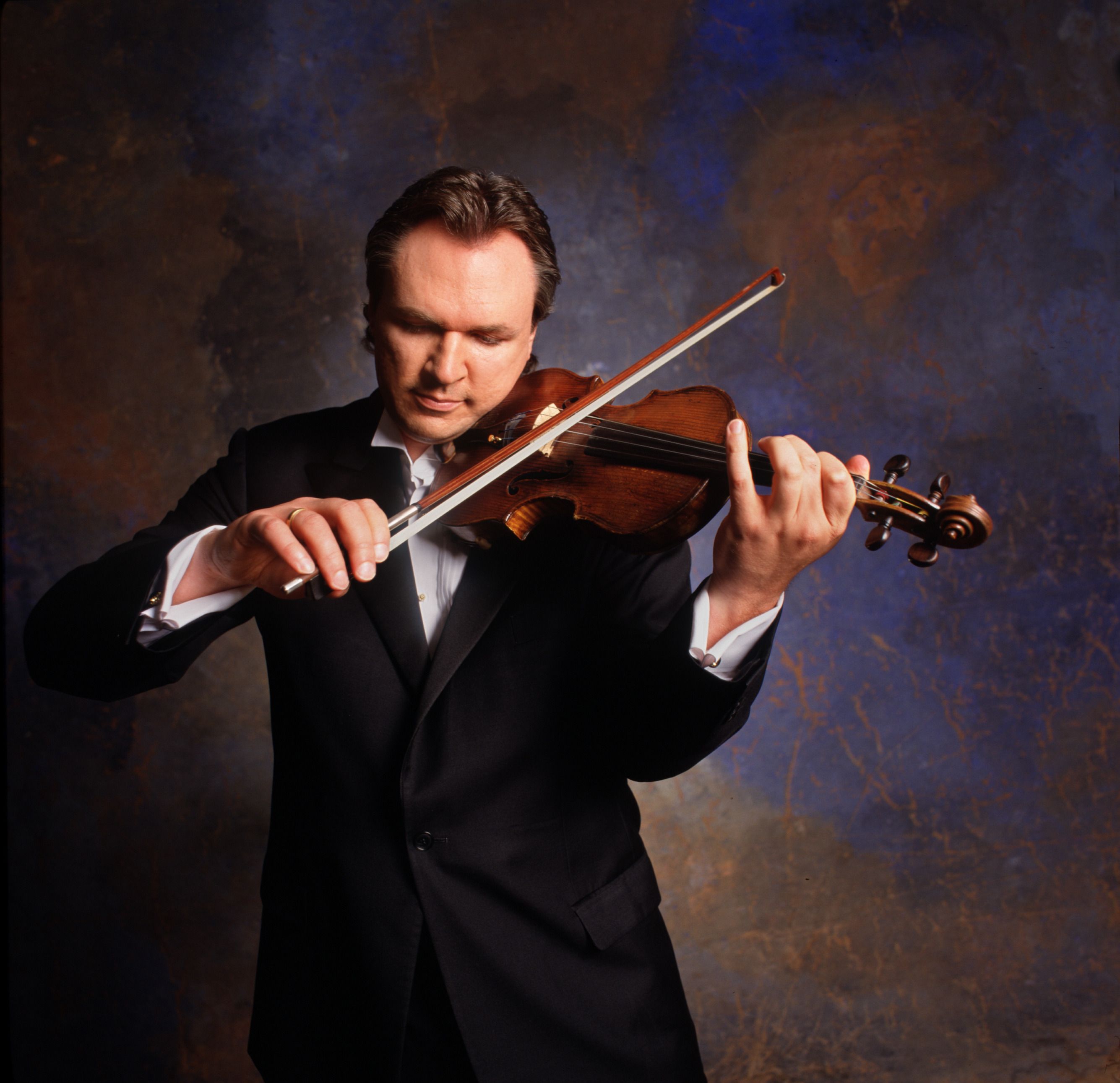
Thanks to a wish and a prayer and a bold phone call from Colorado American String Teachers Association (CASTA) president Nancy Allwein, one of the world’s great violinists will be in Colorado Springs this week.
Two-time Grammy Award- Mark O’Connor will bring his “American” fiddle playing to the Colorado Music Educators Association’s conference for a concert at The Broadmoor on Wednesday night with his wife, Maggie, also a violinist. On Thursday, they will present a workshop presented by the Colorado Springs Youth Symphony and the Black Rose Acoustic Society at the Global Village Academy.
The 53-year-old O’Connor has done much to bring bluegrass and folk styles of playing into the classical music mainstream. He’s also championed the “O’Connor Method” of violin instruction.
Gazette: You’re coming into a situation here where almost all of the teachers who will be at the CASTA conference believe in and teach the Suzuki method, which you are on record as being in major opposition to. How do you handle the situation?
O’Connor: For my entire career I’ve been promoting my music and American music. I just keep on doing it. We’ve been putting on string camps for 20 years – started in the hills of Tennessee. They grew to include California and Boston and other places. And the mission statement has really been the same: Suzuki and status quo string education ignored American music and styles. I feel like in the larger sense American music should be at the center in music education – not only in the United States but around the world. We’re the center of the world in terms of band instruments, guitar, percussion, singing, even chorale societies. But the strings are the ones that are lagging behind, so I’m an advocate for that.
Gazette: Has it always been this way?
O’Connor: If we go back far enough to 1800s and 1700s, string playing in the American scene was doing very well here. It’s really just this last 100, 150 years. Suzuki didn’t include any American music in his method – so a complete snub. American music has its own teaching philosophy and how we dealt with our diverse population. Musicians reached out to each other separate from the elite societies or government. Musicians found a way to play together, to teach each other our music. That’s how things like R&B and country music were formed. The fiddle and the violin have been central to the creation of this.
Gazette: How old were you when you were officially a professional?
O’Connor: Twelve. I was the youngest person to be signed to Rounder Records at that time. In my childhood years, I was the national fiddle and guitar champion. … Then I had the period when I was a sideman and a recording studio player. That was all the Nashville years and the band years – participated in monumental bands like “The Strength in Numbers” and “The Dreggs” and then I did all those sessions. For 10 years, I was everyone’s favorite player. I played on like 450 albums. Then I became a solo artist full time under the strength of my own recordings on Warner Brothers and my touring. Then my orchestral compositions. To date I’ve composed nine concertos and two symphonies.
Gazette: You’ve recorded with Yo Yo Ma.
O’Connor: My projects with Yo Yo – “Appalachian Waltz” and “Appalachian Journey”- sold a million CDs. A lot of string players have that in their library and a lot of people grew up listening to that are 20, 30 years old today. … I’ve been able to get pretty far down the road in the profession with American string playing. Now the big hurdle is making sure that the kids get a chance to really partake in it.
American violin master Mark O’Connor COURTESY PHOTO